 뒤로
뒤로Joints (Articulations): Structure, Function, and Movement
스터디 가이드 - 스마트 노트
 자료에 맞춘 맞춤형 노트, 핵심 정의, 예시, 맥락을 확장해 제공합니다.
Joints and Articulations
Introduction to Joints
Joints, also known as articulations, are the locations where two or more bones meet. They are essential for movement and provide mechanical support to the skeleton. The structure and function of joints determine the range and type of movement possible at each articulation.
Joint strength and stability are inversely related to their range of motion.
Joints are classified by both their structure and function.
Classification of Joints
Structural and Functional Classification
Joints are categorized based on the material binding the bones and the presence or absence of a joint cavity, as well as their range of motion.
Structural types: Bony, fibrous, cartilaginous, synovial
Functional types:
Synarthrosis: Immovable joints
Amphiarthrosis: Slightly movable joints
Diarthrosis: Freely movable joints
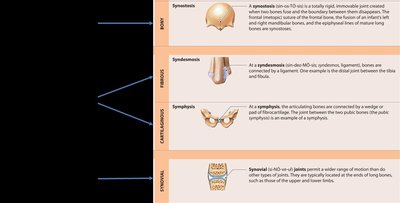
Types of Joints
Bony Joints (Synostosis)
Bony joints are totally rigid, immovable joints formed when two bones fuse and the boundary between them disappears. Example: fusion of the frontal bone.
Fibrous Joints
Suture: Found only in the skull, bones are interlocked and bound by dense fibrous connective tissue.
Syndesmosis: Bones are connected by a ligament, allowing more movement than a suture but less than a synovial joint. Example: distal joint between tibia and fibula.
Cartilaginous Joints
Synchondrosis: Bones are joined by hyaline cartilage. Example: epiphyseal plates in growing bones.
Symphysis: Bones are joined by fibrocartilage. Example: pubic symphysis.
Synovial Joints
Synovial joints are freely movable (diarthrosis) and are characterized by a joint cavity filled with synovial fluid. They are stabilized by accessory structures such as ligaments, tendons, and bursae.
Allow a wide range of movements
Examples: shoulder, elbow, knee, hip
Structure of Synovial Joints
Basic Components
Articular cartilage: Covers bone surfaces to reduce friction
Joint (synovial) cavity: Space filled with synovial fluid
Articular capsule: Encloses the joint cavity
Accessory structures: Ligaments, tendons, bursae, fat pads, menisci
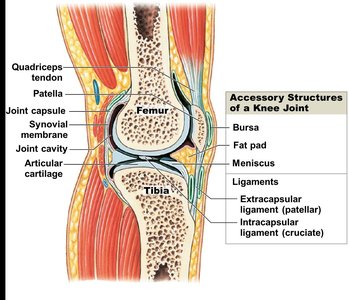
Movements at Synovial Joints
Axes and Planes of Motion
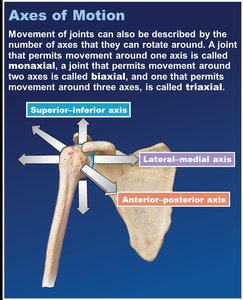
Movements at synovial joints are described by the number of axes around which movement can occur:
Monaxial: Movement in one plane (e.g., elbow)
Biaxial: Movement in two planes (e.g., wrist)
Triaxial: Movement in three planes (e.g., shoulder)
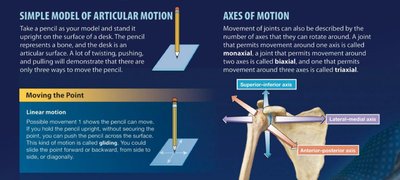
Types of Movement
Gliding: Sliding movements between flat surfaces
Angular movements: Change the angle between bones (flexion, extension, abduction, adduction)
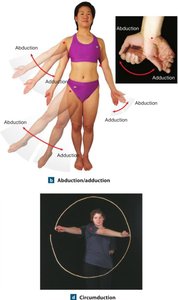
Circumduction: Circular movement combining flexion, extension, abduction, and adduction
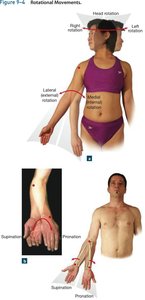
Rotation: Movement around a bone's long axis (medial/lateral rotation, pronation/supination)
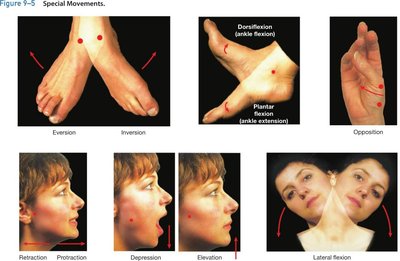
Special movements: Eversion, inversion, dorsiflexion, plantar flexion, opposition, retraction, protraction, depression, elevation, lateral flexion
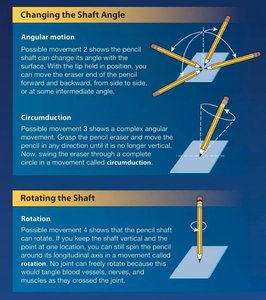
Movement Names and Examples
Flexion: Decreases the angle between bones (e.g., bending the elbow)
Extension: Increases the angle between bones (e.g., straightening the knee)
Hyperextension: Extension beyond the anatomical position
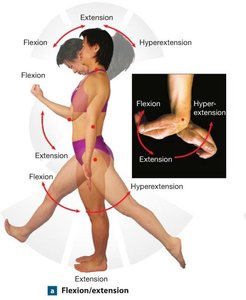
Abduction: Movement away from the midline
Adduction: Movement toward the midline
Circumduction: Circular movement at a joint
Rotation: Movement around the longitudinal axis (e.g., head rotation)
Supination/Pronation: Rotational movement of the forearm
Special movements: Unique to certain joints (e.g., opposition of thumb, dorsiflexion/plantar flexion of ankle)
Types of Synovial Joints
Joint Types and Examples
Type | Movement | Examples |
|---|---|---|
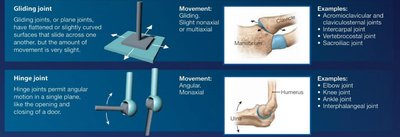
Gliding (plane) | Gliding, slight nonaxial/multiaxial | Acromioclavicular, intercarpal joints |
Hinge | Angular, monaxial | Elbow, knee, ankle |
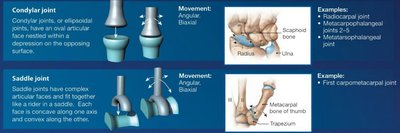
Condylar (ellipsoid) | Angular, biaxial | Radiocarpal, metacarpophalangeal joints |
Saddle | Angular, biaxial | First carpometacarpal joint (thumb) |
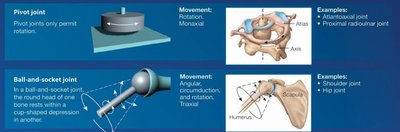
Pivot | Rotation, monaxial | Atlantoaxial, proximal radioulnar joints |
Ball-and-socket | Angular, circumduction, rotation, triaxial | Shoulder, hip |
Major Synovial Joints
Elbow Joint
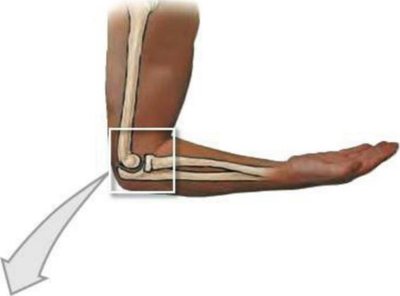
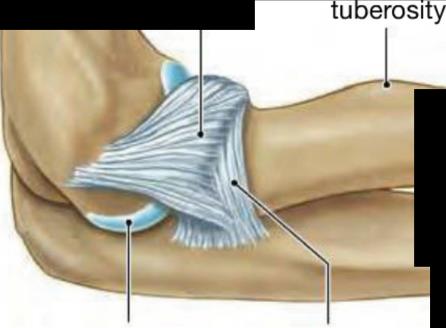
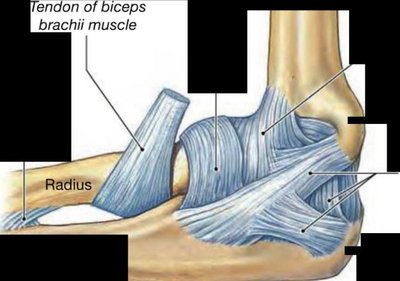
The elbow is a hinge joint formed by the humerus, radius, and ulna. It allows flexion and extension of the forearm.
Knee Joint
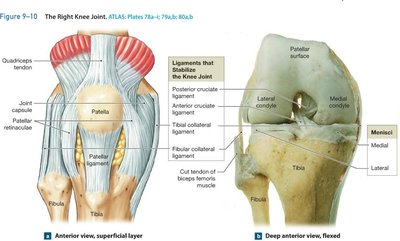
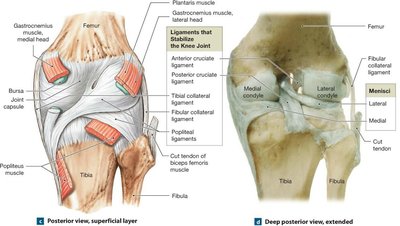
The knee is a complex hinge joint that transfers weight from the femur to the tibia. It contains three articulations and is stabilized by several ligaments and menisci.
Medial and lateral menisci: Fibrocartilage pads that cushion and stabilize the joint
Major ligaments: Patellar, popliteal, cruciate, tibial collateral, fibular collateral
Shoulder and Hip Joints
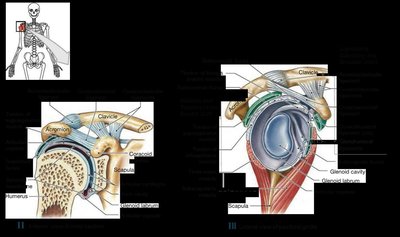
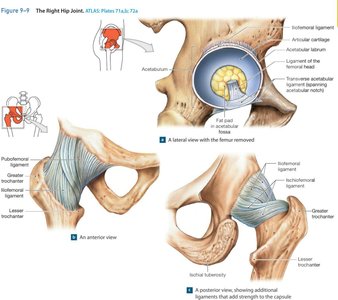
Both the shoulder and hip are ball-and-socket joints, allowing movement in multiple planes (flexion, extension, abduction, adduction, circumduction, rotation).
Effects of Aging on Joints
Degenerative Changes
Rheumatism: Pain and stiffness in the musculoskeletal system
Arthritis: Inflammation of joints, including osteoarthritis (wear and tear), rheumatoid arthritis (autoimmune), and gouty arthritis (uric acid crystals)
Joint immobilization can reduce synovial fluid flow, increasing arthritis risk
Aging decreases bone mass and increases fracture risk
Integration with Other Systems
Skeletal System Interactions
Bone remodeling involves osteoblasts (formation) and osteoclasts (recycling)
Balance is affected by age, physical stress, hormones, mineral uptake, and genetics
Muscles attach to bones, and movement is controlled by the nervous and endocrine systems
Digestive and urinary systems supply minerals for bone growth
The skeleton serves as a mineral reserve
Skeletal System Functions
Provides structural support
Stores minerals and lipids
Produces blood cells in red bone marrow
Protects soft tissues and organs
Provides leverage for movement
