 뒤로
뒤로Molecular Interactions: Biomolecules and Bonds in Human Physiology
스터디 가이드 - 스마트 노트
 자료에 맞춘 맞춤형 노트, 핵심 정의, 예시, 맥락을 확장해 제공합니다.
Ch. 2: Molecular Interactions
Introduction to Molecular Interactions
Molecular interactions are fundamental to the structure and function of living organisms. Understanding the types of molecules, their bonds, and interactions is essential for grasping physiological processes at the cellular and systemic levels.
Molecules and Bonds
Organic Molecules and Biomolecules
Organic molecules contain carbon and are the basis of life.
Biomolecules are organic molecules found in living organisms and are classified into four major groups: carbohydrates, lipids, proteins, and nucleotides.
Most biomolecules contain carbon (C), hydrogen (H), and oxygen (O).
Functions include providing energy and serving as building blocks for cellular structures.
Functional Groups in Biomolecules
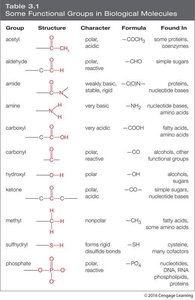
Functional groups are specific atoms or groups of atoms attached to carbon skeletons that determine the chemical properties and reactivity of organic molecules.
They impact acidity, polarity, and overall chemical behavior.
Common functional groups include hydroxyl, carboxyl, amino, phosphate, and methyl groups.
Types of Bonds
Covalent bonds: Strong bonds formed by sharing pairs of electrons between atoms. Can be single, double, or triple bonds. Covalent bonds can be polar (unequal sharing) or nonpolar (equal sharing).
Ionic bonds: Formed by the electrostatic attraction between oppositely charged ions (cations and anions).
Hydrogen bonds: Weak bonds between a hydrogen atom and an electronegative atom (O, N, or F). Important in water properties and protein/nucleic acid structure.
Van der Waals forces: Weak, nonspecific attractions between molecules or atoms.
Important Ions in the Body
Cations: Sodium (Na+), Potassium (K+), Calcium (Ca2+), Hydrogen (H+), Magnesium (Mg2+)
Anions: Chloride (Cl-), Bicarbonate (HCO3-), Phosphate (HPO42-), Sulfate (SO42-)
Biomolecules: Structure and Function
Lipids
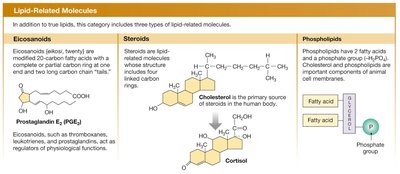
Lipids are hydrophobic organic molecules that serve as energy stores, structural components, and signaling molecules.
Composed mainly of fatty acids and glycerol.
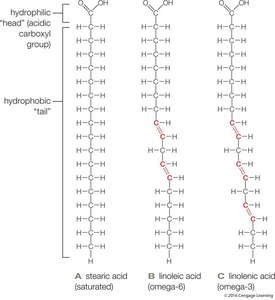
Fatty acids: Long hydrocarbon chains with a carboxyl group. Saturated fatty acids have no double bonds (straight tails), while unsaturated fatty acids have one or more double bonds (kinked tails).
Triglycerides: Three fatty acids bound to a glycerol molecule; main energy storage form in animals.
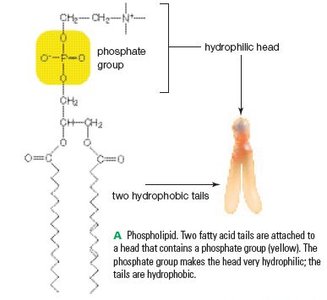
Phospholipids: Two fatty acids and a phosphate group attached to glycerol; major component of cell membranes.
Steroids: Lipids with a backbone of four carbon rings; include cholesterol, bile salts, vitamin D, and steroid hormones (e.g., estrogen, testosterone).
Carbohydrates
Carbohydrates are the most abundant biomolecules, serving as energy sources and structural materials.
General formula: (CH2O)n
Monosaccharides: Simple sugars (e.g., glucose, fructose, galactose) with a single sugar unit.

Disaccharides: Two monosaccharides joined together (e.g., sucrose, lactose).
Polysaccharides: Long chains of monosaccharides; include cellulose (plant cell walls), starch (plant energy storage), and glycogen (animal energy storage).
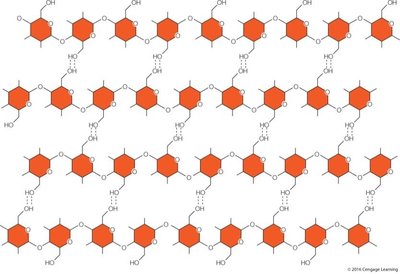
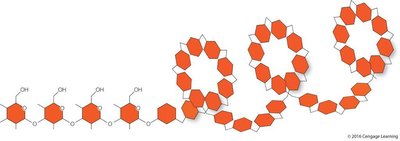
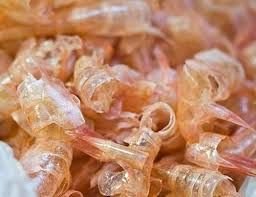
Chitin: A polysaccharide similar to cellulose, found in fungal cell walls and exoskeletons of arthropods.
Proteins
Proteins are the most diverse biomolecules, essential for structure, function, and regulation of the body's tissues and organs.
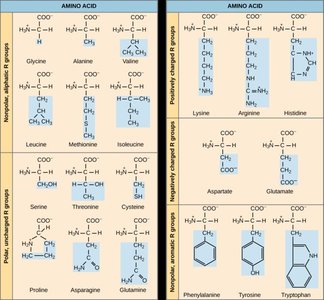
Composed of 20 different amino acids, each with a central carbon, an amino group, a carboxyl group, and a variable R group.


Primary structure: Sequence of amino acids in a polypeptide chain.

Secondary structure: Local folding into α-helices and β-sheets, stabilized by hydrogen bonds.

Tertiary structure: Overall 3D shape of a single polypeptide chain, formed by interactions among R groups.
Quaternary structure: Association of multiple polypeptide chains (e.g., hemoglobin).
Conjugated proteins: Proteins combined with other biomolecules (e.g., glycoproteins, lipoproteins).
Protein function depends on correct 3D structure; denaturation (by heat, pH, etc.) leads to loss of function.
Nucleotides and Nucleic Acids
Nucleotides are small organic molecules that serve as energy carriers, enzyme cofactors, and building blocks for nucleic acids (DNA and RNA).
Each nucleotide consists of a ribose sugar, a nitrogenous base, and one or more phosphate groups.
DNA: Double helix of nucleotides; stores genetic information.
RNA: Single-stranded; involved in protein synthesis and gene regulation.
Noncovalent Interactions and Biological Solutions
Hydrophilic and Hydrophobic Interactions
Hydrophilic molecules: Polar or ionic; dissolve easily in water (aqueous solutions).
Hydrophobic molecules: Nonpolar; do not dissolve in water.
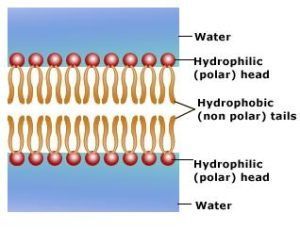
Phospholipid bilayers form the basis of cell membranes, with hydrophilic heads facing water and hydrophobic tails facing inward.
Expressions of Solute Amount and Concentration
Molecular mass: Sum of atomic masses in a molecule (in daltons or amu).
Mole (mol): Amount containing Avogadro's number (6.02 × 10²³) of molecules.
Gram molecular weight: Molecular mass expressed in grams.
Equivalents (Eq): Used for ions; 1 Eq = molarity × number of charges.
Concentration: Expressed as percent solutions, molarity (M), or milliequivalents per liter (mEq/L).
pH, Acids, and Bases
pH and Its Importance
pH: Measure of hydrogen ion concentration in solution.
pH < 7 is acidic; pH > 7 is alkaline.
Acids release H+ in solution; bases decrease H+ concentration (often by producing OH-).
Buffer systems (e.g., bicarbonate) help maintain stable pH in the body.
pH equation:
As [H+] increases, pH decreases.
Protein Interactions and Binding
Protein-Ligand Interactions
Specificity: Proteins bind specific ligands based on molecular complementarity.
Induced-fit model: Protein changes shape to accommodate ligand binding.
Isoforms: Closely related proteins with similar functions but different ligand affinities.
Activation: Proteins may require proteolytic cleavage or cofactors (ions or small organic groups) to become active.
Modulation: Chemical modulators (competitive inhibitors, allosteric modulators) can alter protein activity.
Physical factors: Temperature and pH can affect protein binding and activity.
Saturation: Maximum reaction rate occurs when all binding sites are occupied.
Summary Table: Major Biomolecules and Their Functions
Biomolecule | Monomer | Polymer | Main Functions |
|---|---|---|---|
Carbohydrates | Monosaccharides | Polysaccharides (starch, glycogen, cellulose) | Energy, structure, cell recognition |
Lipids | Fatty acids, glycerol | Triglycerides, phospholipids, steroids | Energy storage, membranes, signaling |
Proteins | Amino acids | Polypeptides, proteins | Structure, enzymes, transport, signaling |
Nucleic Acids | Nucleotides | DNA, RNA | Genetic information, protein synthesis |
