 뒤로
뒤로Organic Compounds: Proteins, Nucleic Acids, and ATP – Chemistry Comes Alive (Chapter 2, Part 4)
스터디 가이드 - 스마트 노트
 자료에 맞춘 맞춤형 노트, 핵심 정의, 예시, 맥락을 확장해 제공합니다.
Organic Compounds: Proteins
Protein Structure and Composition
Proteins are essential macromolecules composed primarily of carbon (C), hydrogen (H), oxygen (O), and nitrogen (N), with some containing sulfur (S) or phosphorus (P). They are made up of long chains of amino acids joined by peptide bonds and constitute 10–30% of cell mass, serving both structural and functional roles.
Proteome: The complete set of proteins produced by an organism.
Structural/Functional Classes: Proteins are classified based on their roles in the cell.
Amino Acids: Structure and Properties
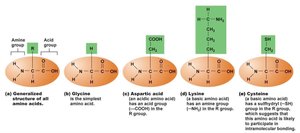
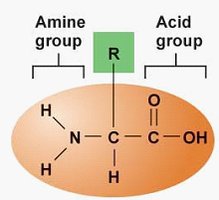
Amino acids are the building blocks of proteins. Each amino acid contains an amine group (NH2), a carboxyl group (COOH), and a unique R group (side chain) that determines its properties.
Amine End: Acts as a proton donor.
Carboxyl End: Acts as a proton acceptor.
R Group: Any combination of atoms, making each amino acid unique.
Peptide Bond Formation
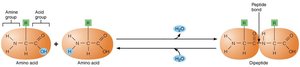
Peptide bonds are formed by dehydration synthesis between the amine group of one amino acid and the carboxyl group of another. Hydrolysis breaks these bonds, releasing water.
Dipeptide: Two chemically-bound amino acids.
Tripeptide: Three chemically-bound amino acids.
Polypeptide: Ten or more chemically-bound amino acids.
Protein Functions
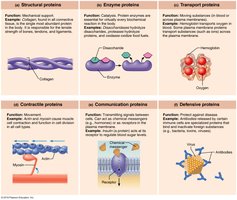
Proteins serve a variety of functions in the body, including structural support, catalysis, transport, movement, communication, and defense.
Structural proteins: Provide mechanical support (e.g., collagen).
Enzyme proteins: Catalyze biochemical reactions (e.g., disaccharidase).
Transport proteins: Move substances (e.g., hemoglobin).
Contractile proteins: Enable movement (e.g., actin, myosin).
Communication proteins: Transmit signals (e.g., insulin).
Defensive proteins: Protect against disease (e.g., antibodies).
Protein Structure Levels
Primary, Secondary, Tertiary, and Quaternary Structures
Proteins are macromolecules with complex spatial configurations. Their structure is organized into four levels:
Primary (1′): Linear amino acid sequence (nonfunctional).
Secondary (2′): Twisting or bending to form alpha (α) helices or beta (β) pleated sheets via hydrogen bonds.
Tertiary (3′): Superimposed folding of secondary structures, stabilized by covalent disulfide bonds (S–S).
Quaternary (4′): Multiple polypeptide chains linked together in a specific manner.
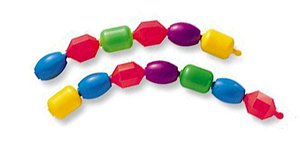
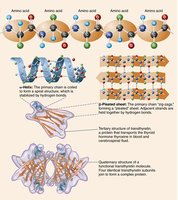
Fibrous vs. Globular Proteins
Proteins are classified based on their shape and function:
Fibrous proteins: Extended, strand-like structural proteins, primarily secondary (some quaternary) structures. Water-insoluble and stable (e.g., keratin, elastin, collagen).
Globular proteins: Compact, spherical functional proteins, mostly tertiary (some quaternary) structures. Water-soluble and chemically active (e.g., antibodies, hormones, enzymes).
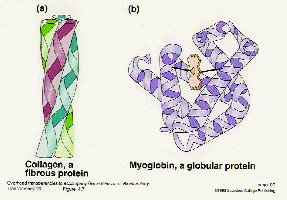
Protein Denaturation
Denaturation and Its Effects
Denaturation is the process by which a protein loses its specific 3-D structure, often due to heat or pH changes. This affects the protein's active site and function.
Hydrogen bonds: Maintain 3-D structure; easily broken by heat.
Active site: Must be exposed for interaction; denaturation alters activity.
Reversibility: Denaturation is reversible unless covalent disulfide bonds are broken.
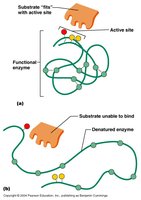
Enzymes
Enzyme Structure and Function
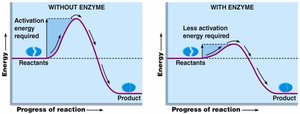
Enzymes are globular proteins that act as biological catalysts, speeding up chemical reactions by lowering activation energy. They are highly specific and reusable.
Holoenzyme: Apoenzyme (protein portion) + cofactor (helper molecule).
Apoenzyme: Inactive enzyme without cofactor.
Chemical specificity: Enzymes are specific to their substrates.
Naming: Enzyme names usually end in -ase (e.g., lipase).
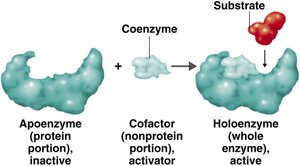
Enzyme Action Mechanism
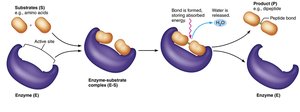
Enzymes bind to substrates, forming an enzyme-substrate complex. The reaction occurs at a lower activation energy, and the enzyme remains intact after releasing the product.
Enzyme-substrate complex: Temporary association during reaction.
Product formation: Water is released as peptide bonds are formed.
Reusability: Enzymes are not consumed in the reaction.
Nucleic Acids: DNA and RNA
Nucleotide Structure
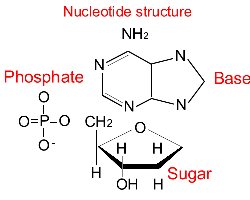
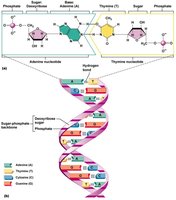
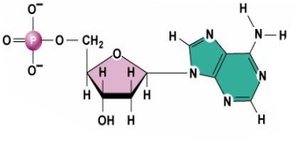
Nucleic acids are the largest molecules in the body, composed of C, H, O, N, and P. Their structural units are nucleotides, which consist of a pentose sugar, a phosphate group, and a nitrogen-containing base.
Pentose sugar: Ribose (RNA) or deoxyribose (DNA).
Phosphate group: Provides backbone structure.
Nitrogenous base: Purines (adenine, guanine) and pyrimidines (cytosine, uracil, thymine).
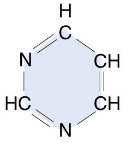
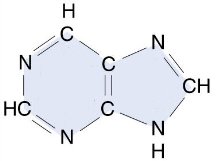
Deoxyribonucleic Acid (DNA)
DNA is the genetic material found in the cell nucleus, containing instructions for making all body proteins. It is a double-stranded helix with a sugar-phosphate backbone and specific base pairing.
Base pairing: Adenine (A) pairs with Thymine (T) via 2 H-bonds; Cytosine (C) pairs with Guanine (G) via 3 H-bonds.
Structure: Double helix stabilized by hydrogen bonds between complementary bases.
Ribonucleic Acid (RNA)
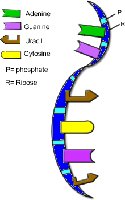
RNA is produced in the cell nucleus but functions outside the nucleus. It is a single-stranded polymer containing bases A, G, C, U (uracil replaces thymine) and ribose sugar.
Base pairing: Adenine (A) pairs with Uracil (U); Cytosine (C) pairs with Guanine (G).
Function: Carries instructions from DNA for protein synthesis.
Adenosine Triphosphate (ATP)
ATP Structure and Function
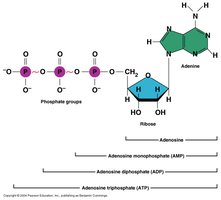
ATP is the primary energy currency of the cell, transporting chemical energy for metabolic processes. It is an adenine-containing RNA nucleotide with two additional phosphate groups attached via high-energy bonds.
Hydrolysis: Breaking a high-energy phosphate bond releases energy for cellular work.
Structure: Adenine, ribose, and three phosphate groups.
ATP Utilization and Cellular Work
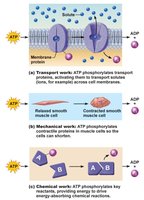
ATP is used in three main types of cellular work: transport, mechanical, and chemical. Glucose and lipid oxidation supply energy to regenerate ATP.
Transport work: Moves molecules across cell membranes.
Mechanical work: Drives muscle contraction.
Chemical work: Powers coupled reactions.
Summary Table: Protein Types
Type | Structure | Function | Examples |
|---|---|---|---|
Fibrous | Strand-like, stable | Structural support | Collagen, keratin |
Globular | Spherical, soluble | Catalysis, transport, defense | Enzymes, antibodies |
Additional info: All explanations have been expanded for academic completeness and clarity, including definitions, examples, and structural details.
