 뒤로
뒤로Orientation to the Human Body: Introduction and Organizing Principles
스터디 가이드 - 스마트 노트
 자료에 맞춘 맞춤형 노트, 핵심 정의, 예시, 맥락을 확장해 제공합니다.
Orientation to the Human Body
Anatomy vs. Physiology
The study of the human body is divided into two main disciplines: Anatomy and Physiology. Anatomy focuses on the structure and organization of body parts, while physiology examines how these parts function and interact to sustain life.
Anatomy: The study of the structure of the body and the relationships among its parts.
Physiology: The study of function—how the body and its parts work together to carry out life-sustaining processes.
Topics of Anatomy
Anatomy can be further subdivided based on the scale and developmental stage of the structures studied.
Gross Anatomy (Macroscopic Anatomy): Study of structures visible to the naked eye (organs, muscles, bones).
Microscopic Anatomy: Study of structures requiring a microscope (cells—cytology, tissues—histology).
Developmental Anatomy: Study of structural changes from conception through adulthood, including embryology.
Topics of Physiology
Physiology explains how anatomical structures operate and why they function as they do, often focusing on specific organ systems.
Cell physiology: Function of cells.
Neurophysiology: Function of the nervous system.
Cardiovascular physiology: Function of the heart and blood vessels.
Principle of Complementarity
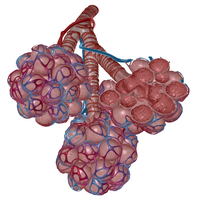
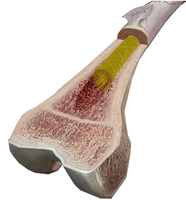
The Principle of Complementarity of Structure and Function states that anatomy and physiology are inseparable; function always reflects structure. For example, the thin walls of alveoli facilitate gas exchange, and the rigid structure of bones supports movement and protection.
Example: Alveoli in the lungs have thin walls to allow efficient gas exchange.
Example: Bones are structured to provide support and protection.
Levels of Biological Organization
Hierarchical Structure of the Human Body
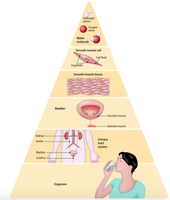
The human body is organized into a hierarchy of structural levels, each building upon the previous.
Chemical Level: Atoms combine to form molecules.
Cellular Level: Molecules form cells, the basic unit of life.
Tissue Level: Groups of similar cells form tissues.
Organ Level: Tissues combine to form organs.
Organ System Level: Organs work together in organ systems.
Organism Level: All organ systems combine to form the living organism.

Characteristics and Requirements for Life
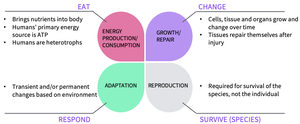
Characteristics of Life
Living organisms exhibit several essential characteristics that distinguish them from nonliving matter.
Boundaries: Separation between internal and external environments (e.g., skin).
Movement: Both internal (e.g., blood flow) and external (e.g., locomotion).
Responsiveness: Ability to sense and respond to stimuli.
Digestion: Breakdown of food for absorption.
Metabolism: All chemical reactions within the body. Metabolism includes catabolism (breaking down molecules) and anabolism (building molecules).
Excretion: Removal of waste products.
Reproduction: Production of offspring.
Growth: Increase in size and number of cells.

Survival Needs
To sustain life, organisms require certain environmental conditions and resources.
Nutrients: Essential for energy and cell building.
Oxygen: Required for cellular respiration.
Water: Necessary for metabolic reactions.
Normal body temperature: Maintains optimal enzyme activity.
Appropriate atmospheric pressure: Needed for proper gas exchange.

Homeostasis and Feedback Systems
Homeostasis
Homeostasis is the process by which the body maintains stable internal conditions despite external changes. Homeostatic set points are thresholds required for physiological processes to remain balanced.
Importance: Maintains optimal conditions for cellular function, prevents disease, and supports survival.

Feedback Control Systems
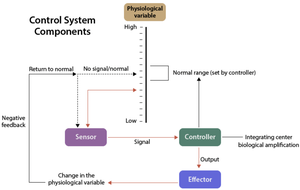
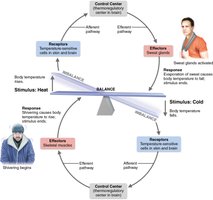
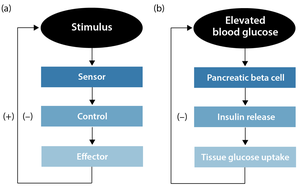
Feedback systems regulate homeostasis through negative and positive feedback mechanisms. Each system consists of three main components:
Receptor: Detects changes in the environment.
Control Center: Processes information and determines response.
Effector: Carries out the response to restore balance.
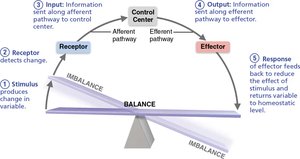
Signals travel via afferent (to control center) and efferent (to effector) pathways.
Negative Feedback
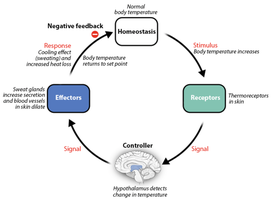
Negative feedback is the most common mechanism, where the response reduces or shuts off the original stimulus, returning the variable to its set point.
Examples: Regulation of body temperature, blood glucose levels.


Positive Feedback
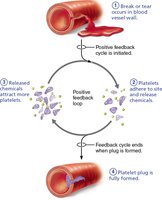
Positive feedback amplifies the original stimulus, causing the variable to continue in the same direction. It is less common and usually controls infrequent events.
Examples: Enhancement of labor contractions by oxytocin, platelet plug formation in blood clotting.
Basic Body Terminology
Anatomical Position
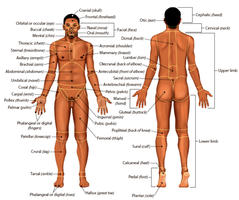
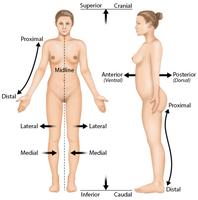
The anatomical position is the standard reference for describing body locations and relationships. The body stands upright, feet together, eyes forward, arms at the sides, and palms facing forward.

Directional and Regional Terms
Directional terms describe the location of body parts relative to each other, while regional terms specify particular areas of the body.
Directional terms: Superior, inferior, anterior, posterior, medial, lateral, proximal, distal.
Regional terms: Specific body regions (e.g., cranial, thoracic, abdominal).

Planes of Section
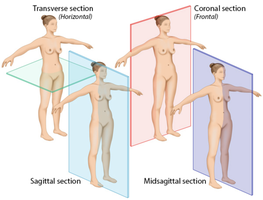
Body planes are used to divide the body into sections for anatomical study.
Transverse (horizontal) plane: Divides body into upper and lower sections.
Frontal (coronal) plane: Divides body into anterior and posterior sections.
Sagittal plane: Divides body into left and right sections.
Midsagittal plane: Divides body into equal left and right sections at the midline.

Body Cavities and Membranes
Body Cavities
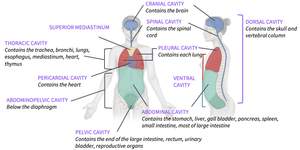
Body cavities are spaces within the body that house groups of organs. They are classified as dorsal (posterior) and ventral (anterior) cavities, each with subdivisions.
Dorsal cavity: Contains the cranial and spinal cavities.
Ventral cavity: Contains the thoracic and abdominopelvic cavities.
Thoracic cavity: Contains the heart and lungs.
Abdominal cavity: Contains digestive organs.
Pelvic cavity: Contains reproductive and urinary organs.

Serous Membranes
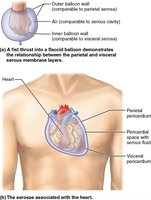
Serous membranes line body cavities and cover organs, providing lubrication and reducing friction. They consist of parietal (lining cavity walls) and visceral (covering organs) layers.
Regions and Quadrants
Body cavities can be further subdivided into regions and quadrants for clinical and anatomical reference.
Regions: Nine regions used for anatomical study.
Quadrants: Four quadrants used in clinical practice (e.g., lower right quadrant pain may indicate appendicitis).
Other Body Cavities
Oral and digestive cavities
Nasal cavity
Orbital cavities
Middle ear cavities
Synovial cavities
Summary Table: Levels of Biological Organization
Level | Description | Example |
|---|---|---|
Chemical | Atoms combine to form molecules | Water, proteins |
Cellular | Molecules form cells | Muscle cell |
Tissue | Groups of similar cells | Muscle tissue |
Organ | Tissues combine to form organs | Bladder |
Organ System | Organs work together | Urinary system |
Organism | All organ systems combine | Human body |
Summary Table: Feedback Mechanisms
Type | Response | Example |
|---|---|---|
Negative Feedback | Reduces original stimulus | Body temperature, blood glucose |
Positive Feedback | Enhances original stimulus | Labor contractions, blood clotting |
Key Equations
Metabolism
Metabolism encompasses all chemical reactions in the body:
Conclusion
Understanding the orientation and organizing principles of the human body is foundational for further study in anatomy and physiology. Mastery of terminology, structural organization, and homeostatic mechanisms is essential for describing, analyzing, and maintaining human health.
