 뒤로
뒤로The Cell: Structure, Function, and Processes in Human Anatomy & Physiology
스터디 가이드 - 스마트 노트
 자료에 맞춘 맞춤형 노트, 핵심 정의, 예시, 맥락을 확장해 제공합니다.
The Cell
Basic Processes of Cells
Cells are the fundamental units of life, performing essential processes to maintain homeostasis and support bodily functions.
Cell Metabolism: Chemical reactions within cells, including anabolic (building up), catabolic (breaking down), and oxidation-reduction reactions.
Substance Transport: Movement of compounds into, out of, or within cells.
Communication: Cells interact with their environment and other cells via signaling mechanisms.
Cell Reproduction: Most cells undergo division to produce new cells.
Overview of Cell Structure
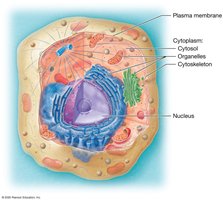
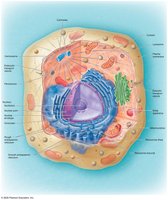
Most animal cells share three basic components: plasma membrane, cytoplasm, and nucleus. The cytoplasm includes cytosol, organelles, and cytoskeleton.
Plasma Membrane: Surrounds the cell, regulates transport, provides structural support, and enables communication.
Cytoplasm: Contains cytosol (intracellular fluid), organelles, and cytoskeleton.
Nucleus: Houses DNA and is the site of RNA production.
Cell Size and Diversity
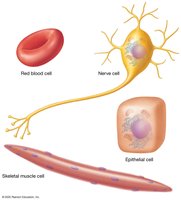
Cells vary greatly in size and appearance, allowing for specialized functions throughout the human body.
Examples: Red blood cells, nerve cells, epithelial cells, and skeletal muscle cells.
The Plasma Membrane
The Phospholipid Bilayer
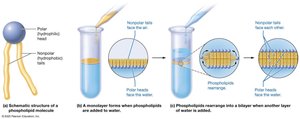
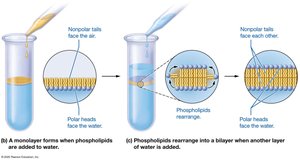
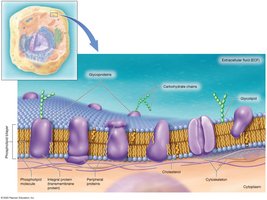
The plasma membrane is primarily composed of a phospholipid bilayer, forming a barrier between the extracellular fluid (ECF) and cytosol.
Hydrophilic (polar) heads: Face water.
Hydrophobic (nonpolar) tails: Repel water.
Phospholipids rearrange into two layers to exclude water from the fatty acid tails.
The Fluid Mosaic Model
The plasma membrane is a dynamic structure, with proteins, lipids, and carbohydrates moving within the bilayer, giving rise to the "fluid mosaic model." This fluidity is essential for membrane function.
Membrane Proteins
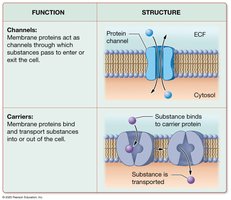
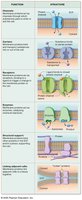
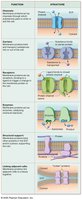
Membrane proteins are critical for cell function and are classified by location and function.
Integral proteins: Span the membrane; transmembrane if they reach both sides.
Peripheral proteins: Located on one side; may be anchored or float freely.
Functional types: Channels, carriers, receptors, enzymes, structural support, and linker proteins.
Other Membrane Components
Cholesterol: Stabilizes membrane structure during temperature changes.
Glycolipids and Glycoproteins: Carbohydrate chains attached to lipids or proteins; function in cell recognition.
Transport Across the Plasma Membrane
Passive Transport
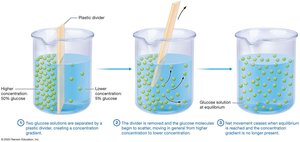
Passive transport does not require energy and relies on concentration gradients.
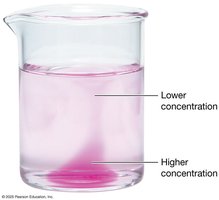
Diffusion: Movement of solute from high to low concentration.
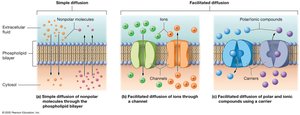
Simple Diffusion: Nonpolar solutes and gases pass directly through the bilayer.
Facilitated Diffusion: Polar or charged solutes cross via channel or carrier proteins.
Osmosis
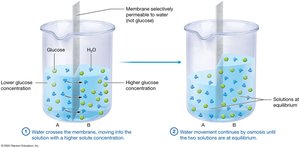
Osmosis is the movement of water across a selectively permeable membrane from lower to higher solute concentration.
Water crosses via aquaporins or between phospholipids.
Results in changes in fluid volume in compartments.
Tonicity
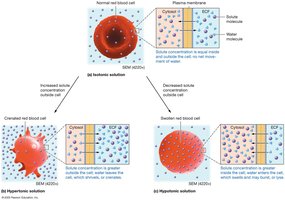
Tonicity compares solute concentrations and determines a solution's ability to cause osmosis.
Isotonic: No net water movement.
Hypertonic: Cell loses water and shrivels (crenate).
Hypotonic: Cell gains water, swells, and may rupture (lyse).
Active Transport
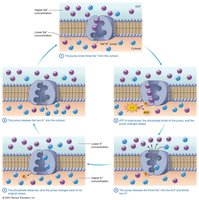
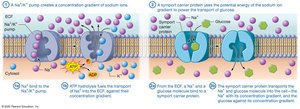
Active transport requires ATP to move solutes against their concentration gradient via carrier proteins called pumps.
Primary Active Transport: Direct use of ATP; e.g., sodium-potassium pump moves 3 Na+ out and 2 K+ in.
Secondary Active Transport: Uses gradient created by primary transport to move another substance.
Vesicular Transport
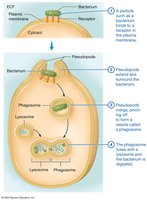
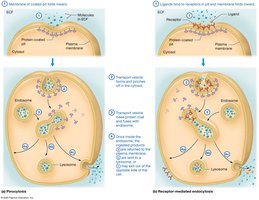
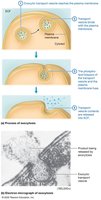
Large particles are transported via vesicles, requiring ATP.
Endocytosis: Bringing substances into the cell (phagocytosis, pinocytosis, receptor-mediated endocytosis).
Exocytosis: Releasing substances from the cell.
Transcytosis: Substance moves across the cell.
Cytoplasmic Organelles
Membrane-Enclosed Organelles
Organelles compartmentalize cellular functions for efficiency and protection.
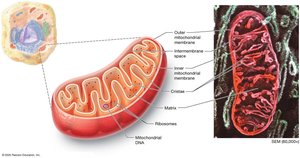
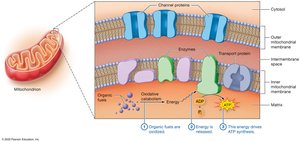
Mitochondria: ATP production; contain DNA, enzymes, and ribosomes.
Peroxisomes: Oxidize toxic substances, break down fatty acids, synthesize phospholipids.
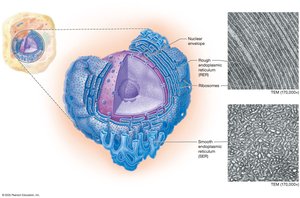
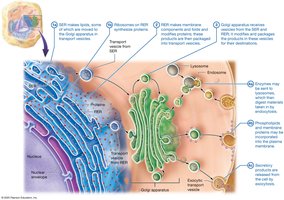
Endoplasmic Reticulum (ER): Rough ER (protein folding, export), Smooth ER (lipid synthesis, detoxification).
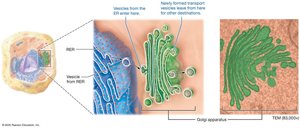
Golgi Apparatus: Modifies, sorts, and packages proteins and lipids.
Lysosomes: Digest macromolecules, degrade organelles, function in immunity.
The Cytoskeleton
Types of Filaments
The cytoskeleton provides structural support, movement, and specialized functions.
Actin Filaments (Microfilaments): Structural support, tension, movement (muscle contraction).
Intermediate Filaments: Mechanical strength, support nuclear membrane, unite cells.
Microtubules: Internal architecture, move organelles, form cilia and flagella.
The Nucleus
Structure and Function
The nucleus directs cellular activities and houses DNA, which contains genetic instructions for protein synthesis.
Nuclear Envelope: Double membrane with nuclear pores.
Chromatin: DNA and histone proteins; condenses into chromosomes during cell division.
Nucleolus: Assembles ribosomes.
Protein Synthesis
Transcription and Translation
Protein synthesis involves transcription (DNA to mRNA) and translation (mRNA to polypeptide).
Transcription: RNA polymerase creates mRNA from DNA template.
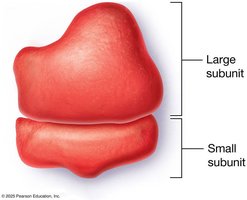
Translation: Ribosomes read mRNA and synthesize polypeptides using tRNA.
Posttranslational Modification: Folding and alteration of polypeptides to functional proteins.
The Cell Cycle
Phases of the Cell Cycle
The cell cycle is the series of events from cell formation to division, essential for growth, development, and tissue repair.
Interphase: Growth and preparation for division (G1, S, G2 phases).
S Phase: DNA replication via semiconservative mechanism.
M Phase: Mitosis (division of genetic material) and cytokinesis (division of cytoplasm).
Cell Cycle Control and Cancer
Cell division is regulated by checkpoints and signals. Uncontrolled division leads to tumor formation; cancerous tumors can invade other tissues (metastasis).
Additional info: This study guide covers the main concepts of Chapter 3: The Cell, including cell structure, membrane transport, organelles, cytoskeleton, nucleus, protein synthesis, and the cell cycle, with relevant images to reinforce understanding.
