 뒤로
뒤로The Cellular Level of Organization: Structure and Function of Cells
스터디 가이드 - 스마트 노트
 자료에 맞춘 맞춤형 노트, 핵심 정의, 예시, 맥락을 확장해 제공합니다.
The Cellular Level of Organization
Introduction to Cell Structure and Function
The cell is the fundamental unit of life, and understanding its structure and function is essential for comprehending how the human body operates. Cells maintain homeostasis, facilitate growth and repair, and respond to environmental changes through specialized organelles and processes.
Cell Types and Diversity
Prokaryotic vs. Eukaryotic Cells
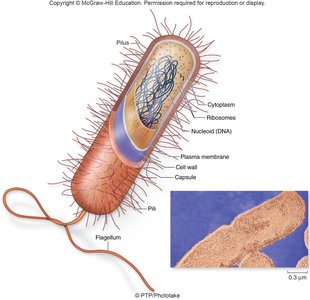
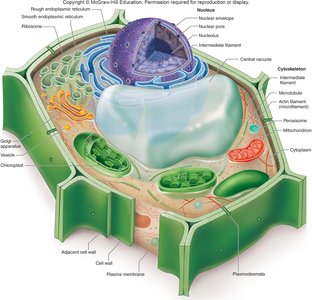
Cells are classified as prokaryotic (bacteria) or eukaryotic (animal and plant cells). Eukaryotic cells contain membrane-bound organelles, while prokaryotic cells lack these structures.
Prokaryotic cells: Simple structure, no nucleus, DNA in nucleoid region.
Eukaryotic cells: Complex structure, nucleus present, multiple organelles.
Cell diversity: Human cells vary in size, shape, and function, reflecting their specialized roles.
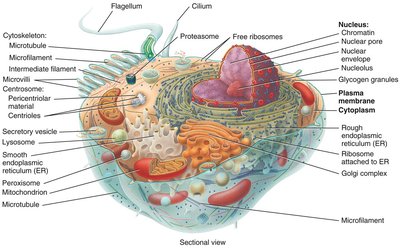
Major Parts of the Animal Cell
Plasma Membrane
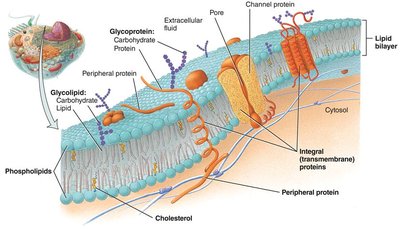
The plasma membrane, or plasmalemma, is a flexible barrier that separates the cell's internal environment from the external environment. It is composed of a lipid bilayer with embedded proteins and carbohydrates.
Integral (transmembrane) proteins: Span the membrane, function as channels, carriers, enzymes, or receptors.
Peripheral proteins: Loosely attached, provide structural support, act as enzymes or motor proteins.
Glycocalyx: Surface sugars important for cell-cell recognition.
Fluid mosaic model: Membrane components move freely, creating a dynamic structure.
Cytoplasm
The cytoplasm consists of cytosol (intracellular fluid) and organelles. It is the site of many metabolic reactions and provides structural support.
Cytosol: Gel-like solution containing water, proteins, salts, sugars.
Organelles: Specialized structures with distinct functions (see below).
Inclusions: Insoluble molecules such as glycogen granules, pigments, lipid droplets.
Nucleus
The nucleus is the largest organelle and contains the cell's genetic material. It directs cellular activities and protein synthesis.
Nuclear envelope: Double membrane with pores for transport.
Nucleolus: Site of ribosomal RNA synthesis and ribosome assembly.
Chromatin: DNA wrapped around histone proteins; condenses into chromosomes during cell division.
Membrane Transport Processes
Passive Transport
Passive transport moves substances across the plasma membrane without energy input. It relies on concentration gradients.
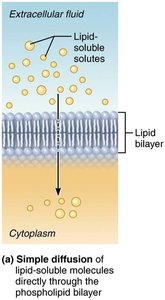
Simple diffusion: Movement of small, nonpolar molecules directly through the lipid bilayer.
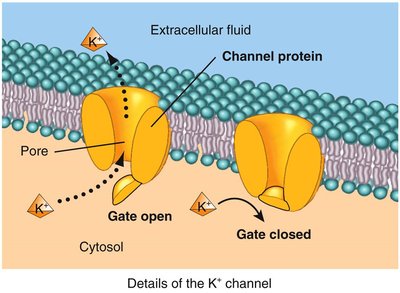
Facilitated diffusion: Movement of polar or charged molecules via channel or carrier proteins.
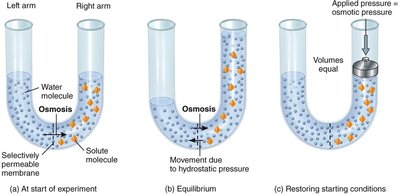
Osmosis: Movement of water across a selectively permeable membrane.
Active Transport
Active transport requires ATP to move substances against their concentration gradient.
Primary active transport: Direct use of ATP to pump ions (e.g., Na+/K+ pump).
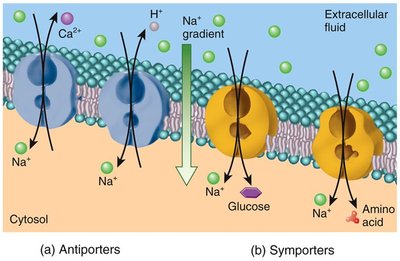
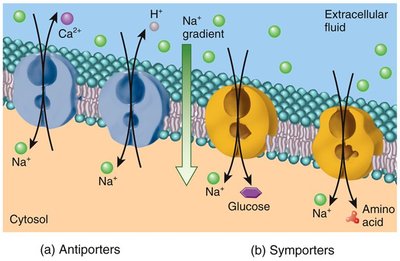
Secondary active transport: Uses ion gradients established by primary transport to move other substances (symporters and antiporters).
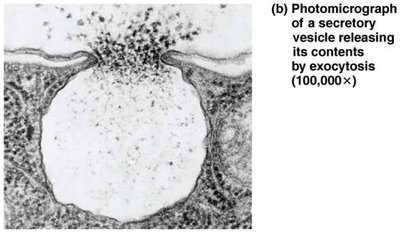
Vesicular transport: Movement of large molecules via endocytosis and exocytosis.
Cell Organelles and Their Functions
Endoplasmic Reticulum (ER)
Rough ER: Studded with ribosomes; synthesizes proteins for secretion, membrane, or lysosomes.
Smooth ER: Lacks ribosomes; involved in lipid metabolism, detoxification, and calcium storage.
Golgi Apparatus
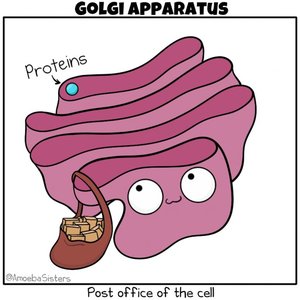
The Golgi apparatus modifies, sorts, and packages proteins and lipids for transport within or outside the cell. It acts as the cell's "post office." Proteins from the ER are processed and sent to their destinations via vesicles.
Secretory vesicles: Carry proteins for exocytosis.
Lysosomes: Digestive enzymes for intracellular digestion.
Membrane vesicles: Insert proteins/lipids into membranes.
Lysosomes and Peroxisomes
Lysosomes: Contain acid hydrolases for digestion of cellular debris, pathogens, and worn-out organelles.
Peroxisomes: Contain oxidases and catalase for detoxification and breakdown of fatty acids.
Mitochondria
Mitochondria are the "power plants" of the cell, producing ATP via aerobic respiration. They have a double membrane and their own DNA.
ATP production: Cellular energy for metabolic processes.
Cristae: Inner membrane folds increase surface area for respiration.
Ribosomes
Free ribosomes: Synthesize proteins for use in the cytosol.
Membrane-bound ribosomes: Attached to ER; synthesize proteins for membranes or export.
Cytoskeleton
The cytoskeleton is a network of protein filaments that provides structural support, facilitates movement, and organizes cellular contents.
Microfilaments: Actin filaments for cell shape and movement.
Intermediate filaments: Provide tensile strength.
Microtubules: Tubulin-based, involved in organelle movement and cell division.
Centrosome, Cilia, Flagella, and Microvilli
Centrosome: Microtubule organizing center, important for cell division.
Cilia: Move substances across cell surfaces.
Flagella: Propel cells (e.g., sperm).
Microvilli: Increase surface area for absorption.
Protein Synthesis
Transcription and Translation
Gene expression involves two main steps:
Transcription: DNA code is transcribed to mRNA in the nucleus.
Translation: mRNA is translated into a protein sequence at the ribosome.
Transcription phases: Initiation, elongation, termination.
Translation phases: Initiation, elongation, termination.
Cell Division
Cell Cycle and Mitosis
Cell division is essential for growth, repair, and reproduction. The cell cycle consists of interphase (G1, S, G2) and the mitotic phase (mitosis and cytokinesis).
Interphase: Cell growth, DNA replication, preparation for division.
Mitosis: Nuclear division (prophase, metaphase, anaphase, telophase).
Cytokinesis: Cytoplasmic division, forming two identical cells.
Meiosis
Meiosis is reproductive cell division, producing gametes with half the chromosome number of somatic cells.
Cellular Aging and Disorders
Aging
Cellular aging leads to decreased function, reduced cell numbers, and loss of tissue integrity.
Cancer
Cancer is characterized by uncontrolled cell growth and spread. Causes include carcinogens, oncogenes, and viruses. Treatments include surgery, chemotherapy, radiation, immunotherapy, and targeted therapies.
Summary Table: Cell Parts and Their Functions
Part | Description | Functions |
|---|---|---|
Plasma Membrane | Fluid mosaic lipid bilayer with proteins | Protects, mediates entry/exit, cell communication |
Cytoplasm | Cytosol and organelles | Site of metabolic reactions |
Nucleus | Envelope, nucleoli, chromatin | Genetic control, ribosome production |
Ribosome | Protein and rRNA, free or bound | Protein synthesis |
ER | Rough (ribosomes), smooth (no ribosomes) | Protein/lipid synthesis, detoxification |
Golgi Apparatus | Stacked cisterns | Modifies, sorts, packages proteins/lipids |
Lysosome | Digestive enzymes | Intracellular digestion |
Peroxisome | Oxidases, catalase | Detoxification, fatty acid metabolism |
Mitochondrion | Double membrane, cristae | ATP production |
Cytoskeleton | Microfilaments, intermediate filaments, microtubules | Structure, movement |
Summary Table: Comparison of Transport Types
Transport Process | Description | Substances Transported |
|---|---|---|
Simple Diffusion | Passive movement through lipid bilayer | Nonpolar, hydrophobic solutes |
Facilitated Diffusion | Passive movement via channels/carriers | Polar/charged solutes |
Osmosis | Passive movement of water | Water |
Active Transport | ATP-driven movement against gradient | Ions, polar/charged solutes |
Vesicular Transport | Transport via vesicles (endocytosis/exocytosis) | Large molecules, particles |
