 뒤로
뒤로The Chemical Level of Organization: Foundations for Anatomy & Physiology
스터디 가이드 - 스마트 노트
 자료에 맞춘 맞춤형 노트, 핵심 정의, 예시, 맥락을 확장해 제공합니다.
The Chemical Level of Organization
Chemistry and Matter
Chemistry is the science that studies the structure of matter, which is anything that occupies space and has mass. Matter is composed of atoms, the smallest stable units, which combine to form chemicals with unique characteristics. These chemical properties ultimately determine physiological processes at the molecular and cellular levels.
Atoms and Atomic Structure
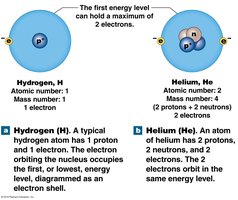
Atoms consist of three main subatomic particles:
Protons: Positively charged, 1 mass unit, located in the nucleus.
Neutrons: Neutral charge, 1 mass unit, located in the nucleus.
Electrons: Negatively charged, very low mass, found in the electron cloud surrounding the nucleus.
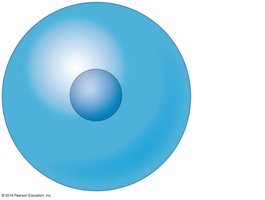
The atomic number is the number of protons in an atom and determines the element. The nucleus contains protons and neutrons, while the electron cloud contains electrons arranged in shells or energy levels.
Principal Elements in the Human Body
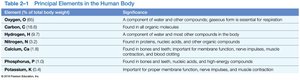
The human body is composed of several principal elements, each with specific physiological roles:
Element (% of body weight) | Significance |
|---|---|
Oxygen (O, 65.0) | Component of water and other compounds; essential for respiration |
Carbon (C, 18.6) | Found in all organic molecules |
Hydrogen (H, 9.7) | Component of water and most other compounds in the body |
Nitrogen (N, 3.2) | Found in proteins, nucleic acids, and other organic compounds |
Calcium (Ca, 1.8) | Found in bones and teeth; important for membrane function, nerve impulses, muscle contraction, and blood clotting |
Phosphorus (P, 1.0) | Found in bones and teeth, nucleic acids, and high-energy compounds |
Potassium (K, 0.4) | Important for proper membrane function, nerve impulses, and muscle contraction |
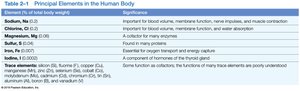
Element (% of body weight) | Significance |
|---|---|
Sodium (Na, 0.2) | Important for blood volume, membrane function, nerve impulses, and muscle contraction |
Chlorine (Cl, 0.2) | Important for blood volume, membrane function, and water absorption |
Magnesium (Mg, 0.06) | A cofactor for many enzymes |
Sulfur (S, 0.04) | Found in many proteins |
Iron (Fe, 0.007) | Essential for oxygen transport and energy capture |
Iodine (I, 0.0002) | A component of hormones of the thyroid gland |
Isotopes and Radioisotopes
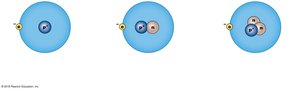
Isotopes are atoms of the same element with different numbers of neutrons, resulting in different mass numbers. Radioisotopes are unstable isotopes that emit radiation and are used in medical diagnostics and treatments. For example, Technetium-99m is used in bone scans, and Iodine-123 is used for thyroid imaging.
Atomic Weight and Molarity
The atomic weight (atomic mass) is the average mass of all isotopes of an element, found as a decimal on the Periodic Table. Molarity is the number of moles of solute per liter of solution, important for physiological concentrations (e.g., blood glucose).
Electrons and Energy Levels
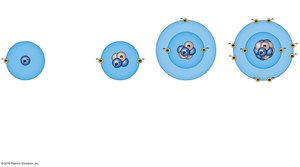
Electrons occupy energy levels (shells) around the nucleus. The first shell holds up to 2 electrons, while the second and third can each hold up to 8. The outermost shell, or valence shell, determines chemical bonding and reactivity. Atoms are most stable when their valence shell is full.
Molecules, Compounds, and Chemical Bonds
Chemical Bonds
Chemical bonds involve the sharing, gaining, or losing of electrons. The three major types are:
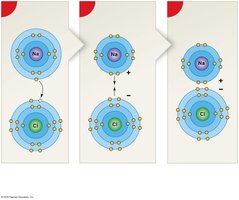
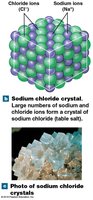
Ionic bonds: Formed when electrons are transferred from one atom to another, creating charged ions (cations and anions) that attract each other.
Covalent bonds: Formed when atoms share electrons. Can be single, double, or triple bonds depending on the number of shared electron pairs.
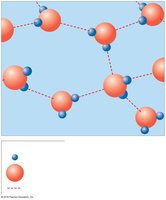
Hydrogen bonds: Weak attractions between a hydrogen atom (with a slight positive charge) and an electronegative atom (like oxygen or nitrogen) in another molecule.
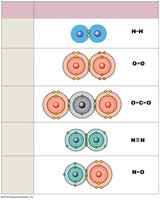
Polar and Nonpolar Covalent Bonds
In nonpolar covalent bonds, electrons are shared equally. In polar covalent bonds, electrons are shared unequally, resulting in partial charges (e.g., water molecules).
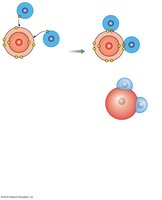
Hydrogen Bonds and Water Properties
Hydrogen bonds are responsible for many of water's unique properties, such as high surface tension and its role as a universal solvent.
States of Matter
Matter exists as solids (fixed shape and volume), liquids (fixed volume, variable shape), and gases (variable shape and volume). Biological examples include bone (solid), blood plasma (liquid), and oxygen (gas).
Chemical Reactions
Types of Chemical Reactions
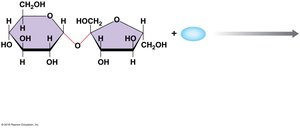
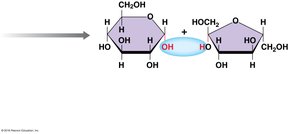
Decomposition (Catabolism): Breaks chemical bonds (e.g., hydrolysis).
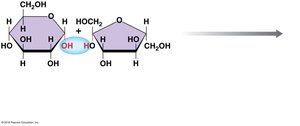
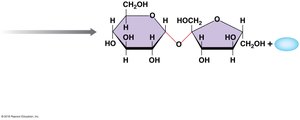
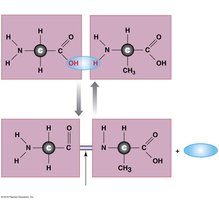
Synthesis (Anabolism): Forms chemical bonds (e.g., dehydration synthesis).
Reversible reactions: Can proceed in both directions to reach equilibrium.
Enzymes and Activation Energy
Enzymes are protein catalysts that lower the activation energy required for biochemical reactions, allowing them to proceed rapidly at body temperature.
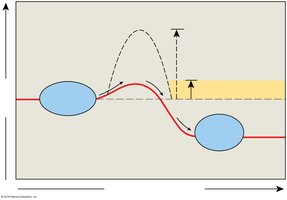
Inorganic and Organic Compounds
Inorganic Compounds
Inorganic compounds do not contain both carbon and hydrogen. Examples include water, oxygen, carbon dioxide, acids, and bases.
Organic Compounds
Organic compounds contain both carbon and hydrogen and include carbohydrates, proteins, lipids, and nucleic acids. These molecules are typically larger and more complex than inorganic compounds.
Properties of Water
Water's Biological Importance
Water accounts for up to two-thirds of body weight and has several critical properties:
High heat capacity: Stabilizes body temperature.
Lubrication: Reduces friction between organs.
Reactivity: Participates in many chemical reactions.
Solvent properties: Dissolves many substances, forming solutions.
Aqueous Solutions and Hydration Spheres
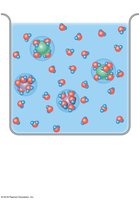
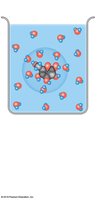
Water's polarity allows it to dissociate ionic compounds and surround ions or polar molecules with hydration spheres, keeping them in solution.
Electrolytes
Electrolytes are inorganic substances that dissociate in water to release ions, which are essential for nerve impulses, muscle contraction, and other physiological functions. Imbalances can disrupt vital processes.
Hydrophilic and Hydrophobic Compounds
Hydrophilic: Water-loving; includes ions and polar molecules that interact with water.
Hydrophobic: Water-fearing; includes nonpolar molecules like fats and oils that do not interact with water.
pH and Homeostasis
pH Scale
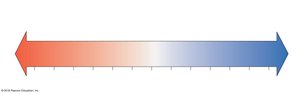
The pH scale measures the concentration of hydrogen ions in a solution, ranging from 0 (acidic) to 14 (basic). Human blood pH is tightly regulated between 7.35 and 7.45. Deviations can disrupt cellular functions and enzyme activities.
Acids, Bases, and Buffers
Acids: Release hydrogen ions (H+) in solution (e.g., HCl).
Bases: Remove hydrogen ions from solution (e.g., NaOH).
Salts: Ionic compounds that do not affect H+ or OH- concentrations directly.
Buffers: Compounds that stabilize pH by removing or replacing H+ ions; the carbonic acid–bicarbonate system is crucial in humans.
Macromolecules: Monomers and Polymers
Carbohydrates
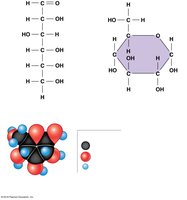
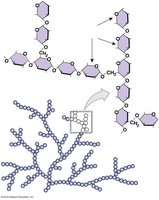
Carbohydrates are organic molecules composed of carbon, hydrogen, and oxygen. They serve as energy sources and structural components. Monosaccharides (e.g., glucose) are the simplest form, while disaccharides (e.g., sucrose) and polysaccharides (e.g., glycogen) are formed by dehydration synthesis.
Lipids
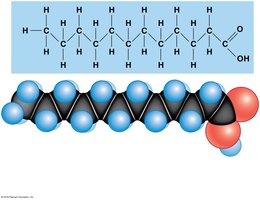
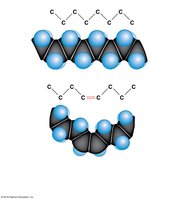
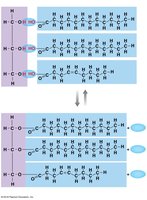
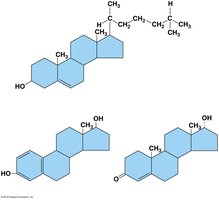
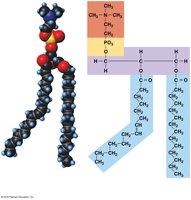
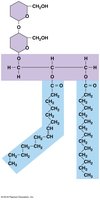
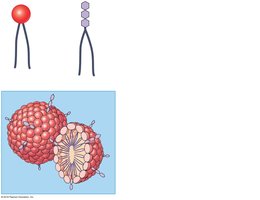
Lipids are hydrophobic molecules including fatty acids, eicosanoids, glycerides, steroids, phospholipids, and glycolipids. They function as energy reserves, structural components, and signaling molecules.
Proteins
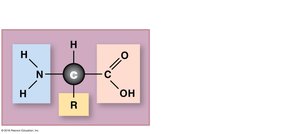
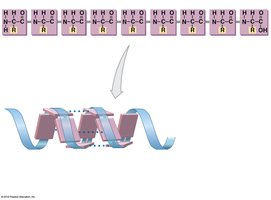
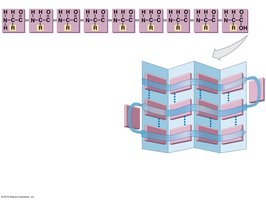
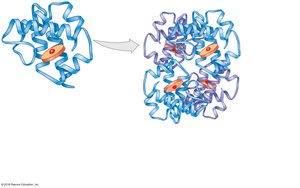
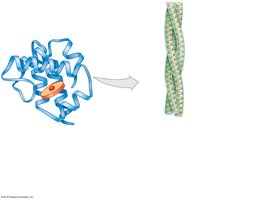
Proteins are the most abundant organic molecules, composed of amino acids. They serve structural, enzymatic, transport, regulatory, and defensive roles. Protein structure is organized into four levels: primary, secondary, tertiary, and quaternary.
Enzyme Function
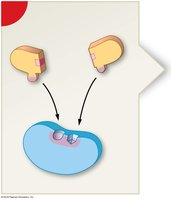
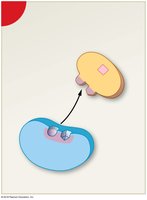
Enzymes are specific protein catalysts that accelerate chemical reactions by lowering activation energy. They bind substrates at their active site, facilitate the reaction, and release products unchanged.
Nucleic Acids
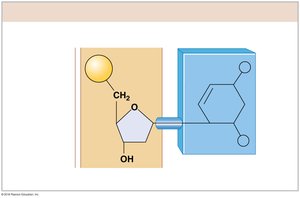
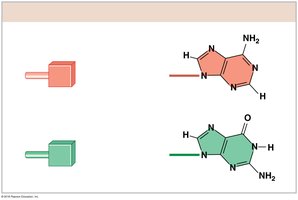
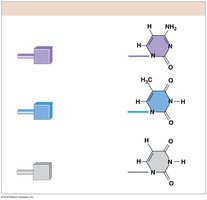
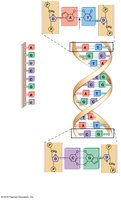
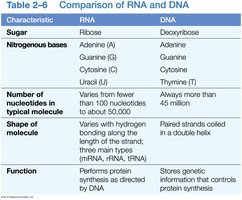
Nucleic acids (DNA and RNA) store and process genetic information. They are polymers of nucleotides, each consisting of a sugar, phosphate group, and nitrogenous base (purine or pyrimidine).
High-Energy Compounds
High-energy compounds, such as ATP (adenosine triphosphate), store and transfer energy within cells. ATP is generated by adding a phosphate group to ADP (adenosine diphosphate) in a process called phosphorylation. The breakdown of ATP releases energy for cellular processes.
Additional info: This summary integrates foundational chemical concepts essential for understanding anatomy and physiology, focusing on atomic structure, chemical bonding, water properties, macromolecules, and energy transfer in biological systems.
