 뒤로
뒤로The Chemical Level of Organization: Study Notes for Anatomy & Physiology
스터디 가이드 - 스마트 노트
 자료에 맞춘 맞춤형 노트, 핵심 정의, 예시, 맥락을 확장해 제공합니다.
The Chemical Level of Organization
Introduction to Chemistry in Anatomy & Physiology
Chemistry forms the foundation for understanding the structure and function of the human body at the molecular level. Matter, composed of atoms, interacts through chemical reactions to create the molecules essential for life.
Matter: Anything that occupies space and has mass.
Chemistry: The science of matter's structure and interactions.
Atoms and Atomic Structure
Subatomic Particles and Atomic Structure
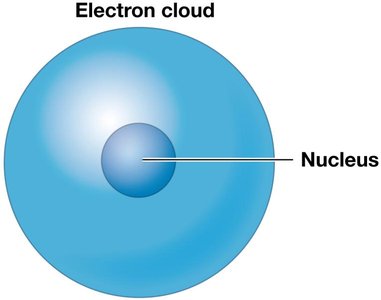
An atom is the smallest stable unit of matter, composed of subatomic particles: protons, neutrons, and electrons. The arrangement of these particles determines atomic properties and reactivity.
Protons: Positively charged, found in the nucleus.
Neutrons: Neutral, found in the nucleus.
Electrons: Negatively charged, orbit the nucleus in the electron cloud.
Atomic number: Number of protons in an atom.
Electron shell: Representation of electron cloud; shells hold specific numbers of electrons.
Elements and Isotopes
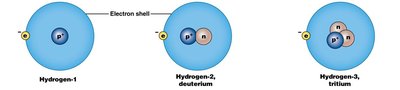
Elements are pure substances composed of one type of atom. Isotopes are variants of elements with different numbers of neutrons.
Element: Cannot be broken down by ordinary means.
Isotope: Same element, different neutron count.
Radioisotope: Unstable isotope used in diagnostics.
Electron Shells and Energy Levels
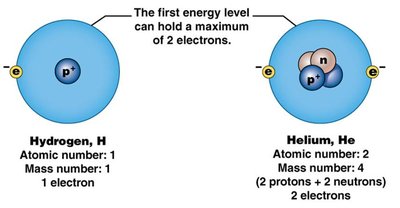
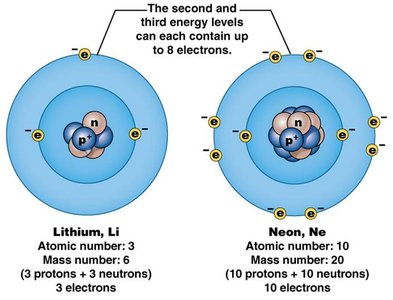
Electrons occupy energy levels (shells) around the nucleus. The outermost shell, or valence shell, determines chemical reactivity.
First shell: up to 2 electrons.
Second and third shells: up to 8 electrons each.
Valence shell: Outermost shell, key to chemical properties.
Molecules and Compounds
Chemical Bonds
Atoms combine to form molecules and compounds through chemical bonds. The type of bond affects molecular properties and biological function.
Molecule: Two or more atoms joined by shared electrons.
Compound: Two or more atoms of different elements.
Chemical bond: Force holding atoms together.
Ionic Bonds
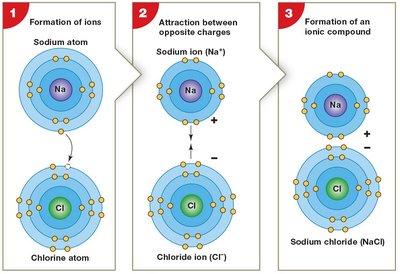
Ionic bonds form between atoms that transfer electrons, resulting in charged ions (cations and anions) that attract each other.
Cation: Positively charged ion (electron donor).
Anion: Negatively charged ion (electron acceptor).
Covalent Bonds
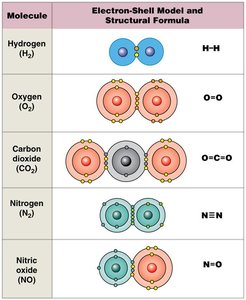
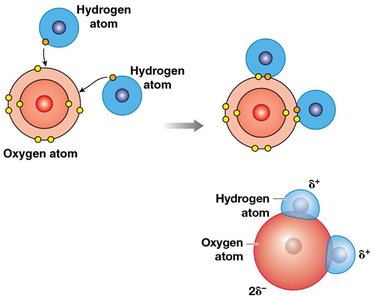
Covalent bonds involve the sharing of electrons between atoms. They can be single, double, or triple bonds, and may be polar or nonpolar.
Single bond: One pair of electrons shared.
Double bond: Two pairs shared.
Triple bond: Three pairs shared.
Nonpolar: Equal sharing.
Polar: Unequal sharing, creating partial charges.
Hydrogen Bonds
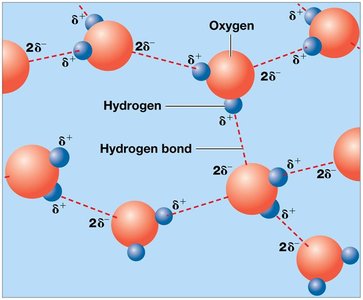
Hydrogen bonds are weak attractions between the partial positive charge of hydrogen and partial negative charges of other atoms (O, N, F). They are crucial for water's properties and the structure of DNA.
Responsible for water's high surface tension.
Stabilize large molecules like DNA.
Chemical Reactions
Types of Chemical Reactions
Chemical reactions involve the formation or breaking of bonds. They are essential for metabolism and cellular function.
Reactants: Substances entering a reaction.
Products: Substances produced by a reaction.
Metabolism: All chemical reactions in the body.
Decomposition and Synthesis Reactions
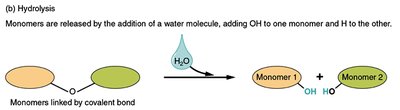
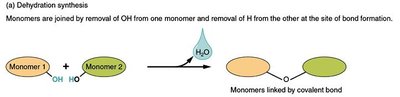
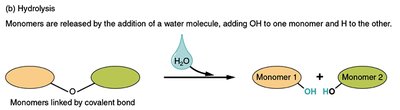
Decomposition reactions break molecules into smaller fragments (catabolism), often releasing energy. Synthesis reactions build larger molecules from smaller ones (anabolism), requiring energy.
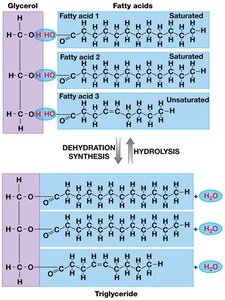
Hydrolysis: Decomposition using water.
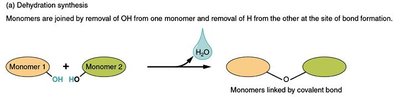
Dehydration synthesis: Synthesis producing water.
Reversible and Exchange Reactions
Many biological reactions are reversible, allowing dynamic equilibrium. Exchange reactions rearrange molecular components.
Reversible:
Exchange:


Enzymes and Metabolism
Role of Enzymes
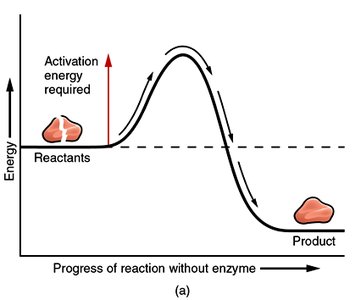
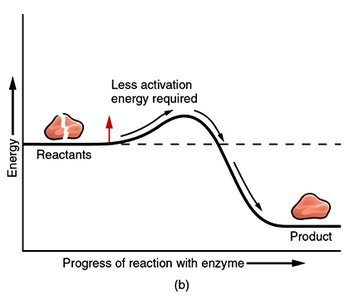
Enzymes are biological catalysts that lower activation energy, speeding up reactions without being consumed. Each step in metabolic pathways is controlled by specific enzymes.
Activation energy: Energy required to start a reaction.
Catalyst: Substance that increases reaction rate.
Inorganic and Organic Compounds
Inorganic Compounds
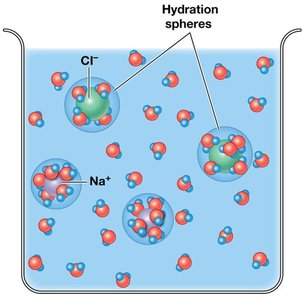
Inorganic compounds lack carbon-hydrogen bonds and include water, salts, acids, and bases. They are essential for physiological processes.
Electrolytes: Inorganic substances whose ions conduct electricity.
Ionization: Dissociation into ions in water.
Organic Compounds
Organic compounds contain carbon and hydrogen and include carbohydrates, lipids, proteins, and nucleic acids. They are the building blocks of life.
Water and pH
Chemical Properties of Water
Water is vital for life due to its polarity, high heat capacity, and solvent properties. It participates in many chemical reactions.
pH and Homeostasis
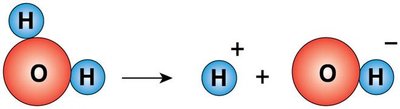
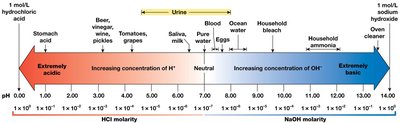
pH measures hydrogen ion concentration. Maintaining pH is critical for physiological function.
Neutral pH: 7.0 (pure water).
Acidic: pH < 7, higher H+ concentration.
Basic (alkaline): pH > 7, higher OH- concentration.
Buffers
Buffers stabilize pH by binding or releasing hydrogen ions. The carbonic acid-bicarbonate system is crucial in blood.
Blood pH: 7.35–7.45.
Buffers prevent drastic pH changes.

Acids, Bases, and Salts
Physiological Roles
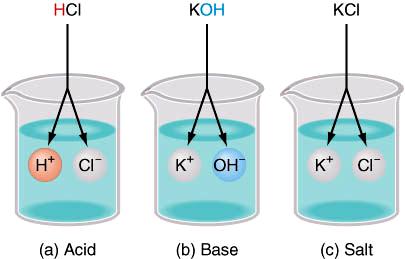
Acids, bases, and salts dissociate in water to form ions, affecting cellular function and homeostasis.
Acids: Release H+ ions.
Bases: Release OH- ions.
Salts: Release cations and anions other than H+ or OH-.
Carbohydrates
Structure and Function
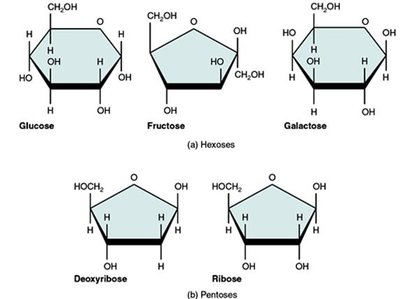
Carbohydrates are organic macromolecules composed of C, H, and O in a 1:2:1 ratio. They are the body's primary energy source.
Monosaccharides: Simple sugars (glucose, fructose, galactose).
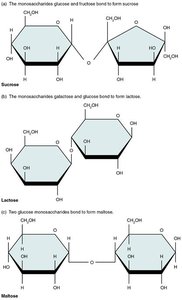
Disaccharides: Two monosaccharides joined (sucrose, lactose, maltose).
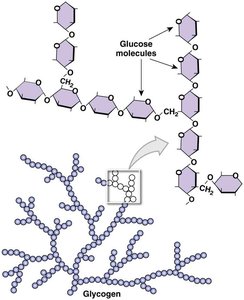
Polysaccharides: Polymers of monosaccharides (glycogen, starch, cellulose).


Lipids
Structure and Function
Lipids are hydrophobic organic molecules, mainly composed of C and H. They serve as structural components, energy storage, and signaling molecules.
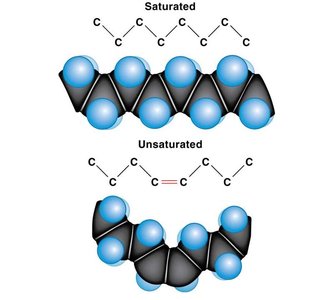
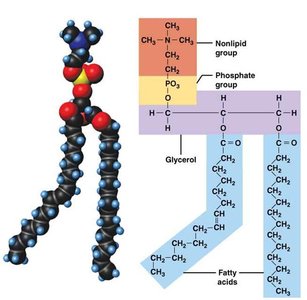
Fatty acids: Long hydrocarbon chains with a carboxyl group.
Saturated: No double bonds.
Unsaturated: One or more double bonds.
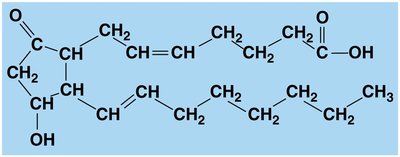
Eicosanoids: Derived from arachidonic acid, involved in signaling.
Glycerides: Fatty acids attached to glycerol (triglycerides).
Steroids: Four-ring structure (cholesterol, hormones).
Phospholipids: Structural lipids with hydrophilic heads and hydrophobic tails.
Proteins
Structure and Function
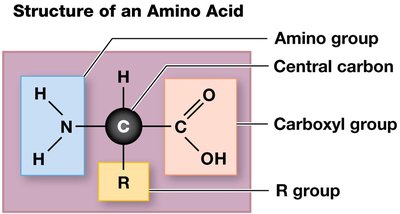
Proteins are polymers of amino acids and are the most abundant organic molecules in the body. They perform structural, regulatory, and catalytic functions.
Amino acids: Monomers with a central carbon, amino group, carboxyl group, and R group.
Peptide bond: Links amino acids via dehydration synthesis.
Polypeptide: Long chain of amino acids.
Levels of Protein Structure
Primary: Sequence of amino acids.
Secondary: Alpha helix or beta sheet from hydrogen bonding.
Tertiary: 3D folding from R group interactions.
Quaternary: Multiple polypeptides forming a complex.
Protein Function and Enzymes
Protein shape determines function. Enzymes are proteins that catalyze reactions, exhibiting specificity, saturation limits, and regulation. Denaturation disrupts function.
Nucleic Acids
Structure and Function
Nucleic acids store and process genetic information. They are polymers of nucleotides, each containing a pentose sugar, phosphate group, and nitrogenous base.
DNA: Double-stranded, bases A, T, C, G.
RNA: Single-stranded, bases A, U, C, G.
High-Energy Compounds
ATP and Energy Storage
High-energy compounds, such as ATP, store and release energy for cellular processes. ATP is formed by phosphorylation and broken down by ATPase.
AMP: Adenosine monophosphate.
ADP: Adenosine diphosphate.
ATP: Adenosine triphosphate, main energy carrier.
Summary Table: Major Elements in the Human Body
Element | % Body Weight | Significance |
|---|---|---|
Oxygen (O) | 65 | Component of water, essential for respiration |
Carbon (C) | 18.6 | Found in all organic molecules |
Hydrogen (H) | 9.7 | Component of water and most compounds |
Nitrogen (N) | 3.2 | Found in proteins, nucleic acids |
Calcium (Ca) | 1.8 | Bones, teeth, nerve impulses, muscle contraction |
Phosphorus (P) | 1.0 | Bones, teeth, nucleic acids, high-energy compounds |
Potassium (K) | 0.4 | Membrane function, nerve impulses, muscle contraction |
Additional info: These notes expand on brief lecture points to provide a comprehensive overview of the chemical level of organization, suitable for exam preparation in Anatomy & Physiology.
