 뒤로
뒤로The Endocrine System: Structure, Function, and Regulation
스터디 가이드 - 스마트 노트
 자료에 맞춘 맞춤형 노트, 핵심 정의, 예시, 맥락을 확장해 제공합니다.
The Endocrine System
Overview of the Endocrine System
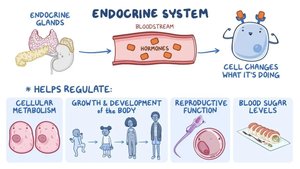
The endocrine system is a major regulatory system of the body that works alongside the nervous system to coordinate and integrate the activities of body cells. It influences metabolic activities by means of hormones transported in the blood, with responses that are generally slower but longer-lasting than those of the nervous system.
Key Functions: Reproduction, growth and development, maintenance of electrolyte, water, and nutrient balance, regulation of cellular metabolism and energy balance, and mobilization of body defenses.
Endocrinology: The study of hormones and endocrine organs.
Comparison of Nervous and Endocrine Systems
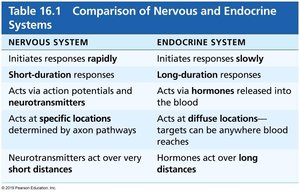
The nervous and endocrine systems are the two main control systems of the body, but they differ in their mechanisms and effects.
Nervous System | Endocrine System | |
|---|---|---|
Response Time | Rapid | Slow |
Duration | Short | Long |
Signal Type | Action potentials and neurotransmitters | Hormones in blood |
Location of Action | Specific locations (axon pathways) | Diffuse locations (anywhere blood reaches) |
Distance of Action | Short distances | Long distances |
Endocrine vs. Exocrine Glands
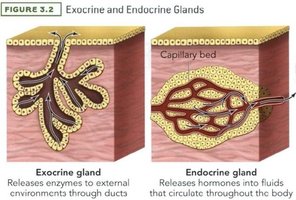
Glands in the body can be classified as either endocrine or exocrine based on their mode of secretion.
Exocrine glands: Produce nonhormonal substances (e.g., sweat, saliva) and have ducts to carry secretions to membrane surfaces.
Endocrine glands: Produce hormones and lack ducts; hormones are released into surrounding tissue fluid and then enter the bloodstream.
Major Endocrine Organs
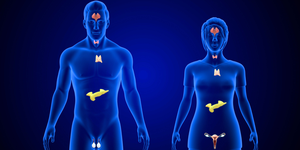
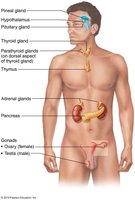
The major endocrine organs include the pituitary, thyroid, parathyroid, adrenal, and pineal glands. The hypothalamus is considered a neuroendocrine organ. Some organs, such as the pancreas, gonads, and placenta, have both endocrine and exocrine functions. Other tissues and organs, including adipose cells, thymus, and cells in the walls of the small intestine, stomach, kidneys, and heart, also produce hormones.
Chemical Messengers of the Endocrine System
The endocrine system uses several types of chemical messengers:
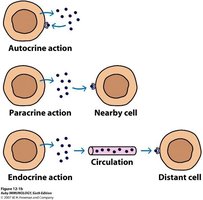
Hormones: Long-distance chemical signals that travel in blood or lymph to target cells.
Autocrines: Chemicals that exert effects on the same cells that secrete them.
Paracrines: Locally acting chemicals that affect cells other than those that secrete them.
Hormone Structure and Mechanisms of Action
Chemical Classes of Hormones
Hormones are classified based on their chemical structure, which determines their mechanism of action:
Amino acid–based hormones (water-soluble): Includes amino acid derivatives, peptides, and proteins.
Steroid hormones (lipid-soluble): Synthesized from cholesterol; includes gonadal and adrenocortical hormones.
Eicosanoids: Derived from fatty acids (arachidonic acid); act mainly as paracrines (e.g., prostaglandins, leukotrienes).
Hormone Receptors and Mechanisms
Hormones act through specific receptors, and their mechanism of action depends on their solubility:
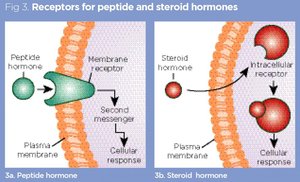
Water-soluble hormones: Bind to receptors on the plasma membrane and act through second messenger systems (e.g., cyclic AMP).
Lipid-soluble hormones: Diffuse through the plasma membrane, bind to intracellular receptors, and directly activate genes.
Cyclic AMP Second-Messenger Mechanism (Water-Soluble Hormones)
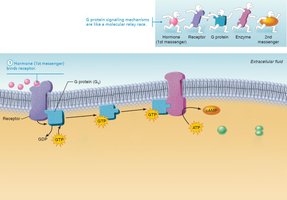
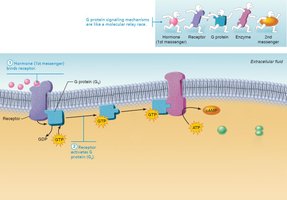
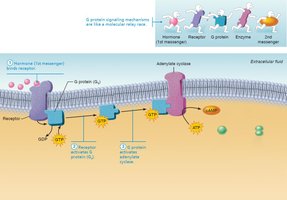
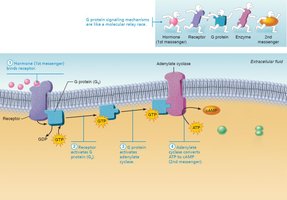
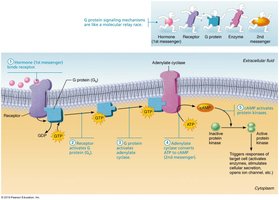
Water-soluble hormones (e.g., most amino acid–based hormones) use the cyclic AMP (cAMP) pathway to exert their effects:
Hormone binds to receptor on the cell membrane.
Receptor activates a G protein.
G protein activates adenylate cyclase.
Adenylate cyclase converts ATP to cAMP (the second messenger).
cAMP activates protein kinases, which trigger cellular responses.
Direct Gene Activation (Lipid-Soluble Hormones)
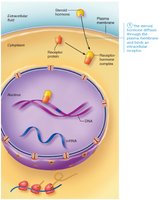
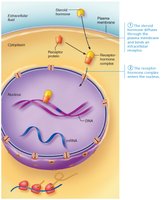
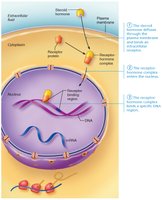
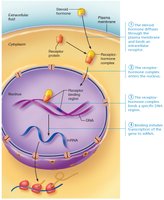
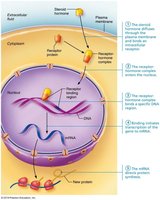
Lipid-soluble hormones (e.g., steroid and thyroid hormones) act by entering target cells and binding to intracellular receptors, which then directly activate specific genes.
Steroid hormone diffuses through the plasma membrane and binds to an intracellular receptor.
The receptor-hormone complex enters the nucleus and binds to a specific DNA region.
This binding initiates transcription of the gene to mRNA.
The mRNA directs protein synthesis, leading to the cellular response.
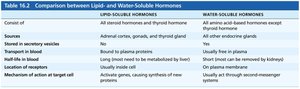
Comparison of Lipid- and Water-Soluble Hormones
Lipid-Soluble Hormones | Water-Soluble Hormones | |
|---|---|---|
Consist of | All steroid hormones and thyroid hormone | All amino acid–based hormones except thyroid hormone |
Source | Adrenal cortex, gonads, thyroid gland | All other endocrine glands |
Transport in blood | Bound to plasma proteins | Usually free in plasma |
Half-life in blood | Long (most need to be metabolized by liver) | Short (most removed by kidneys) |
Location of receptor | Usually inside cell | On plasma membrane |
Mechanism of action at target cell | Activate genes, causing synthesis of new proteins | Usually act through second-messenger systems |
Regulation of Hormone Release
Endocrine Gland Stimuli
Hormone release is regulated by three main types of stimuli:
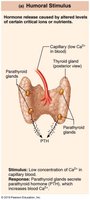
Humoral stimuli: Changing blood levels of ions and nutrients directly stimulate hormone secretion (e.g., low blood Ca2+ stimulates parathyroid hormone release).
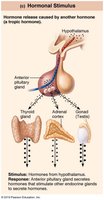
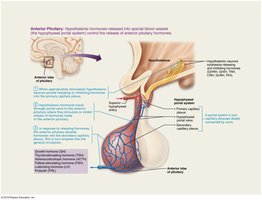
Hormonal stimuli: Hormones stimulate other endocrine organs to release their hormones (e.g., hypothalamic hormones stimulate anterior pituitary hormones).
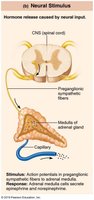
Neural stimuli: Nerve fibers stimulate hormone release (e.g., sympathetic nervous system stimulates adrenal medulla to secrete catecholamines).
Feedback Mechanisms
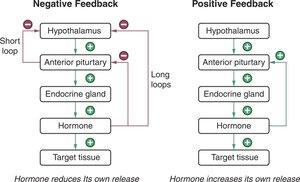
Blood levels of hormones are controlled primarily by negative feedback systems, which maintain hormone levels within a narrow, desirable range. In some cases, positive feedback mechanisms can occur (e.g., oxytocin during childbirth).
Target Cell Specificity and Hormone Interactions
Target Cell Specificity
Hormones affect only target cells that have specific receptors for them. The activation of target cells depends on:
Blood levels of the hormone
Relative number of receptors on/in the target cell
Affinity (strength) of binding between receptor and hormone
Cells can adjust their sensitivity to hormones by up-regulating (increasing receptor number) or down-regulating (decreasing receptor number) in response to hormone levels.
Hormone Interactions at Target Cells
Permissiveness: One hormone cannot exert its effects without another hormone being present (e.g., reproductive hormones need thyroid hormone).
Synergism: More than one hormone produces the same effects, amplifying the response (e.g., glucagon and epinephrine both cause the liver to release glucose).
Antagonism: One or more hormones oppose the action of another hormone (e.g., insulin and glucagon).
Clinical Applications and Disorders
Diabetes Mellitus
Diabetes mellitus is a disorder of insulin secretion or action, resulting in high blood glucose levels. There are two main types:
Type 1 Diabetes Mellitus: Due to hyposecretion of insulin (autoimmune destruction of beta cells).
Type 2 Diabetes Mellitus: Due to hypoactivity of insulin (insulin resistance).
Three cardinal signs of diabetes mellitus are polyuria (excessive urination), polydipsia (excessive thirst), and polyphagia (excessive hunger).
Additional info: The endocrine system is essential for maintaining homeostasis and regulating physiological processes throughout the body. Disorders of the endocrine system can have widespread effects due to the systemic nature of hormone action.
