 뒤로
뒤로The Human Body in Health and Disease: Structured Study Notes
스터디 가이드 - 스마트 노트
 자료에 맞춘 맞춤형 노트, 핵심 정의, 예시, 맥락을 확장해 제공합니다.
Anatomical Reference Systems
Body Planes
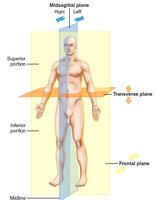
Anatomical reference systems are essential for describing the locations and relationships of structures within the human body. Body planes are imaginary lines used to divide the body into sections for descriptive purposes, aligned to the anatomical position.
Sagittal Plane: Divides the body into unequal left and right portions.
Midsagittal Plane: Divides the body into equal left and right halves.
Frontal (Coronal) Plane: Divides the body into anterior (front) and posterior (back) portions.
Transverse Plane: Divides the body into superior (upper) and inferior (lower) portions.
Body Direction Terms
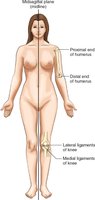
Body direction terms describe the relative location of sections of the body or organs, often using pairs of contrasting terms.
Ventral: Refers to the front or belly side (opposite of dorsal).
Dorsal: Refers to the back (opposite of ventral).
Cephalic: Toward the head (opposite of caudal).
Caudal: Toward the lower part of the body (opposite of cephalic).
Anterior: Situated in the front (opposite of posterior).
Posterior: Situated in the back (opposite of anterior).
Superior: Uppermost, above, or toward the head (opposite of inferior).
Inferior: Lowermost, below, or toward the feet (opposite of superior).
Proximal: Nearest the midline or beginning of a structure (opposite of distal).
Distal: Farthest from the midline or beginning of a structure (opposite of proximal).
Medial: Toward or nearer the midline (opposite of lateral).
Lateral: Toward the side, away from the midline (opposite of medial).
Major Body Cavities
Dorsal and Ventral Cavities
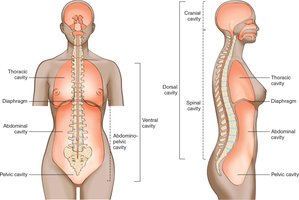
The body contains two major cavities: dorsal and ventral. These cavities house and protect internal organs.
Dorsal Cavity: Located along the back; contains the cranial cavity (brain) and spinal cavity (spinal cord).
Ventral Cavity: Located along the front; contains the thoracic cavity (chest), abdominal cavity (digestion), and pelvic cavity (reproductive and excretory organs).
Diaphragm: Muscle separating thoracic and abdominal cavities.
Abdominopelvic Cavity: Refers to abdominal and pelvic cavities as a single unit.
Regions and Quadrants of the Abdomen
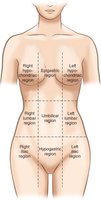
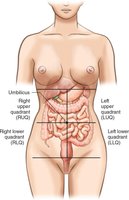
The abdomen and lower thorax are divided into regions and quadrants for descriptive and diagnostic purposes.
Nine Regions: Right/left hypochondriac, epigastric, right/left lumbar, umbilical, right/left iliac, hypogastric.
Four Quadrants: Right upper (RUQ), left upper (LUQ), right lower (RLQ), left lower (LLQ).
The Peritoneum
The peritoneum is a membrane lining the abdominal cavity and covering its organs.
Parietal Peritoneum: Lines the interior abdominal wall.
Mesentery: Double layer attaching intestines to the wall.
Visceral Peritoneum: Surrounds abdominal organs.
Retroperitoneal: Located behind the peritoneum.
Peritonitis: Inflammation of the peritoneum.
Structural Organization of the Body
Levels of Organization
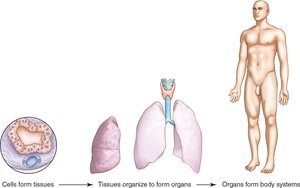
The human body is organized into four structural levels: cells, tissues, organs, and body systems. Each level builds upon the previous, forming increasingly complex structures.
Cell: Basic structural and functional unit.
Tissue: Group of similar cells performing a function.
Organ: Structure composed of tissues, performing specific functions.
Body System: Group of organs working together for a common purpose.
Cells
Cell Structure
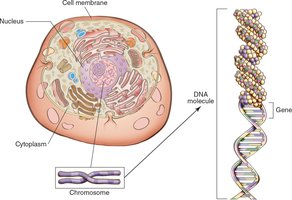
Cells are the basic units of life, specialized to form tissues and organs. Cytology is the study of cells.
Cell Membrane: Surrounds and protects cell contents.
Cytoplasm: Material within the membrane, excluding the nucleus.
Nucleus: Controls cell activities and division; surrounded by nuclear membrane.
Stem Cells
Stem cells are unspecialized cells capable of self-renewal and differentiation.
Adult Stem Cells: Maintain and repair tissues; undifferentiated among differentiated cells.
Embryonic Stem Cells: Can form any adult cell; harvested from cord blood or surplus embryos.
Stem Cell Therapy: Uses stem cells to heal injuries and treat diseases; risk of rejection if donor and recipient are not matched.
Genetics
Genes and Chromosomes
Genetics is the study of heredity and variation. Individuals inherit genes from both parents, which determine traits and disease risks.
Dominant Genes: Expressed if inherited from either parent (e.g., freckles, Huntington’s disease).
Recessive Genes: Expressed only if inherited from both parents (e.g., sickle cell anemia).
Genome: Complete set of genetic information.
Chromosomes: Genetic structures in the nucleus; somatic cells have 46 chromosomes (23 pairs), gametes have 23 single chromosomes.
DNA: Deoxyribonucleic acid; double helix structure, main component of chromosomes.
Genetic Mutation and Disorders
Mutations are changes in DNA sequence, which can be somatic (affecting the individual) or gametic (transmitted to offspring). Genetic disorders are caused by absent or defective genes.
Examples: Cystic fibrosis, Down syndrome (trisomy 21), Fragile X syndrome, hemophilia, muscular dystrophy, phenylketonuria (PKU).

Tissues
Types of Tissue
Tissues are groups of specialized cells performing specific functions. Histology is the study of tissues.
Epithelial Tissue: Covers internal and external surfaces; forms glands.
Connective Tissue: Supports and connects organs; includes bone, cartilage, adipose, blood, and lymph.
Muscle Tissue: Specialized for contraction and relaxation.
Nerve Tissue: Specialized for reaction to stimuli and conduction of electrical impulses.
Pathology of Tissue Formation
Aplasia: Incomplete tissue formation.
Hypoplasia: Underdevelopment of tissue.
Anaplasia: Change in cell structure and orientation.
Dysplasia: Abnormal development or growth.
Hyperplasia: Increase in cell number.
Hypertrophy: Increase in cell size.
Glands
Types of Glands
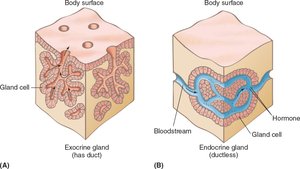
Glands are groups of specialized epithelial cells producing secretions.
Exocrine Glands: Secrete substances into ducts leading to organs or outside the body.
Endocrine Glands: Produce hormones released directly into the bloodstream; ductless.
Pathology of Glands
Adenitis: Inflammation of a gland.
Adenocarcinoma: Malignant tumor originating in glands.
Adenoma: Benign tumor in glandular tissue.
Adenosis: Disease or condition of a gland.
Body Systems and Related Organs
Overview of Body Systems
Body systems are groups of organs working together for specialized functions. Examples include:
Skeletal System: Bones, joints, cartilage.
Lymphatic System: Lymph, vessels, nodes.
Immune System: Tonsils, spleen, thymus, skin, blood cells.
Special Senses: Eyes, ears.
Integumentary System: Skin, sebaceous glands, sweat glands.
Cardiovascular System: Heart, arteries, veins, capillaries, blood.
Pathology
Study of Disease
Pathology is the study of disease, its causes, and effects on structure and function. Etiology is the study of disease causes.
Modes of Disease Transmission
Direct Transmission: Human-to-human contact.
Bloodborne Transmission: Infected blood or fluids.
Droplet Transmission: Respiratory droplets.
Indirect Contact Transmission: Contaminated surfaces.
Airborne Transmission: Pathogens in the air.
Food-borne/Waterborne Transmission: Contaminated food/water.
Vector-borne Transmission: Insect bites.
Types of Diseases
Organic Disorder: Detectable physical changes.
Functional Disorder: Symptoms without identifiable cause.
Iatrogenic Illness: Caused by medical treatment.
Idiopathic Disease: Unknown cause.
Infectious Disease: Caused by pathogens.
Nosocomial Infection: Hospital-acquired.
Syndromes and Congenital Disorders
Syndrome: Group of signs and symptoms occurring together.
Congenital Disorder: Abnormal condition existing at birth; may result from developmental disorders, prenatal risk factors, premature birth, or birth injuries.
Health Care Professionals
Roles in Health Care
Health care professionals include doctors, nurses, administrative staff, and allied health professionals. Primary care specialists provide ongoing care, and allied health professionals support medical teams in various settings.
Medical Word Parts, Spelling, Pronunciation, and Abbreviations
Medical Word Parts
anter/o: Before, front
exo-: Out of, outside, away from
hist/o: Tissue
-ology: The science or study of
poster/o: Behind, toward the back
Abbreviations
A & P: Anatomy and physiology
DNA: Deoxyribonucleic acid
GP: General practitioner
HD: Huntington’s disease
LLQ: Left lower quadrant
LUQ: Left upper quadrant
PA: Physician assistant
RLQ: Right lower quadrant
RUQ: Right upper quadrant
Summary Table: Major Body Cavities
Cavity | Location | Main Contents |
|---|---|---|
Dorsal | Back of body | Brain, spinal cord |
Ventral | Front of body | Thoracic (heart, lungs), abdominal (digestive organs), pelvic (reproductive, excretory organs) |
Summary Table: Types of Tissue
Tissue Type | Main Function | Examples |
|---|---|---|
Epithelial | Protection, secretion | Skin, glands |
Connective | Support, connection | Bone, cartilage, blood |
Muscle | Contraction, movement | Skeletal muscle |
Nerve | Impulse conduction | Brain, nerves |
Summary Table: Modes of Disease Transmission
Mode | Description | Examples |
|---|---|---|
Direct | Person-to-person contact | STDs |
Bloodborne | Blood or fluids | HIV, hepatitis B |
Droplet | Respiratory droplets | Flu, COVID-19 |
Airborne | Pathogens in air | Tuberculosis |
Vector-borne | Insect bites | Malaria |
