 뒤로
뒤로The Language of Anatomy: Foundational Concepts for Anatomy & Physiology
스터디 가이드 - 스마트 노트
 자료에 맞춘 맞춤형 노트, 핵심 정의, 예시, 맥락을 확장해 제공합니다.
The Language of Anatomy
Anatomical Position
The anatomical position is a standardized posture used as a reference in anatomical descriptions. In this position, the human body stands erect, feet slightly apart, head and toes facing forward, and arms at the sides with palms facing forward. This orientation is essential for clarity in anatomical terminology, as all directional terms are based on this position regardless of the body's actual posture.
Importance: Provides a universal frame of reference for describing locations and relationships of body parts.
Key Features: Erect posture, feet apart, arms at sides, palms forward.
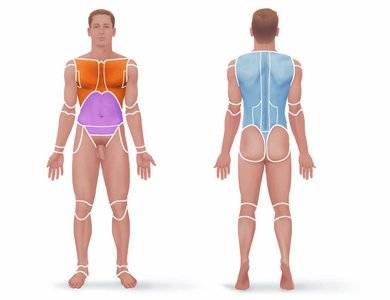
Surface Anatomy
Surface anatomy involves identifying visible landmarks on the body. The body is divided into two major regions:
Axial: Includes the head, neck, and trunk (the axis of the body).
Appendicular: Includes the limbs and their attachments to the axis.
Each region has specific anatomical terms, such as abdominal (anterior trunk below ribs), brachial (arm), femoral (thigh), and gluteal (buttocks).
Body Orientation and Direction
Directional Terms
Directional terms describe the location of one body part relative to another. These terms are essential for precise communication in anatomy.
Superior/Inferior: Above/below along the body's long axis (e.g., nose is superior to mouth).
Anterior/Posterior: Front/back (e.g., spine is posterior to heart).
Medial/Lateral: Toward/away from the midline (e.g., sternum is medial to ribs).
Proximal/Distal: Nearer/farther from the trunk or point of attachment (e.g., fingers are distal to elbow).
Superficial/Deep: Toward/away from the body surface (e.g., skin is superficial to muscles).
Dorsal/Ventral: Backside/belly side; in humans, dorsal = posterior, ventral = anterior.
Cephalad/Caudal: Toward the head/tail; in humans, synonymous with superior/inferior.
Body Planes and Sections
Planes of the Body
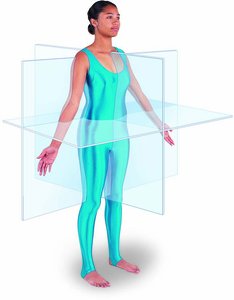
To study internal structures, the body is divided by imaginary lines called planes. The three primary planes are:
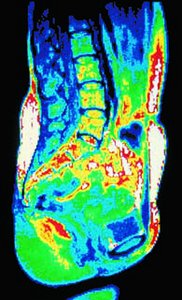
Sagittal Plane: Runs longitudinally, dividing the body into right and left parts. The midsagittal (median) plane divides the body into equal halves.
Frontal (Coronal) Plane: Divides the body into anterior and posterior parts.
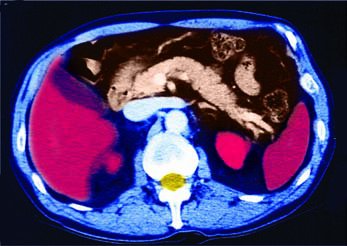
Transverse Plane: Runs horizontally, dividing the body into superior and inferior parts. Sections along this plane are called cross sections.
Sections of organs or objects (e.g., a banana) in different planes provide distinct views, which are important for anatomical study and medical imaging.
Body Cavities
Major Body Cavities
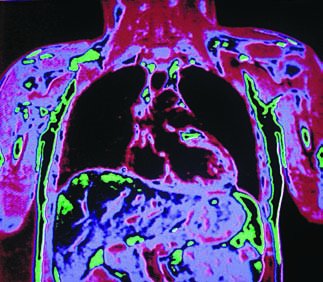
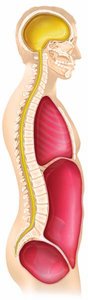
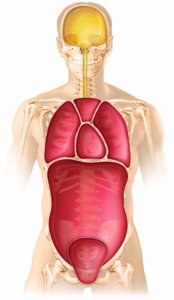
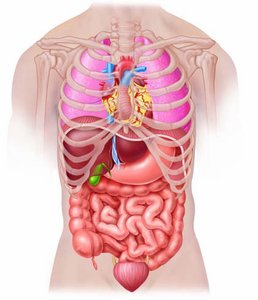
The axial portion of the body contains two large cavities that protect internal organs:
Dorsal Body Cavity: Includes the cranial cavity (brain) and vertebral cavity (spinal cord).
Ventral Body Cavity: Subdivided into the thoracic cavity (heart and lungs) and abdominopelvic cavity (digestive organs, reproductive organs, bladder, rectum).
Serous Membranes
Serous membranes (serosa) are thin, double-layered membranes covering the walls and organs of the ventral body cavity. The parietal serosa lines cavity walls, while the visceral serosa covers organs. These membranes produce lubricating fluid to reduce friction and compartmentalize organs, preventing the spread of infection.
Peritoneum: Lines the abdominal cavity and covers its organs.
Pleura: Encloses the lungs.
Pericardium: Surrounds the heart.
Abdominopelvic Quadrants and Regions
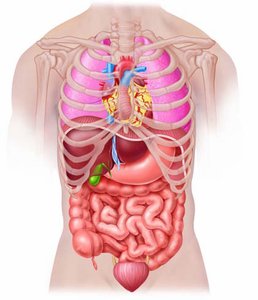
The abdominopelvic cavity is divided for clinical and anatomical purposes:
Quadrants: Four regions—right upper (RUQ), right lower (RLQ), left upper (LUQ), left lower (LLQ).
Nine Regions: More detailed division—umbilical, epigastric, hypogastric (pubic), right/left iliac (inguinal), right/left lumbar, right/left hypochondriac.

Other Body Cavities
Smaller Cavities
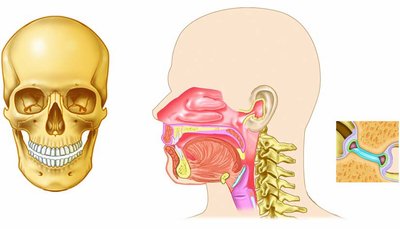
In addition to the major cavities, several smaller cavities exist, mostly in the head:
Oral cavity: Contains the tongue and teeth; part of the digestive tube.
Nasal cavity: Part of the respiratory system, located within and posterior to the nose.
Orbital cavities: House the eyes.
Middle ear cavities: Contain bones that transmit sound vibrations.
Synovial cavities: Found in joints, lined by membranes that secrete lubricating fluid.
Summary Table: Major Body Cavities and Their Contents
Body Cavity | Location | Main Organs |
|---|---|---|
Dorsal (Cranial) | Head | Brain |
Dorsal (Vertebral) | Spinal column | Spinal cord |
Ventral (Thoracic) | Chest | Heart, lungs |
Ventral (Abdominal) | Abdomen | Stomach, intestines, liver |
Ventral (Pelvic) | Pelvis | Bladder, reproductive organs, rectum |
Key Terms and Definitions
Anatomical Position: Standard reference posture for anatomical descriptions.
Surface Anatomy: Study of external body landmarks.
Directional Terms: Words describing relative positions of body parts.
Body Planes: Imaginary lines dividing the body for anatomical study.
Body Cavities: Spaces within the body housing organs.
Serous Membranes: Double-layered membranes lining body cavities and organs.
Equations and Abbreviations
Longitudinal section:
Cross section: or
Example: The heart is located in the thoracic cavity, surrounded by the pericardium. The stomach is found in the abdominal cavity, covered by the peritoneum.
Additional info: These foundational concepts are essential for understanding later chapters in Anatomy & Physiology, including organ systems, histology, and medical imaging.
