 뒤로
뒤로The Metric System and Measurement in Anatomy & Physiology
스터디 가이드 - 스마트 노트
 자료에 맞춘 맞춤형 노트, 핵심 정의, 예시, 맥락을 확장해 제공합니다.
The Metric System in Anatomy & Physiology
Introduction to Measurement
Accurate measurement is fundamental in Anatomy & Physiology for describing structures, quantifying physiological processes, and ensuring reproducibility in experiments. The metric system is the standard system of measurement in science, including the health sciences.
Basic Units: The metric system uses standardized units for length, mass (weight), and volume.
Importance: Consistent measurement allows for clear communication and comparison of data in scientific and medical contexts.
Basic Units of the Metric System
Length: The basic unit is the meter (m).
Mass: The basic unit is the gram (g).
Volume: The basic unit is the liter (L).
These units are used to measure anatomical structures, body mass, and fluid volumes in physiological processes.
Metric System Prefixes
Prefixes are used in the metric system to indicate multiples or fractions of the base units. Each prefix represents a specific factor of ten, making conversions straightforward.
Prefix | Symbol | Factor |
|---|---|---|
tera | T | 1,000,000,000,000 (1012) |
giga | G | 1,000,000,000 (109) |
mega | M | 1,000,000 (106) |
kilo | k | 1,000 (103) |
hecto | H | 100 (102) |
deca | da | 10 (101) |
(base unit) | - | 1 |
deci | d | 0.1 (10-1) |
centi | c | 0.01 (10-2) |
milli | m | 0.001 (10-3) |
micro | μ | 0.000001 (10-6) |
nano | n | 0.000000001 (10-9) |
Example: 1 kilometer (km) = 1,000 meters (m); 1 milligram (mg) = 0.001 grams (g).
Common Metric Conversions
Conversions between metric units are based on powers of ten, making calculations simple and reducing errors in scientific work.
1 kilometer (km) = 1,000 meters (m)
1 centimeter (cm) = 0.01 meters (m)
1 millimeter (mm) = 0.001 meters (m)
1 kilogram (kg) = 1,000 grams (g)
1 milligram (mg) = 0.001 grams (g)
1 milliliter (mL) = 0.001 liters (L)
1 microliter (μL) = 0.000001 liters (L)
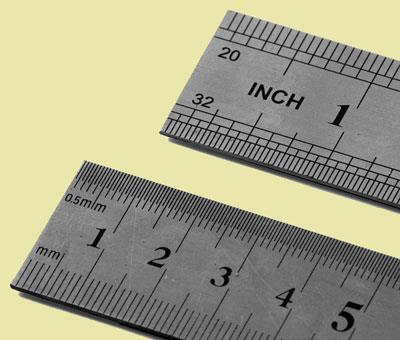
Metric and U.S. Customary System Equivalents
In Anatomy & Physiology, it is often necessary to convert between metric and U.S. customary units, especially in clinical settings in the United States.
U.S. Unit | Metric Equivalent |
|---|---|
1 inch | 2.54 centimeters (cm) |
1 foot | 30.5 centimeters (cm) |
1 mile | 1.6 kilometers (km) |
1 ounce | 28.3 grams (g) |
1 pound | 0.45 kilograms (kg) |
1 kilogram | 2.2 pounds (lb) |
1 teaspoon (tsp) | 5 milliliters (mL) |
1 fluid ounce | 30 milliliters (mL) |
1 U.S. quart | 0.95 liters (L) |
1 U.S. gallon | 3.79 liters (L) |
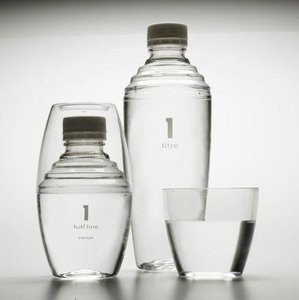
Temperature in Anatomy & Physiology
Temperature is a critical measurement in physiology, affecting enzyme activity, metabolic rate, and homeostasis. The Celsius (°C) and Fahrenheit (°F) scales are commonly used.
Water freezes: 0°C (32°F)
Water boils: 100°C (212°F)
Average human body temperature: 37°C (98.6°F)
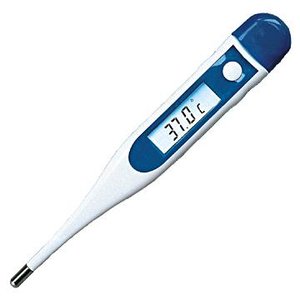
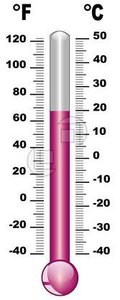
Temperature Conversion Formulas
To convert between Celsius and Fahrenheit, use the following formulas:
Celsius to Fahrenheit:
Fahrenheit to Celsius:
Summary Table: Common Metric Units in Anatomy & Physiology
Quantity | Unit | Symbol | Example in A&P |
|---|---|---|---|
Length | meter | m | Height, length of bones |
Mass | gram | g | Body mass, organ weight |
Volume | liter | L | Blood volume, lung capacity |
Temperature | degree Celsius | °C | Body temperature |
Application in Anatomy & Physiology
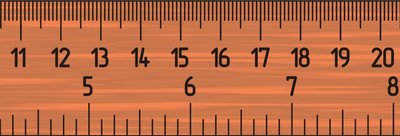
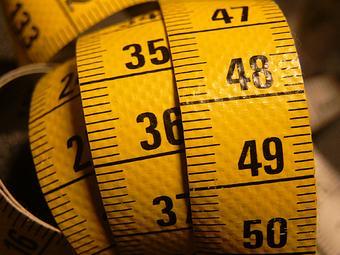
Measuring anatomical structures (e.g., using a ruler or tape measure for length in centimeters or meters).
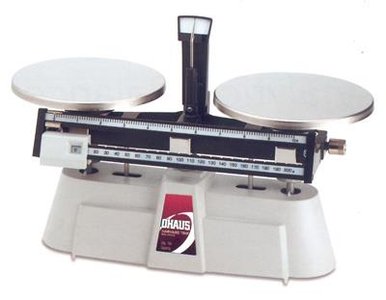
Determining body mass (e.g., using a balance scale for grams or kilograms).
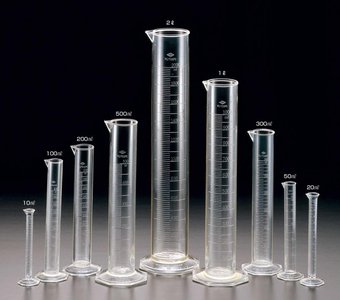
Assessing fluid volumes (e.g., using graduated cylinders or bottles for milliliters or liters).
Monitoring body temperature (e.g., using thermometers in °C or °F).
Example: A physician may record a patient's height as 1.75 meters, weight as 70 kilograms, and body temperature as 37°C.
