 뒤로
뒤로The Thyroid and Parathyroid Glands: Structure, Function, and Regulation
스터디 가이드 - 스마트 노트
 자료에 맞춘 맞춤형 노트, 핵심 정의, 예시, 맥락을 확장해 제공합니다.
The Thyroid and Parathyroid Glands
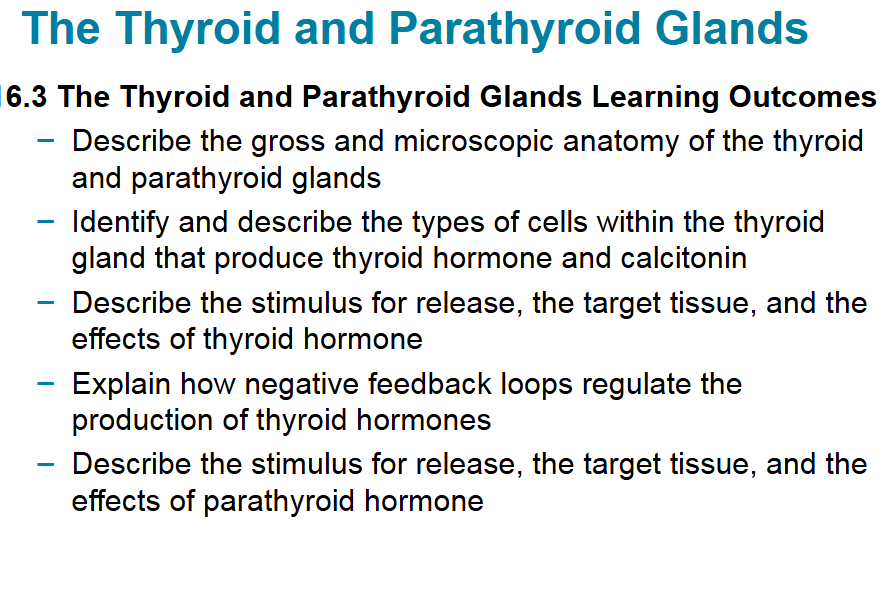
Gross and Microscopic Anatomy of the Thyroid and Parathyroid Glands
The thyroid gland is a butterfly-shaped endocrine gland located anterior to the trachea and inferior to the larynx. It consists of two lateral lobes connected by a narrow isthmus. The parathyroid glands are typically four small, oval-shaped glands embedded in the posterior surface of the thyroid gland. Both glands play crucial roles in regulating metabolism and calcium homeostasis.
Thyroid gland: Composed of spherical follicles filled with colloid, surrounded by follicular cells.
Parathyroid glands: Consist mainly of chief cells and oxyphil cells, responsible for hormone secretion.
Cell Types in the Thyroid Gland
The thyroid gland contains several specialized cell types, each with distinct functions:
Follicular cells: Produce and secrete thyroid hormones (thyroxine (T4) and triiodothyronine (T3)).
Parafollicular cells (C cells): Secrete calcitonin, a hormone involved in calcium regulation.
Thyroid hormones are stored in the colloid within the follicles until released into the bloodstream.
Thyroid Hormone: Stimulus, Target Tissues, and Effects
Thyroid hormone release is regulated by the hypothalamic-pituitary-thyroid axis:
Stimulus for release: Thyrotropin-releasing hormone (TRH) from the hypothalamus stimulates the anterior pituitary to release thyroid-stimulating hormone (TSH), which then stimulates the thyroid gland.
Target tissues: Most cells in the body, especially those involved in metabolism (e.g., liver, muscle, heart).
Effects: Increases basal metabolic rate, enhances protein synthesis, and regulates growth and development.
Example: Increased thyroid hormone levels accelerate cellular respiration and energy expenditure.
Negative Feedback Regulation of Thyroid Hormone Production
Thyroid hormone secretion is tightly controlled by a negative feedback loop:
Elevated levels of T3 and T4 inhibit the release of TRH and TSH, reducing further hormone production.
This feedback maintains homeostasis and prevents excessive hormone levels.
Example: If thyroid hormone levels rise above normal, TSH secretion decreases, lowering thyroid hormone output.
Parathyroid Hormone: Stimulus, Target Tissues, and Effects
The parathyroid glands secrete parathyroid hormone (PTH), which is essential for calcium balance:
Stimulus for release: Low blood calcium levels (hypocalcemia).
Target tissues: Bones, kidneys, and intestines.
Effects: Increases blood calcium by stimulating osteoclast activity (bone resorption), enhancing calcium reabsorption in the kidneys, and promoting activation of vitamin D to increase intestinal calcium absorption.
Example: When blood calcium drops, PTH is released to restore normal calcium levels.
