Ch. 1 Introduction to Anatomy and Physiology
Amerman- Human Anatomy & Physiology 3e
Amerman3rd EditionHuman Anatomy & PhysiologyISBN: 9780138247201, 9780138247928, 9780138201814당신이 사용하는 게 아니라요?교과서 변경
1장, 문제 13

In which of the following cavities do serous membranes envelop the organs?
(Circle all that apply.)
a. Mediastinum
b. Pericardial cavity
c. Peritoneal cavity
d. Abdominal cavity
e. Pelvic cavity
f. Pleural cavity

검증된 단계별 안내
1
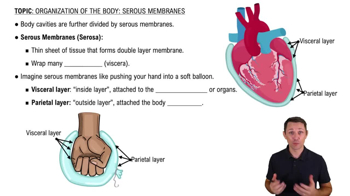
Step 1: Understand the role of serous membranes. Serous membranes are thin tissues that line body cavities not open to the outside and cover the organs within these cavities. They secrete serous fluid to reduce friction between moving organs.
Step 2: Identify the major cavities in the body where serous membranes are present. These include the pericardial cavity (around the heart), pleural cavities (around the lungs), and peritoneal cavity (around abdominal organs).
Step 3: Analyze each option provided in the question: a) Mediastinum is the central compartment of the thoracic cavity but does not have serous membranes enveloping organs. b) Pericardial cavity contains the heart and is lined by serous membranes. c) Peritoneal cavity surrounds abdominal organs and is lined by serous membranes. d) Abdominal cavity includes the peritoneal cavity but is not entirely lined by serous membranes. e) Pelvic cavity is not fully lined by serous membranes. f) Pleural cavity surrounds the lungs and is lined by serous membranes.
Step 4: Determine which cavities have serous membranes enveloping organs. Based on the analysis, the correct answers are b) Pericardial cavity, c) Peritoneal cavity, and f) Pleural cavity.
Step 5: Review the function of serous membranes in these cavities. In the pericardial cavity, they protect the heart; in the pleural cavity, they protect the lungs; and in the peritoneal cavity, they protect abdominal organs by reducing friction during movement.

비슷한 문제에 대한 검증된 영상 답변:

이 영상 해법은 위 문제에 도움이 된다고 튜터들이 추천한 것입니다.

주요 개념

질문에 올바르게 답하기 위해 반드시 이해해야 하는 핵심 개념들은 다음과 같습니다.

Serous Membranes

Serous membranes are thin layers of tissue that line body cavities and cover organs, producing a lubricating fluid that reduces friction. They consist of two layers: the parietal layer, which lines the cavity, and the visceral layer, which covers the organs. This structure is crucial for protecting organs and facilitating movement within the cavities.
추천 영상:
4:09
Serous Membranes

Body Cavities

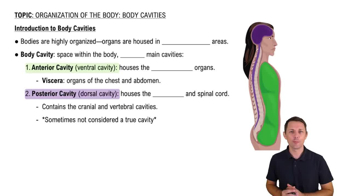
Body cavities are spaces within the body that house organs and are divided into two main categories: dorsal (containing the brain and spinal cord) and ventral (housing organs such as the heart, lungs, and digestive organs). Understanding the specific cavities, such as the mediastinum, pericardial, peritoneal, abdominal, pelvic, and pleural cavities, is essential for identifying where serous membranes are located.
추천 영상:
3:20
Introduction to Body Cavities

Anatomical Terminology

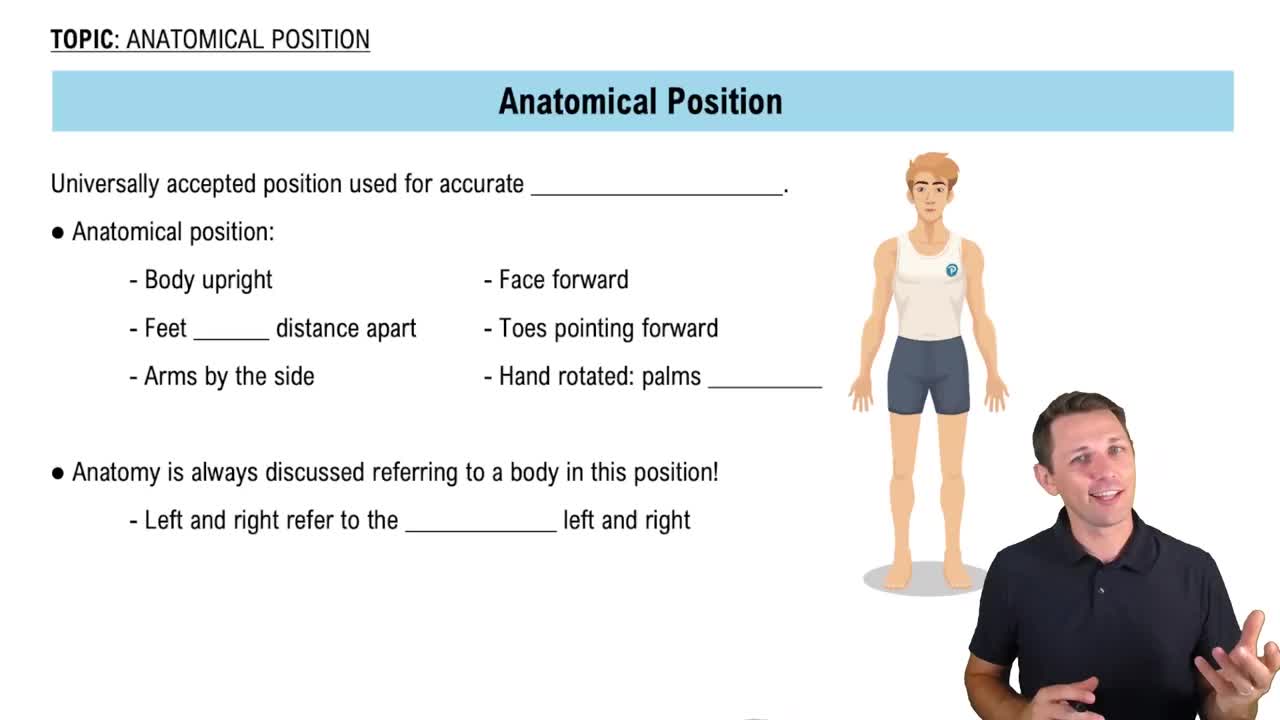
Anatomical terminology provides a standardized language for describing the locations and relationships of body structures. Terms like 'mediastinum' and 'pericardial cavity' refer to specific areas within the thoracic cavity, while 'peritoneal' and 'pelvic' refer to areas in the abdominal cavity. Familiarity with these terms is vital for accurately answering questions related to anatomy.
추천 영상:
02:40
Anatomical Position