Ch. 1 Introduction to Anatomy and Physiology
Amerman- Human Anatomy & Physiology 3e
Amerman3rd EditionHuman Anatomy & PhysiologyISBN: 9780138247201, 9780138247928, 9780138201814당신이 사용하는 게 아니라요?교과서 변경
1장, 문제 16c

Mark the following statements as true or false. If a statement is false, correct it to make a true statement.
Positive feedback loops are triggered by a deviation from the set point of a regulated variable and are shut down when conditions return to the set point.

검증된 단계별 안내
1
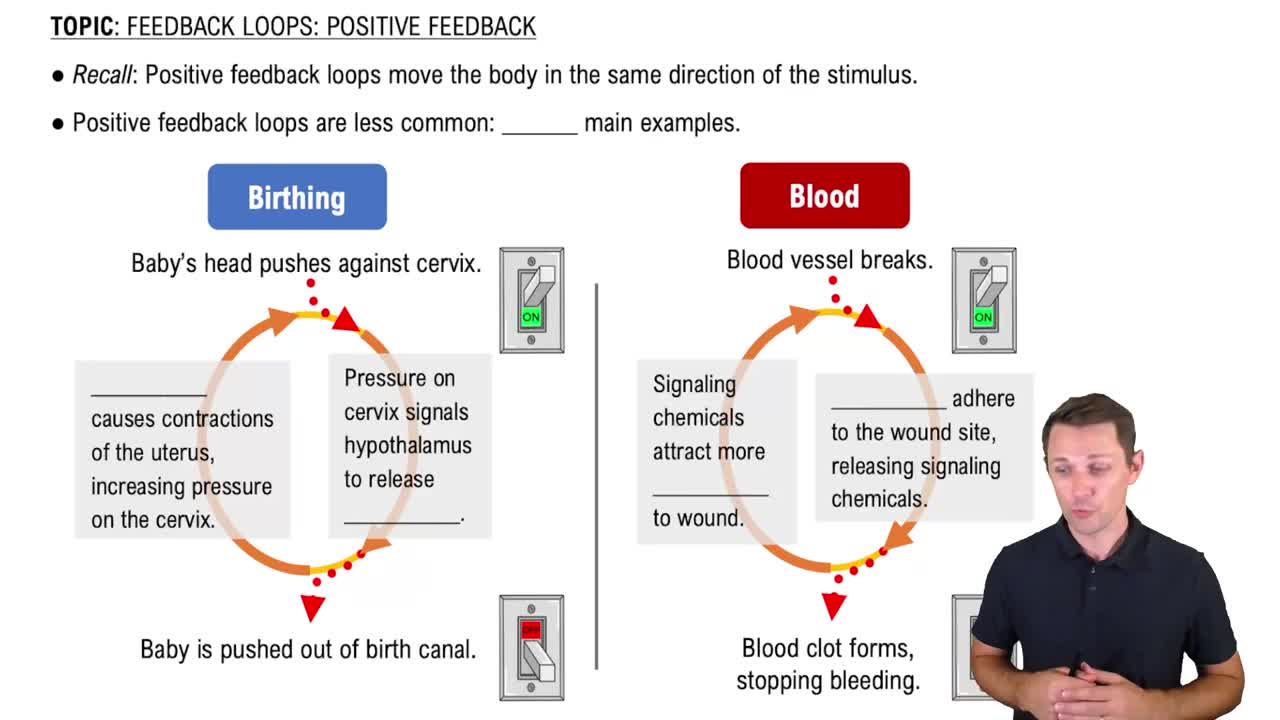
Understand the concept of positive feedback loops: Positive feedback loops amplify a change in a regulated variable rather than reversing it. They are typically not involved in maintaining homeostasis but rather in processes that need a rapid or self-perpetuating response, such as blood clotting or childbirth.
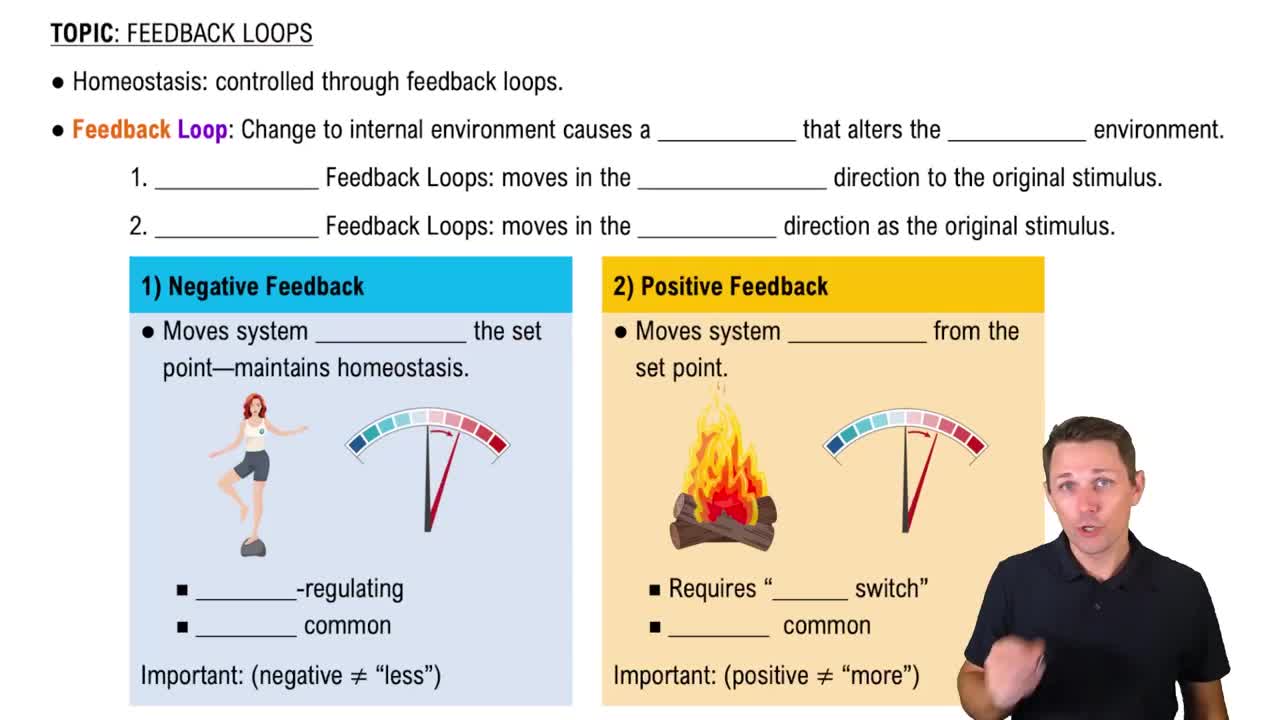
Analyze the statement: The statement claims that positive feedback loops are triggered by a deviation from the set point and are shut down when conditions return to the set point. This description aligns more closely with negative feedback loops, which work to restore a variable to its set point.
Identify the error: Positive feedback loops are not shut down when conditions return to the set point. Instead, they are typically terminated by an external event or process, not by the return to the set point.
Correct the false statement: A corrected version of the statement would be: 'Positive feedback loops are triggered by a deviation from the set point of a regulated variable and are shut down by an external event or process, not by the return to the set point.'
Review the corrected statement: Ensure the corrected statement accurately reflects the nature of positive feedback loops and distinguishes them from negative feedback loops, which are responsible for maintaining homeostasis.

비슷한 문제에 대한 검증된 영상 답변:

이 영상 해법은 위 문제에 도움이 된다고 튜터들이 추천한 것입니다.
도움이 되었나요?

주요 개념

질문에 올바르게 답하기 위해 반드시 이해해야 하는 핵심 개념들은 다음과 같습니다.

Positive Feedback Loops

Positive feedback loops are processes that amplify changes or deviations from a set point in a system. Unlike negative feedback, which aims to stabilize a system by counteracting deviations, positive feedback enhances the direction of the change, often leading to a more significant response. An example is the process of childbirth, where the release of oxytocin increases contractions, further stimulating its release.
추천 영상:
가이드 코스
03:25
Positive Feedback Loops

Set Point

The set point is the desired or optimal level of a regulated variable in a biological system, such as body temperature or blood glucose levels. It serves as a reference point for homeostasis, where the body strives to maintain stability. Deviations from this set point trigger feedback mechanisms to restore balance, but in the case of positive feedback, the system moves away from the set point instead.
추천 영상:
가이드 코스
04:09
Introduction to Feedback Loops

Homeostasis

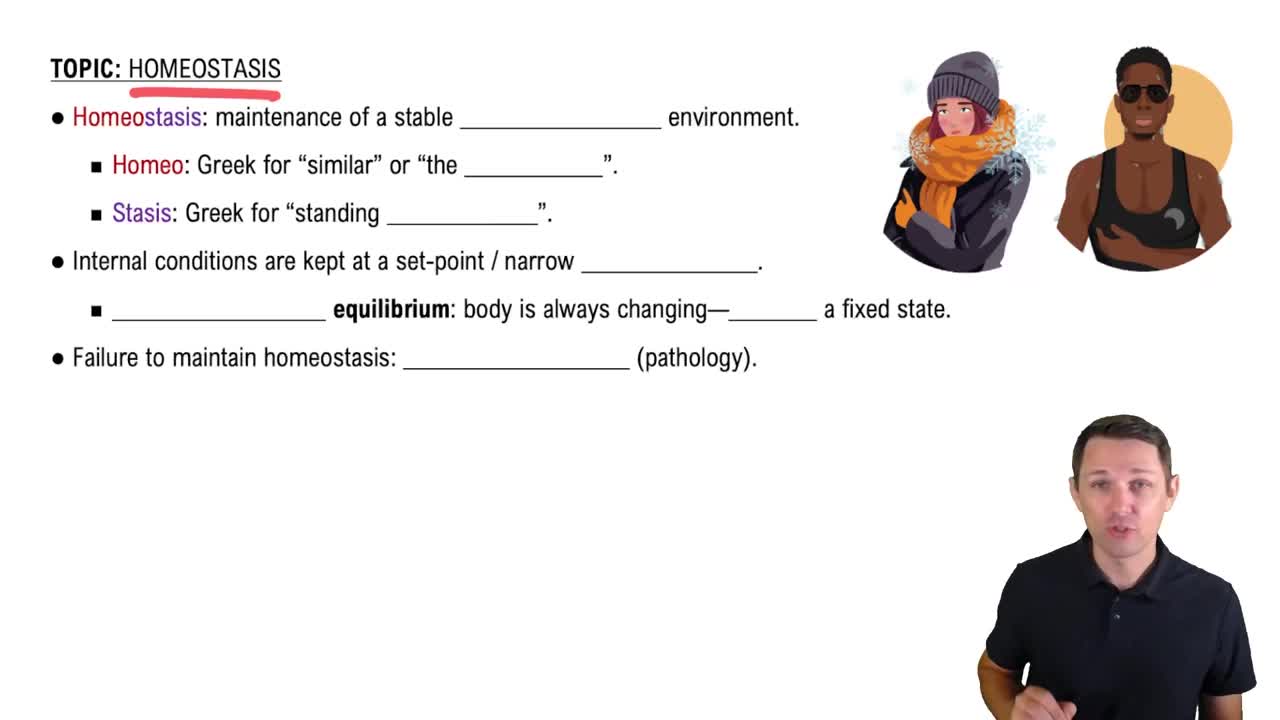
Homeostasis is the process by which biological systems maintain stability while adjusting to changing external conditions. It involves various feedback mechanisms, primarily negative feedback, which counteract deviations from the set point to keep internal conditions within a narrow range. Understanding homeostasis is crucial for grasping how organisms regulate vital functions and respond to environmental changes.
추천 영상:
가이드 코스
01:59
Introduction to Homeostasis