
Ch. 10 Muscle Tissue and Physiology
Amerman- Human Anatomy & Physiology 3e
Amerman3rd EditionHuman Anatomy & PhysiologyISBN: 9780138247201, 9780138247928, 9780138201814당신이 사용하는 게 아니라요?교과서 변경
10장, 문제 16

Which of the following is not likely to result from endurance training alone?
a. Increase in oxidative enzymes in the muscle fiber
b. Increased numbers of mitochondria
c. Hypertrophy of the muscle fibers
d. Increase in blood supply to the muscle fibers

검증된 단계별 안내
1
Understand the context of the question: Endurance training primarily focuses on improving the efficiency of the cardiovascular and muscular systems to sustain prolonged physical activity. It typically enhances aerobic capacity rather than significantly increasing muscle size.
Analyze each option: a) 'Increase in oxidative enzymes in the muscle fiber' is a common adaptation to endurance training, as it improves the muscle's ability to use oxygen for energy production. b) 'Increased numbers of mitochondria' is another hallmark of endurance training, as mitochondria are essential for aerobic metabolism. c) 'Hypertrophy of the muscle fibers' refers to an increase in muscle fiber size, which is more commonly associated with resistance training rather than endurance training. d) 'Increase in blood supply to the muscle fibers' is a typical adaptation to endurance training, as it enhances oxygen and nutrient delivery.
Focus on the physiological mechanisms: Endurance training leads to increased capillary density and mitochondrial biogenesis, which improve oxygen delivery and energy production. However, it does not typically cause significant hypertrophy (muscle fiber enlargement), which is more characteristic of strength or resistance training.
Eliminate the options that are consistent with endurance training: Options a, b, and d are all physiological changes that occur as a result of endurance training. These adaptations improve the muscle's ability to sustain prolonged activity.
Identify the correct answer: The option that does not align with the typical outcomes of endurance training is c) 'Hypertrophy of the muscle fibers,' as this is more associated with resistance training rather than endurance training.

비슷한 문제에 대한 검증된 영상 답변:

이 영상 해법은 위 문제에 도움이 된다고 튜터들이 추천한 것입니다.
도움이 되었나요?

주요 개념

질문에 올바르게 답하기 위해 반드시 이해해야 하는 핵심 개념들은 다음과 같습니다.

Endurance Training

Endurance training, also known as aerobic training, focuses on improving the efficiency of the cardiovascular system and the muscles' ability to utilize oxygen. This type of training typically involves prolonged, moderate-intensity activities such as running, cycling, or swimming. The primary adaptations include increased aerobic capacity and improved metabolic processes within muscle fibers.
추천 영상:
1:13
Reflex Arcs Example 2

Muscle Fiber Adaptations

Muscle fibers can adapt to different types of training stimuli. Endurance training primarily leads to an increase in oxidative enzymes and mitochondrial density, enhancing the muscle's ability to produce energy aerobically. However, hypertrophy, or an increase in muscle fiber size, is more commonly associated with resistance training rather than endurance training.
추천 영상:
7:47
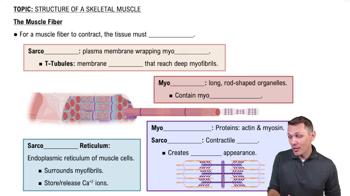
The Muscle Fiber

Hypertrophy vs. Endurance Adaptations

Hypertrophy refers to the increase in muscle fiber size, which is typically stimulated by resistance training through mechanical overload. In contrast, endurance training leads to adaptations that improve muscle endurance and efficiency, such as increased mitochondrial content and capillary density, but does not significantly promote hypertrophy. Understanding this distinction is crucial for identifying the outcomes of different training modalities.
추천 영상:
4:49
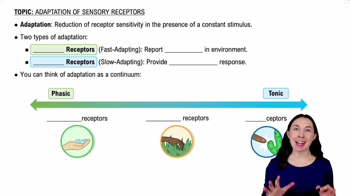
Adaptation