Ch. 18 The Cardiovascular System II: The Blood Vessels
Amerman- Human Anatomy & Physiology 3e
Amerman3rd EditionHuman Anatomy & PhysiologyISBN: 9780138247201, 9780138247928, 9780138201814당신이 사용하는 게 아니라요?교과서 변경
18장, 문제 14b

Mark the following statements as true or false. If a statement is false, correct it to make a true statement.
Increased concentrations of carbon dioxide and hydrogen ions and a decreased concentration of oxygen in the interstitial fluid cause local arteriolar constriction.

검증된 단계별 안내
1
Step 1: Begin by analyzing the physiological effects of increased concentrations of carbon dioxide (CO₂), hydrogen ions (H⁺), and decreased oxygen (O₂) in the interstitial fluid. These changes typically occur in tissues with high metabolic activity.
Step 2: Recall the concept of local autoregulation in blood flow. Increased CO₂ and H⁺ concentrations, along with decreased O₂, generally lead to vasodilation (not vasoconstriction) of arterioles to increase blood flow and oxygen delivery to the tissue.
Step 3: Identify the error in the statement. The statement incorrectly claims that these conditions cause local arteriolar constriction, whereas they actually cause local arteriolar dilation.
Step 4: Correct the false statement. The corrected version should read: 'Increased concentrations of carbon dioxide and hydrogen ions and a decreased concentration of oxygen in the interstitial fluid cause local arteriolar dilation.'
Step 5: Review the corrected statement and ensure it aligns with the principles of physiology, specifically the mechanisms of local blood flow regulation in response to tissue metabolic needs.

비슷한 문제에 대한 검증된 영상 답변:

이 영상 해법은 위 문제에 도움이 된다고 튜터들이 추천한 것입니다.
도움이 되었나요?

주요 개념

질문에 올바르게 답하기 위해 반드시 이해해야 하는 핵심 개념들은 다음과 같습니다.

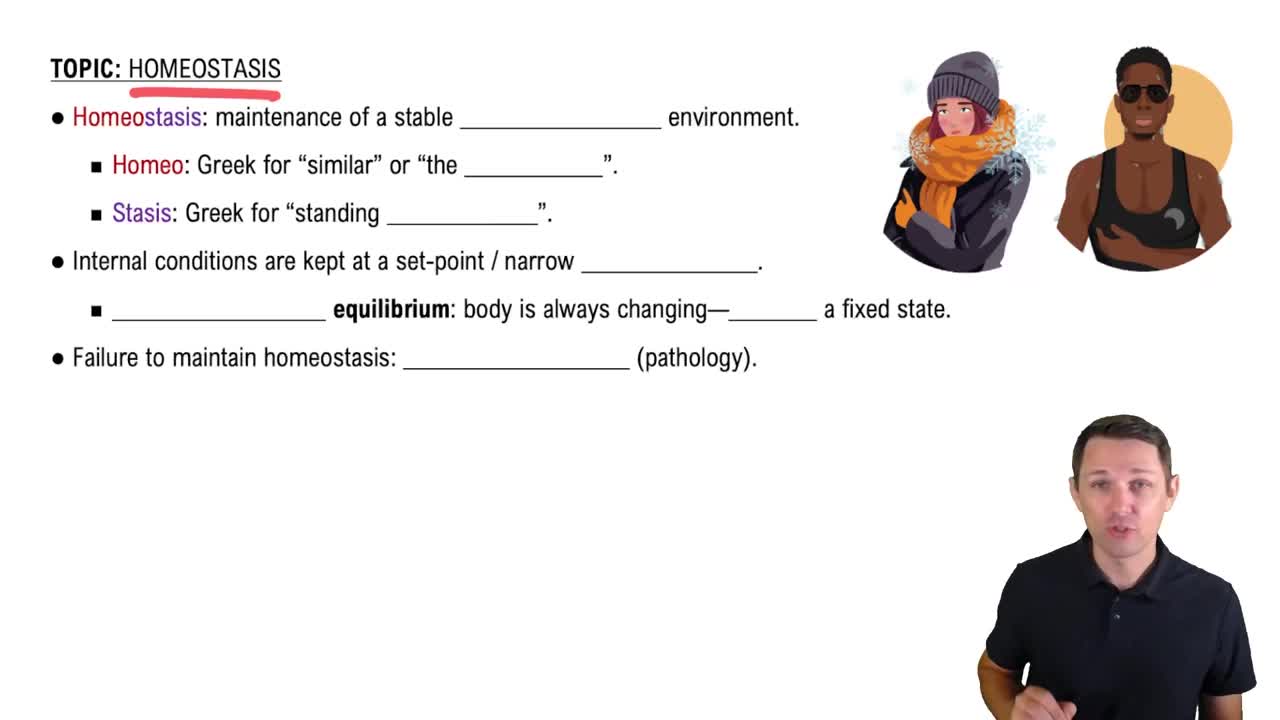
Homeostasis

Homeostasis refers to the body's ability to maintain stable internal conditions despite external changes. This includes regulating factors such as temperature, pH, and concentrations of various ions and gases. In the context of blood flow, homeostasis ensures that tissues receive adequate oxygen and nutrients while removing waste products.
추천 영상:
01:59
Introduction to Homeostasis

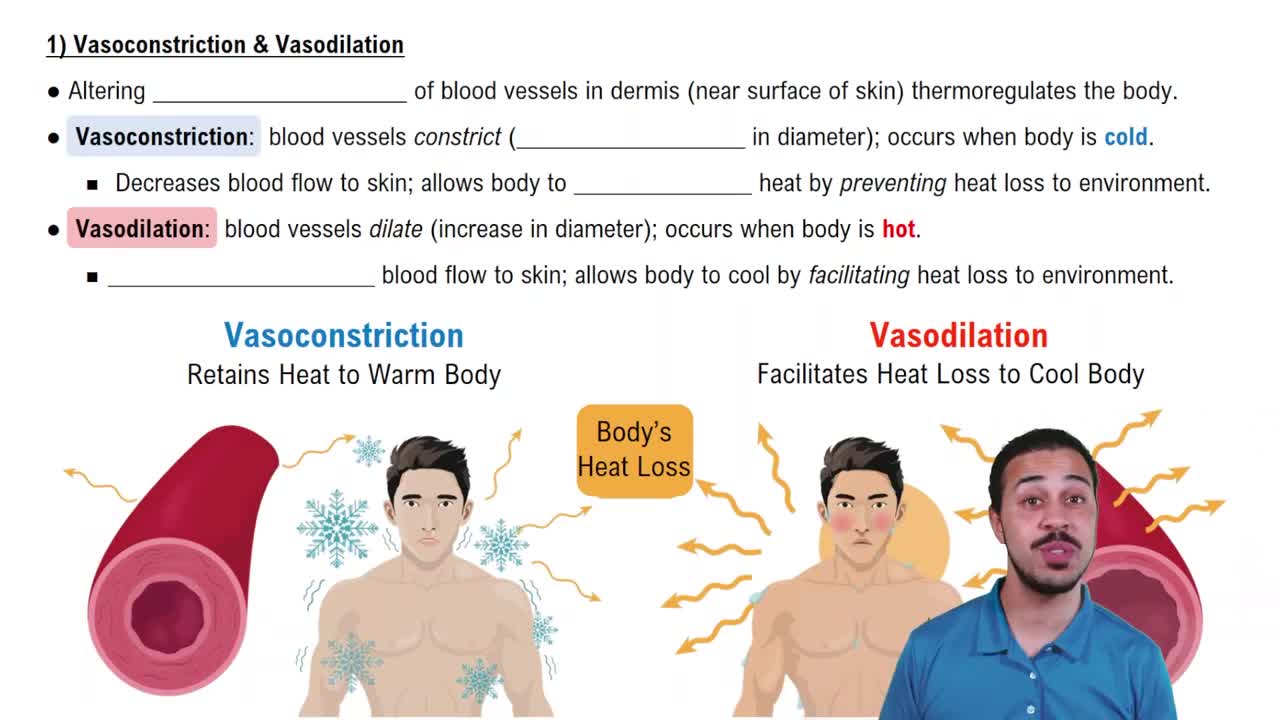
Vasodilation and Vasoconstriction

Vasodilation and vasoconstriction are processes that regulate blood vessel diameter. Vasodilation increases blood flow by widening blood vessels, often in response to low oxygen or high carbon dioxide levels. Conversely, vasoconstriction narrows blood vessels, reducing blood flow, which can occur in response to various stimuli, including increased oxygen levels.
추천 영상:
가이드 코스
05:07
Vasoconstriction & Vasodilation

Chemoreceptors

Chemoreceptors are specialized sensory receptors that detect changes in the chemical composition of blood, such as levels of carbon dioxide, oxygen, and hydrogen ions. They play a crucial role in regulating respiratory and cardiovascular responses to maintain homeostasis. For instance, increased carbon dioxide or hydrogen ions typically stimulate vasodilation to enhance blood flow and oxygen delivery.
추천 영상:
2:11
Sensory Receptor Classification by Modality