Ch. 19 Blood
Amerman- Human Anatomy & Physiology 3e
Amerman3rd EditionHuman Anatomy & PhysiologyISBN: 9780138247201, 9780138247928, 9780138201814당신이 사용하는 게 아니라요?교과서 변경
19장, 문제 16

Tissue plasminogen activator, urokinase, and plasmin are important components of:
a. Coagulation
b. Fibrinolysis
c. Platelet plug formation
d. Hemostasis

검증된 단계별 안내
1
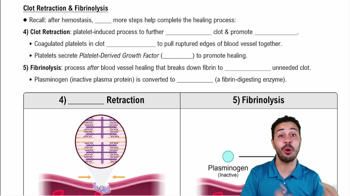
Step 1: Begin by understanding the key terms in the problem. Tissue plasminogen activator (tPA), urokinase, and plasmin are enzymes involved in breaking down blood clots. This process is known as fibrinolysis.
Step 2: Recall the definition of fibrinolysis. Fibrinolysis is the physiological process where fibrin, the protein that forms the structural framework of blood clots, is broken down to prevent excessive clotting and maintain blood flow.
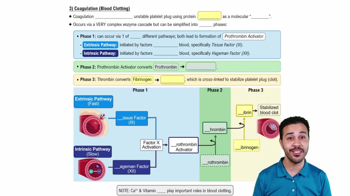
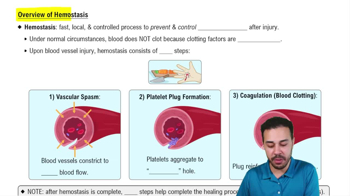
Step 3: Compare fibrinolysis with the other options provided: Coagulation refers to the formation of blood clots, platelet plug formation involves the aggregation of platelets to seal small vessel injuries, and hemostasis is the overall process of stopping bleeding, which includes coagulation, platelet plug formation, and fibrinolysis.
Step 4: Recognize that tissue plasminogen activator (tPA) and urokinase activate plasminogen to form plasmin, which is the enzyme responsible for breaking down fibrin during fibrinolysis.
Step 5: Based on the definitions and roles of these components, identify fibrinolysis as the correct process associated with tissue plasminogen activator, urokinase, and plasmin.

비슷한 문제에 대한 검증된 영상 답변:

이 영상 해법은 위 문제에 도움이 된다고 튜터들이 추천한 것입니다.
도움이 되었나요?

주요 개념

질문에 올바르게 답하기 위해 반드시 이해해야 하는 핵심 개념들은 다음과 같습니다.

Fibrinolysis

Fibrinolysis is the biological process that breaks down fibrin in blood clots. It is essential for the removal of clots after they have served their purpose in stopping bleeding. Tissue plasminogen activator (tPA) and urokinase are enzymes that convert plasminogen to plasmin, the active form that dissolves fibrin, thus playing a critical role in this process.
추천 영상:
7:16
Clot Retraction & Fibrinolysis

Coagulation

Coagulation is the process by which blood changes from a liquid to a gel, forming a blood clot. This process involves a series of complex biochemical reactions that lead to the formation of fibrin, which stabilizes the platelet plug. While coagulation is crucial for stopping bleeding, it is distinct from fibrinolysis, which is responsible for clot breakdown.
추천 영상:
10:05
Coagulation (Blood Clotting)

Hemostasis

Hemostasis is the overall process that prevents and stops bleeding, involving both coagulation and fibrinolysis. It includes three main stages: vascular spasm, platelet plug formation, and coagulation. Understanding hemostasis is essential for recognizing how the body maintains blood flow and prevents excessive blood loss after injury.
추천 영상:
4:28
Overview of Hemostasis