Ch. 20 The Lymphatic System and Immunity
Amerman- Human Anatomy & Physiology 3e
Amerman3rd EditionHuman Anatomy & PhysiologyISBN: 9780138247201, 9780138247928, 9780138201814당신이 사용하는 게 아니라요?교과서 변경
20장, 문제 6

Which of the following does not describe the relationship between the lymphatic and immune systems?
a. Lymphoid organs and tissues house cells of the immune system.
b. Lymphoid organs and tissues trap pathogens for the immune system.
c. Lymphoid organs activate cells of the immune system.
d. Lymphoid organs and tissues create the surface barriers of the immune system.

검증된 단계별 안내
1
Step 1: Begin by understanding the roles of the lymphatic and immune systems. The lymphatic system is responsible for transporting lymph, a fluid containing infection-fighting white blood cells, while the immune system defends the body against pathogens.
Step 2: Review the functions of lymphoid organs and tissues. These include the lymph nodes, spleen, thymus, and tonsils, which house immune cells, trap pathogens, and activate immune responses.
Step 3: Analyze each option provided in the question. For example, options a, b, and c describe functions that align with the relationship between the lymphatic and immune systems.
Step 4: Evaluate option d. Surface barriers, such as skin and mucous membranes, are part of the innate immune system and are not created by lymphoid organs or tissues. This distinguishes option d from the other choices.
Step 5: Conclude that the correct answer is the option that does not describe the relationship between the lymphatic and immune systems, based on the analysis of the functions of lymphoid organs and tissues.

비슷한 문제에 대한 검증된 영상 답변:

이 영상 해법은 위 문제에 도움이 된다고 튜터들이 추천한 것입니다.
도움이 되었나요?

주요 개념

질문에 올바르게 답하기 위해 반드시 이해해야 하는 핵심 개념들은 다음과 같습니다.

Lymphoid Organs and Tissues

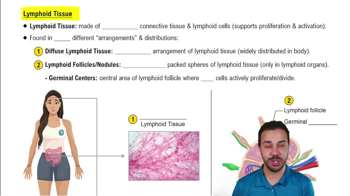
Lymphoid organs and tissues, such as the spleen, thymus, and lymph nodes, are crucial components of the immune system. They serve as sites for the production and maturation of lymphocytes, which are essential white blood cells involved in immune responses. These organs also facilitate the trapping and processing of pathogens, thereby playing a vital role in the body's defense mechanisms.
추천 영상:
가이드 코스
4:55
Lymphoid Tissue

Immune System Function

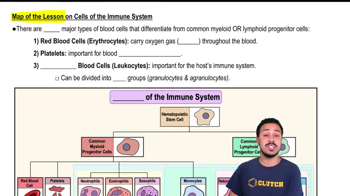
The immune system is responsible for identifying and eliminating pathogens, such as bacteria and viruses, that invade the body. It comprises various cells, including lymphocytes, macrophages, and antibodies, which work together to recognize and destroy foreign invaders. Understanding how lymphoid organs contribute to this process is essential for grasping the overall function of the immune system.
추천 영상:
가이드 코스
6:08
Map of the Lesson on Cells of the Immune System

Surface Barriers of the Immune System

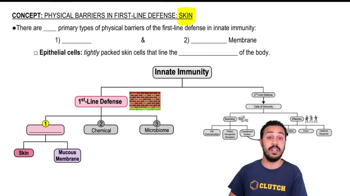
Surface barriers, such as the skin and mucous membranes, are the first line of defense in the immune system. They act as physical and chemical barriers to prevent pathogens from entering the body. Unlike lymphoid organs, which are involved in the immune response after pathogens have breached these barriers, surface barriers are not directly involved in the activation or housing of immune cells.
추천 영상:
가이드 코스
1:28
Physical Barriers