Ch. 22 The Digestive System
Amerman- Human Anatomy & Physiology 3e
Amerman3rd EditionHuman Anatomy & PhysiologyISBN: 9780138247201, 9780138247928, 9780138201814당신이 사용하는 게 아니라요?교과서 변경
22장, 문제 L3.1a

Mr. Williams presents to your clinic with a complaint of abdominal pain in the right upper quadrant. He says that the pain worsens when he eats, particularly when he eats fatty meals. He has noticed that his stool has been an unusual clay color recently. You perform an ultrasound of his abdomen and find that gallstones are blocking his common bile duct, preventing bile from entering the duodenum.
Why are his symptoms worse when he consumes a high-fat meal? Would you expect his symptoms to worsen or lessen when he consumes a meal consisting only of carbohydrates? Explain.

검증된 단계별 안내
1
Understand the role of bile in fat digestion: Bile, produced by the liver and stored in the gallbladder, is essential for emulsifying fats in the small intestine. This process breaks down large fat globules into smaller droplets, making them accessible to digestive enzymes like lipase.
Analyze the impact of a blocked common bile duct: Gallstones blocking the common bile duct prevent bile from reaching the duodenum. Without bile, fat digestion is impaired, leading to symptoms such as abdominal pain and clay-colored stools (due to the absence of bile pigments in the stool).
Explain why symptoms worsen with fatty meals: High-fat meals require more bile for digestion. Since bile cannot reach the duodenum due to the blockage, the undigested fats can cause increased strain on the digestive system, leading to worsened symptoms such as pain and discomfort.
Consider the effect of a carbohydrate-only meal: Carbohydrates do not require bile for digestion. They are broken down by enzymes like amylase into simpler sugars, which are absorbed in the small intestine. Therefore, a carbohydrate-only meal would likely result in fewer or no symptoms compared to a high-fat meal.
Summarize the relationship between diet and symptoms: Fatty meals exacerbate symptoms because they rely on bile for digestion, which is unavailable due to the blockage. In contrast, carbohydrate-only meals bypass the need for bile, reducing the likelihood of symptom aggravation.

비슷한 문제에 대한 검증된 영상 답변:

이 영상 해법은 위 문제에 도움이 된다고 튜터들이 추천한 것입니다.

주요 개념

질문에 올바르게 답하기 위해 반드시 이해해야 하는 핵심 개념들은 다음과 같습니다.

Bile Function

Bile is a digestive fluid produced by the liver and stored in the gallbladder, essential for the emulsification and absorption of fats in the small intestine. When fatty foods are consumed, bile is released into the duodenum to aid in digestion. If the common bile duct is obstructed by gallstones, bile cannot reach the intestine, leading to increased abdominal pain and discomfort after meals high in fat.
추천 영상:
6:54
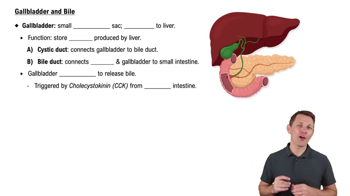
Gallbladder and Bile

Gallstones and Obstruction

Gallstones are solid particles that form in the gallbladder and can obstruct the bile ducts. This obstruction prevents bile from flowing into the duodenum, causing symptoms such as pain, especially after eating fatty foods, which require more bile for digestion. The blockage can also lead to changes in stool color, such as clay-colored stools, indicating a lack of bile reaching the intestines.
추천 영상:
가이드 코스
7:24
Anastomoses Form Collateral Channels

Dietary Impact on Symptoms

The type of food consumed can significantly affect symptoms in patients with gallbladder issues. High-fat meals stimulate bile secretion, which cannot occur effectively if the bile duct is blocked, exacerbating pain. In contrast, meals consisting only of carbohydrates do not require bile for digestion, so symptoms may lessen when such meals are consumed, as they do not trigger the same physiological response.
추천 영상:
가이드 코스
3:32
Introduction to the Lymphatic System Example 2
관련 실천
교과서 질문

A surgical procedure known as gastric bypass involves creating a small upper stomach pouch and attaching part of the small intestine to this pouch, “bypassing” the rest of the stomach and part of the duodenum.

How would bypassing a significant portion of the stomach affect absorption of vitamin B12? Explain.

119
views
교과서 질문

A surgical procedure known as gastric bypass involves creating a small upper stomach pouch and attaching part of the small intestine to this pouch, “bypassing” the rest of the stomach and part of the duodenum.

Ms. Anthony has undergone gastric bypass. She goes out to dinner and eats an extremely large meal. Explain what will happen in her small and large intestines following this meal.

70
views
교과서 질문

Drugs with anticholinergic side effects block ACh receptors in the peripheral nervous system, including those on digestive organs. Predict the effects such drugs would have on motility and secretion on the specific organs of the digestive system.

865
views
교과서 질문

Mr. Williams presents to your clinic with a complaint of abdominal pain in the right upper quadrant. He says that the pain worsens when he eats, particularly when he eats fatty meals. He has noticed that his stool has been an unusual clay color recently. You perform an ultrasound of his abdomen and find that gallstones are blocking his common bile duct, preventing bile from entering the duodenum.

Explain why his feces have become a clay color instead of a normal brown color.

640
views
교과서 질문

Trace the pathway that food takes through the entire alimentary canal, from the oral cavity to the anal canal.

1141
views
교과서 질문

Which of the following is/are absorbed in the small intestine by the Na+/glucose cotransporter?

a. Glucose

b. Galactose

c. Fructose

d. Both a and b are correct

e. All of the above are correct

764
views