Your friend hears about the latest fad diet that consists entirely of fat. Predict the initial effects such a diet might have on your friend's concentration, memory, and other nervous system functions. Would you recommend this diet to anyone? Why or why not?
Ch. 23 Metabolism and Nutrition
Amerman3rd EditionHuman Anatomy & PhysiologyISBN: 9780138247201, 9780138247928, 9780138201814당신이 사용하는 게 아니라요?교과서 변경
23장, 문제 L2.2
Certain diet plans claim that a person may eat all the protein he or she wants, as protein is not stored by the body. Is this claim completely accurate? Explain.
검증된 단계별 안내1
Understand the claim: The statement suggests that protein can be consumed in unlimited amounts because it is not stored in the body. Begin by recalling how the body processes and utilizes protein.
Review protein metabolism: Proteins are broken down into amino acids during digestion. These amino acids are used for building and repairing tissues, producing enzymes and hormones, and other essential functions. Excess amino acids cannot be stored as protein in the body.
Explain what happens to excess protein: When protein intake exceeds the body's needs, the excess amino acids undergo deamination in the liver. This process removes the amino group, converting it into ammonia, which is then processed into urea and excreted in urine. The remaining carbon skeletons are converted into glucose or fat for energy storage.
Discuss potential consequences of excessive protein intake: While protein itself is not stored, consuming excessive amounts can lead to increased workload on the liver and kidneys due to the need to process and excrete nitrogen. Additionally, excess protein can contribute to fat storage if caloric intake exceeds energy expenditure.
Conclude the explanation: The claim is not completely accurate. While protein is not stored in its original form, excess protein can still contribute to fat storage and place stress on the body's metabolic systems. A balanced diet is essential for overall health.

비슷한 문제에 대한 검증된 영상 답변:
이 영상 해법은 위 문제에 도움이 된다고 튜터들이 추천한 것입니다.
주요 개념
질문에 올바르게 답하기 위해 반드시 이해해야 하는 핵심 개념들은 다음과 같습니다.
Protein Metabolism
Protein metabolism refers to the process by which the body breaks down dietary proteins into amino acids, which are then used for various functions such as tissue repair, enzyme production, and hormone synthesis. While the body does not store protein in the same way it stores fats or carbohydrates, excess amino acids can be converted to energy or stored as fat, indicating that unlimited protein intake is not advisable.
추천 영상:
가이드 코스
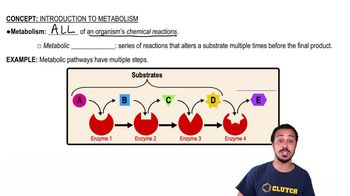
Introduction to Metabolism
Amino Acid Balance
Amino acid balance is crucial for optimal health, as the body requires a specific ratio of essential and non-essential amino acids to function properly. Consuming excessive amounts of protein can lead to an imbalance, potentially causing health issues such as kidney strain or nutrient deficiencies if other food groups are neglected.
추천 영상:
가이드 코스
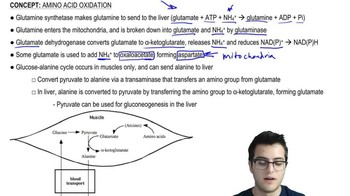
Amino Acid Oxidation 2
Caloric Surplus
A caloric surplus occurs when an individual consumes more calories than the body expends, leading to weight gain. Even if protein is not stored, consuming it in excess can contribute to a caloric surplus, resulting in fat storage and potential obesity, which contradicts the idea that one can eat unlimited protein without consequences.
관련 실천
교과서 질문
1163
views
교과서 질문
A/an ________ is a nutrient that the body requires in large quantities, whereas a/an ________ is one that the body requires in much smaller quantities. A/an ________ is a nutrient that the body cannot produce and so must be supplied from the diet.
1229
views
교과서 질문
Which of the following statements is false?
a. Fiber is a polysaccharide that is completely or partially indigestible by the human body.
b. A complete protein contains all the essential amino acids.
c. Saturated fats contain hydrogen atoms arranged on opposite sides of the carbon-carbon double bond.
d. Linoleic and linolenic acid are essential fatty acids.
1094
views
