Ch. 23 Metabolism and Nutrition
Amerman- Human Anatomy & Physiology 3e
Amerman3rd EditionHuman Anatomy & PhysiologyISBN: 9780138247201, 9780138247928, 9780138201814당신이 사용하는 게 아니라요?교과서 변경
23장, 문제 19

A/an ________ is a nutrient that the body requires in large quantities, whereas a/an ________ is one that the body requires in much smaller quantities. A/an ________ is a nutrient that the body cannot produce and so must be supplied from the diet.

검증된 단계별 안내
1
Step 1: Understand the key terms in the question. The problem is asking about three types of nutrients: one required in large quantities, one required in smaller quantities, and one that the body cannot produce and must obtain from the diet.
Step 2: Recall the classification of nutrients. Nutrients required in large quantities are called macronutrients (e.g., carbohydrates, proteins, and fats), while those required in smaller quantities are called micronutrients (e.g., vitamins and minerals).
Step 3: Identify the term for nutrients that the body cannot produce. These are called essential nutrients, which must be obtained through the diet because the body cannot synthesize them (e.g., certain amino acids, fatty acids, vitamins, and minerals).
Step 4: Match the blanks in the question with the appropriate terms based on the definitions provided. The first blank corresponds to macronutrient, the second to micronutrient, and the third to essential nutrient.
Step 5: Review the definitions and examples of macronutrients, micronutrients, and essential nutrients to ensure a clear understanding of their roles in the body.

비슷한 문제에 대한 검증된 영상 답변:

이 영상 해법은 위 문제에 도움이 된다고 튜터들이 추천한 것입니다.
도움이 되었나요?

주요 개념

질문에 올바르게 답하기 위해 반드시 이해해야 하는 핵심 개념들은 다음과 같습니다.

Macronutrients

Macronutrients are nutrients that the body needs in large amounts to provide energy and support bodily functions. They include carbohydrates, proteins, and fats, which are essential for growth, metabolism, and overall health. Each macronutrient plays a unique role; for example, carbohydrates are the primary energy source, while proteins are crucial for tissue repair and growth.
추천 영상:
5:16
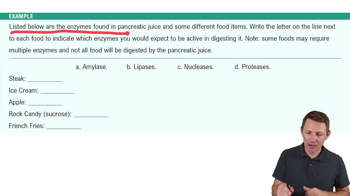
Pancreas Example 1

Micronutrients

Micronutrients are nutrients required by the body in smaller quantities, yet they are vital for various physiological functions. These include vitamins and minerals, which support immune function, bone health, and cellular processes. Despite being needed in lesser amounts than macronutrients, deficiencies in micronutrients can lead to significant health issues.
추천 영상:
5:16
Pancreas Example 1

Essential Nutrients

Essential nutrients are those that the body cannot synthesize on its own and must be obtained through diet. This category includes certain amino acids, fatty acids, vitamins, and minerals. For instance, omega-3 fatty acids are essential for heart health, and vitamin C is crucial for immune function, highlighting the importance of a balanced diet to meet these nutritional needs.
추천 영상:
가이드 코스
05:46
Essential vs. Nonessential Amino Acids