
Ch. 24 The Urinary System
Amerman- Human Anatomy & Physiology 3e
Amerman3rd EditionHuman Anatomy & PhysiologyISBN: 9780138247201, 9780138247928, 9780138201814당신이 사용하는 게 아니라요?교과서 변경
24장, 문제 L3.A1c

Drugs that treat hypertension, or high blood pressure, have the following actions. Discuss the specific effect that each drug will have on the kidneys.
c. Blocking the Na+/Cl−/2K+ transport pumps in the thick ascending limb of the nephron loop

검증된 단계별 안내
1
Understand the role of the Na+/Cl−/2K+ transport pumps in the thick ascending limb of the nephron loop. These pumps are responsible for reabsorbing sodium (Na+), chloride (Cl−), and potassium (K+) ions from the filtrate back into the bloodstream, which helps maintain the osmotic gradient necessary for water reabsorption in the kidney.
Recognize that blocking these transport pumps will inhibit the reabsorption of Na+, Cl−, and K+ ions. This will disrupt the osmotic gradient in the renal medulla, reducing the kidney's ability to reabsorb water from the filtrate.
Explain that the reduced water reabsorption will lead to an increase in urine output (diuresis). This is because water will remain in the filtrate instead of being reabsorbed into the bloodstream, which can help lower blood volume and, consequently, blood pressure.
Discuss how the increased excretion of Na+ and Cl− ions (natriuresis) will also contribute to a reduction in blood volume. Lower blood volume reduces the workload on the heart and decreases blood pressure.
Conclude that this mechanism makes these drugs effective in treating hypertension by reducing both blood volume and systemic vascular resistance, which are key factors in high blood pressure.

비슷한 문제에 대한 검증된 영상 답변:

이 영상 해법은 위 문제에 도움이 된다고 튜터들이 추천한 것입니다.

주요 개념

질문에 올바르게 답하기 위해 반드시 이해해야 하는 핵심 개념들은 다음과 같습니다.

Nephron Structure and Function

The nephron is the functional unit of the kidney, responsible for filtering blood and forming urine. It consists of various segments, including the glomerulus, proximal tubule, loop of Henle, distal tubule, and collecting duct. Each segment plays a specific role in reabsorbing water, electrolytes, and nutrients, as well as excreting waste products.
추천 영상:
0:50
The Nephron Example 1

Na+/Cl−/2K+ Transport Pumps

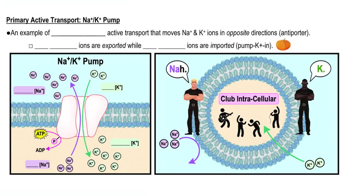
The Na+/Cl−/2K+ transport pumps, located in the thick ascending limb of the loop of Henle, are crucial for reabsorbing sodium, chloride, and potassium ions from the filtrate back into the bloodstream. This process is essential for maintaining electrolyte balance and regulating blood pressure. Inhibition of these pumps can lead to increased excretion of these ions and diuresis.
추천 영상:
가이드 코스
06:57
Primary Active Transport: Na+/K+ Pump

Effects of Diuretics on Blood Pressure

Diuretics are medications that promote the excretion of water and electrolytes through urine. By blocking the Na+/Cl−/2K+ transport pumps, diuretics reduce sodium reabsorption, leading to decreased blood volume and lower blood pressure. Understanding this mechanism is vital for comprehending how certain antihypertensive drugs function and their impact on kidney function.
추천 영상:
가이드 코스
1:32
Effects of the Complement System