Ch. 24 The Urinary System
Amerman- Human Anatomy & Physiology 3e
Amerman3rd EditionHuman Anatomy & PhysiologyISBN: 9780138247201, 9780138247928, 9780138201814당신이 사용하는 게 아니라요?교과서 변경
24장, 문제 L3.2

Mr. Gupta has been diagnosed with nephrotic syndrome, which is characterized by the loss of plasma proteins such as albumin into the urine. What impact will this have on his colloid osmotic pressure? How will this affect the net filtration pressure in his capillary beds? What effect will this likely cause?

검증된 단계별 안내
1
Understand the role of colloid osmotic pressure: Colloid osmotic pressure is primarily maintained by plasma proteins like albumin. These proteins exert a pulling force that helps retain water in the capillaries, opposing the outward hydrostatic pressure.
Analyze the impact of albumin loss: In nephrotic syndrome, albumin is lost in the urine, reducing its concentration in the blood. This decrease in plasma protein levels lowers the colloid osmotic pressure, diminishing the ability of the capillaries to retain water.
Examine the effect on net filtration pressure: Net filtration pressure is determined by the balance between hydrostatic pressure (pushing fluid out of capillaries) and colloid osmotic pressure (pulling fluid into capillaries). A reduction in colloid osmotic pressure will increase the net filtration pressure, favoring fluid movement out of the capillaries into the interstitial space.
Consider the physiological consequences: The increased net filtration pressure can lead to excessive fluid accumulation in the interstitial spaces, causing edema (swelling) in tissues. This is a common symptom in patients with nephrotic syndrome.
Relate the findings to the clinical presentation: The loss of plasma proteins and subsequent edema are key features of nephrotic syndrome. Understanding this mechanism helps explain why patients like Mr. Gupta experience swelling and other related symptoms.

비슷한 문제에 대한 검증된 영상 답변:

이 영상 해법은 위 문제에 도움이 된다고 튜터들이 추천한 것입니다.
도움이 되었나요?

주요 개념

질문에 올바르게 답하기 위해 반드시 이해해야 하는 핵심 개념들은 다음과 같습니다.

Colloid Osmotic Pressure

Colloid osmotic pressure is the pressure exerted by proteins, particularly albumin, in the blood plasma that helps to retain water within the circulatory system. In nephrotic syndrome, the loss of these proteins into the urine decreases the colloid osmotic pressure, leading to a reduced ability to draw water back into the bloodstream from the interstitial spaces.
추천 영상:
가이드 코스
6:12
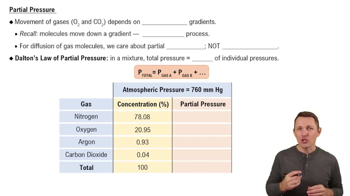
Partial Pressure

Net Filtration Pressure

Net filtration pressure (NFP) is the difference between the hydrostatic pressure in the capillaries and the osmotic pressure exerted by the plasma proteins. A decrease in colloid osmotic pressure, as seen in nephrotic syndrome, reduces NFP, which can lead to less fluid being reabsorbed into the capillaries and more fluid remaining in the interstitial space.
추천 영상:
2:58
Overview of Filtration Pressures

Edema

Edema is the accumulation of excess fluid in the interstitial spaces, often resulting from imbalances in hydrostatic and osmotic pressures. In the case of nephrotic syndrome, the decreased colloid osmotic pressure leads to increased fluid leakage from capillaries, causing swelling and fluid retention in tissues, which is a common symptom of the condition.
추천 영상:
3:15
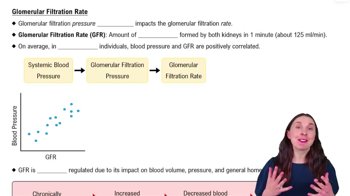
Glomerular Filtration Rate