Ch. 24 The Urinary System
Amerman- Human Anatomy & Physiology 3e
Amerman3rd EditionHuman Anatomy & PhysiologyISBN: 9780138247201, 9780138247928, 9780138201814당신이 사용하는 게 아니라요?교과서 변경
24장, 문제 7c

Mark the following statements as true or false. If a statement is false, correct it to make a true statement.
c. Sodium ion reabsorption creates a gradient that helps drive the reabsorption of water and many other solutes from the proximal tubule.

검증된 단계별 안내
1
Step 1: Understand the context of the problem. The proximal tubule is a part of the nephron in the kidney, and its primary function is to reabsorb water, ions, and nutrients from the filtrate back into the bloodstream. Sodium ion (Na⁺) reabsorption plays a critical role in this process.
Step 2: Analyze the statement provided. The statement claims that sodium ion reabsorption creates a gradient that helps drive the reabsorption of water and other solutes. This involves understanding the mechanisms of sodium reabsorption and its effects on water and solute movement.
Step 3: Recall the physiological mechanism. Sodium ions are actively transported out of the proximal tubule cells into the interstitial fluid via the sodium-potassium pump (Na⁺/K⁺ ATPase). This creates a concentration gradient, where sodium levels are lower inside the tubule cells and higher in the interstitial fluid.
Step 4: Explain how the gradient drives water and solute reabsorption. The sodium gradient facilitates the passive movement of sodium from the filtrate into the tubule cells. This movement also creates an osmotic gradient, which drives water reabsorption via osmosis. Additionally, the sodium gradient enables secondary active transport of other solutes, such as glucose and amino acids, through symporters.
Step 5: Evaluate the statement as true or false. Based on the explanation, the statement is true because sodium ion reabsorption indeed creates a gradient that drives the reabsorption of water and other solutes from the proximal tubule. No correction is needed.

비슷한 문제에 대한 검증된 영상 답변:

이 영상 해법은 위 문제에 도움이 된다고 튜터들이 추천한 것입니다.
도움이 되었나요?

주요 개념

질문에 올바르게 답하기 위해 반드시 이해해야 하는 핵심 개념들은 다음과 같습니다.

Sodium Ion Reabsorption

Sodium ion reabsorption is a critical process in the kidneys, particularly in the proximal tubule, where sodium ions are actively transported out of the tubular fluid and into the bloodstream. This process is essential for maintaining electrolyte balance and blood pressure. The reabsorption of sodium creates an osmotic gradient that facilitates the movement of water and other solutes, enhancing overall fluid balance in the body.
추천 영상:
01:55
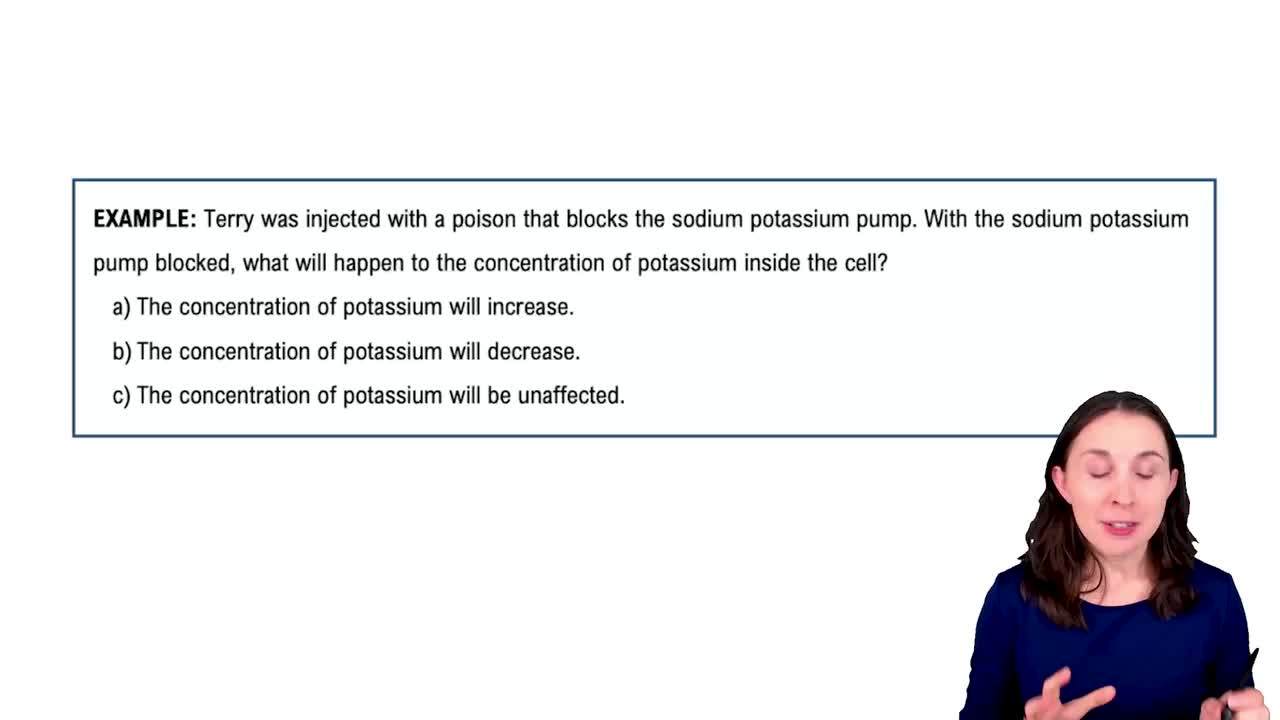
Ions - Sodium and Potassium Example 3

Osmotic Gradient

An osmotic gradient refers to the difference in solute concentration across a membrane, which drives the movement of water through osmosis. In the context of the kidneys, the osmotic gradient established by sodium reabsorption allows water to follow sodium into the bloodstream, thereby concentrating the urine and conserving water. This mechanism is vital for regulating hydration and electrolyte levels in the body.
추천 영상:
04:51
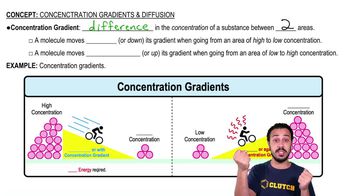
Concentration Gradients and Diffusion

Proximal Tubule Function

The proximal tubule is the first segment of the nephron in the kidney, responsible for the reabsorption of a significant portion of filtered water, sodium, and other solutes. It plays a crucial role in the body's ability to reclaim essential nutrients and maintain homeostasis. The efficiency of the proximal tubule in reabsorbing sodium and water is fundamental to overall kidney function and fluid balance.
추천 영상:
6:51
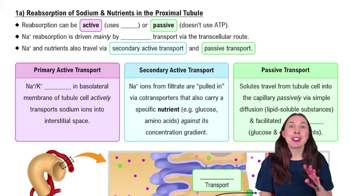
1a) Reabsorption of Sodium & Nutrients in the Proximal Tubule
관련 실천
교과서 질문

Mark the following statements as true or false. If a statement is false, correct it to make a true statement.

d. ADH triggers water reabsorption from the nephron loop.

778
views

교과서 질문

Mark the following statements as true or false. If a statement is false, correct it to make a true statement.

e. Obligatory water reabsorption occurs in the distal tubule and collecting system.

819
views
1
rank
교과서 질문

Mark the following statements as true or false. If a statement is false, correct it to make a true statement.

b. The distal tubule reabsorbs sodium ions and secretes potassium and hydrogen ions in response to ADH.

671
views
교과서 질문

Fill in the blanks for the following statements:

a. When the GFR decreases, the macula densa releases chemicals to______ the afferent arteriole.

b. The sympathetic nervous system______ the blood vessels supplying the kidney _____ to the glomerular filtration rate.

c. The enzyme _____ is released by JG cells in response to a decrease in the GFR.

d. The enzyme ______ converts angiotensin-I to angiotensin-II.

e. Generally, angiotensin-II______ systemic blood pressure while _____ the GFR.

797
views
1
rank
교과서 질문

Which of the following substances would pass through the filtration membrane to become part of the filtrate under normal circumstances? (Circle all that apply.)

a. Sodium ions

b. Albumin

c. Glucose

d. Erythrocytes

e. Leukocytes

f. Amino acids

g. Urea

842
views
교과서 질문

Mark the following statements as true or false. If a statement is false, correct it to make a true statement.

a. Sodium ions and glucose are cotransported into the proximal tubule cell by secondary active transport.

669
views