
교과서 질문
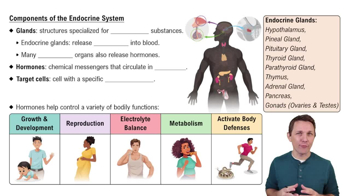
Some hormones act by:
a. Increasing the synthesis of enzymes
b. Converting an inactive enzyme into an active enzyme
c. Affecting only specific target organs
d. All of these
865
views
 검증된 단계별 안내
 13:06
13:06
 7:06
7:06 2:50
2:50Some hormones act by:
a. Increasing the synthesis of enzymes
b. Converting an inactive enzyme into an active enzyme
c. Affecting only specific target organs
d. All of these
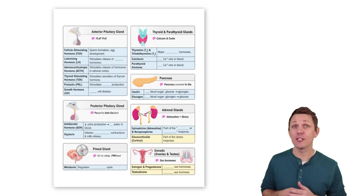
Describe the body location of each of the following endocrine organs: anterior pituitary, pineal gland, pancreas, ovaries, testes, and adrenal glands.
List the hormones produced by each organ.
The anterior pituitary is often referred to as the master endocrine organ, but it, too, has a 'master.' What controls the release of anterior pituitary hormones?
Hormones
a. Are produced by exocrine glands
b. Are carried to all parts of the body in blood
c. Remain at constant concentration in the blood
d. Affect only non-hormone-producing organs
Absence of thyroid hormone would result in:
a. Increased heart rate and increased force of heart contraction
b. Depression of the CNS and lethargy
c. Exophthalmos
d. High metabolic rate
Name a hormone secreted by a muscle cell and two hormones secreted by neurons.