
Ch. 20 The Lymphatic System and Lymphoid Organs and Tissues
Hoehn - Marieb Human Anatomy & Physiology, 12th edition
Hoehn, Haynes, Abbott12th EditionMarieb Human Anatomy & PhysiologyISBN: 9780138242732당신이 사용하는 게 아니라요?교과서 변경
20장, 문제 14

There are no lymphatic arteries. Why isn't this a problem?

검증된 단계별 안내
1
Step 1: Understand the structure of the lymphatic system, which consists of lymphatic capillaries, larger lymphatic vessels, lymph nodes, and ducts, but notably lacks arteries.
Step 2: Recognize that lymphatic vessels do not require arteries because they do not need to actively pump lymph; instead, lymph movement relies on other mechanisms.
Step 3: Identify the mechanisms that propel lymph through the lymphatic vessels, such as skeletal muscle contractions, respiratory movements, and the presence of one-way valves preventing backflow.
Step 4: Note that lymphatic capillaries are highly permeable and absorb interstitial fluid directly, so there is no need for a high-pressure arterial system to deliver lymph.
Step 5: Conclude that the absence of lymphatic arteries is not a problem because lymph flow depends on passive and mechanical forces rather than arterial pressure, making arteries unnecessary in the lymphatic system.

비슷한 문제에 대한 검증된 영상 답변:

이 영상 해법은 위 문제에 도움이 된다고 튜터들이 추천한 것입니다.
영상 길이:
2m
도움이 되었나요?

주요 개념

질문에 올바르게 답하기 위해 반드시 이해해야 하는 핵심 개념들은 다음과 같습니다.

Structure and Function of Lymphatic Vessels

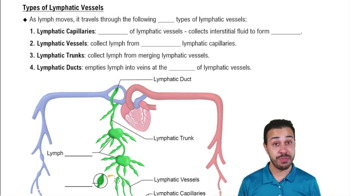
Lymphatic vessels are responsible for transporting lymph fluid throughout the body. Unlike blood vessels, lymphatic vessels have thin walls and valves to prevent backflow, ensuring one-way movement of lymph. They begin as blind-ended capillaries and progressively merge into larger vessels, but there are no arteries because lymph is not pumped under high pressure.
추천 영상:
7:02
Types of Lymphatic Vessels

Role of Muscle Contractions and Valves in Lymph Flow

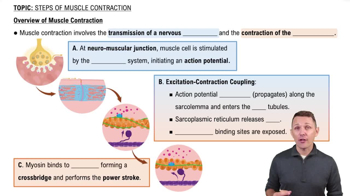
Lymph flow relies on the contraction of surrounding skeletal muscles and the presence of valves within lymphatic vessels. These valves prevent backflow, and muscle movements compress the vessels, pushing lymph forward. This mechanism compensates for the absence of lymphatic arteries and a central pump like the heart.
추천 영상:
가이드 코스
4:53
Overview of Muscle Contraction

Differences Between Blood Circulation and Lymphatic Circulation

Blood circulation is a closed loop driven by the heart, involving arteries, veins, and capillaries. In contrast, the lymphatic system is an open network without arteries and relies on passive mechanisms for fluid movement. This difference explains why lymphatic arteries are unnecessary and not present.
추천 영상:
가이드 코스
03:04
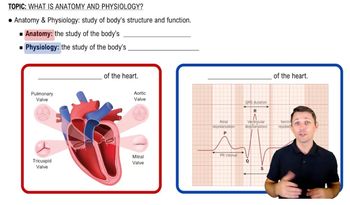
The Difference Between Anatomy and Physiology