Ch. 23 The Digestive System
Hoehn - Marieb Human Anatomy & Physiology, 12th edition
Hoehn, Haynes, Abbott12th EditionMarieb Human Anatomy & PhysiologyISBN: 9780138242732당신이 사용하는 게 아니라요?교과서 변경
23장, 문제 14

Trace the path of a single protein molecule that has been ingested.
The protein molecule will be digested by enzymes made by
a. The mouth, stomach, and colon
b. The stomach, liver, and small intestine
c. The small intestine, mouth, and liver
d. The pancreas, stomach, and small intestine

검증된 단계별 안내
1
Step 1: Understand the process of protein digestion, which involves breaking down proteins into smaller peptides and amino acids by specific enzymes produced in different organs.
Step 2: Identify the organs involved in protein digestion. The mouth primarily uses mechanical digestion and saliva, which contains amylase for carbohydrates but not enzymes for protein digestion.
Step 3: Recognize that the stomach produces pepsin, an enzyme that begins protein digestion by breaking proteins into smaller peptides.
Step 4: Know that the pancreas secretes proteolytic enzymes like trypsin and chymotrypsin into the small intestine, where most protein digestion occurs.
Step 5: Understand that the liver produces bile, which aids fat digestion but does not produce enzymes for protein digestion, and the colon mainly absorbs water and electrolytes, not involved in protein digestion.

비슷한 문제에 대한 검증된 영상 답변:

이 영상 해법은 위 문제에 도움이 된다고 튜터들이 추천한 것입니다.
영상 길이:
2m
도움이 되었나요?

주요 개념

질문에 올바르게 답하기 위해 반드시 이해해야 하는 핵심 개념들은 다음과 같습니다.

Protein Digestion Process

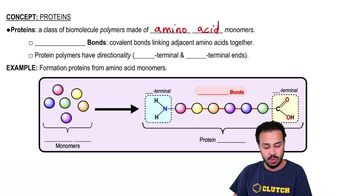
Protein digestion begins in the stomach where enzymes like pepsin break proteins into smaller peptides. This process continues in the small intestine with enzymes such as trypsin and chymotrypsin from the pancreas, further breaking peptides into amino acids for absorption.
추천 영상:
02:50
Proteins

Role of Digestive Organs and Enzymes

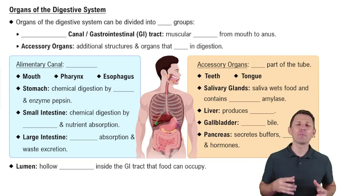
Different organs contribute specific enzymes for digestion: the stomach produces pepsin, the pancreas secretes proteases like trypsin, and the small intestine completes digestion and absorbs nutrients. The liver produces bile but does not secrete protein-digesting enzymes.
추천 영상:
가이드 코스
6:28
Organs of the Digestive System

Pathway of Ingested Protein Molecule

An ingested protein molecule travels from the mouth (mechanical digestion), to the stomach (chemical digestion by pepsin), then to the small intestine where pancreatic enzymes finish digestion. The colon mainly absorbs water and does not digest proteins.
추천 영상:
4:40
Alternative Pathway
관련 실천
교과서 질문

Name the six functional activities of the digestive system.

1203
views
1
rank
교과서 질문

Trace the path of a single protein molecule that has been ingested.

The protein molecule must be digested before it can be transported to and utilized by the cells because

a. Protein is only useful directly

b. Protein has a low pH

c. Proteins in the circulating blood produce an adverse osmotic pressure

d. The protein is too large to be readily absorbed

775
views
교과서 질문

Trace the path of a single protein molecule that has been ingested.

Before the blood carrying the products of protein digestion reaches the heart, it first passes through capillary networks in:

a. The spleen

b. The lungs

c. The liver

d. The brain

100
views
교과서 질문

Make a simple line drawing of the organs of the alimentary canal and label each organ. Then add three labels to your drawing—salivary glands, liver, and pancreas—and use arrows to show where each of these organs empties its secretions into the alimentary canal.

1051
views
1
rank
교과서 질문

Someone has eaten a meal of buttered toast, cream, and eggs. Which of the following would you expect to happen?

a. Compared to the period shortly after the meal, gastric motility and secretion of HCl decrease when the food reaches the duodenum

b. Gastric motility increases even as the person is chewing the food (before swallowing)

c. Fat will be emulsified in the duodenum by the action of bile

d. All of these

766
views
교과서 질문

a. What is the normal number of permanent teeth? Of deciduous teeth?

b. What substance covers the tooth crown? Its root?

c. What substance makes up the bulk of a tooth?

d. What and where is pulp?

110
views