Ch. 19 The Cardiovascular System: Blood Vessels
Marieb - Human Anatomy & Physiology 11th Edition
Marieb, Hoehn11th EditionHuman Anatomy & PhysiologyISBN: 9780136874034당신이 사용하는 게 아니라요?교과서 변경
19장, 문제 15

Describe the neural mechanisms responsible for controlling blood pressure.

검증된 단계별 안내
1
Begin by explaining that blood pressure regulation primarily involves the autonomic nervous system, which adjusts heart rate, blood vessel diameter, and blood volume to maintain homeostasis.
Describe the role of baroreceptors, which are stretch-sensitive sensory neurons located mainly in the carotid sinus and aortic arch. These receptors detect changes in blood pressure by sensing the stretch of blood vessel walls.
Explain how baroreceptors send afferent signals via the glossopharyngeal nerve (from the carotid sinus) and the vagus nerve (from the aortic arch) to the cardiovascular center in the medulla oblongata of the brainstem.
Detail how the cardiovascular center processes this information and modulates autonomic output: increasing parasympathetic activity to lower heart rate and dilate blood vessels when blood pressure is high, or increasing sympathetic activity to raise heart rate, contractility, and cause vasoconstriction when blood pressure is low.
Mention additional neural reflexes such as the chemoreceptor reflex and higher brain centers that can influence blood pressure regulation, integrating signals related to oxygen, carbon dioxide levels, and emotional states.

비슷한 문제에 대한 검증된 영상 답변:

이 영상 해법은 위 문제에 도움이 된다고 튜터들이 추천한 것입니다.
영상 길이:
2m

주요 개념

질문에 올바르게 답하기 위해 반드시 이해해야 하는 핵심 개념들은 다음과 같습니다.

Baroreceptor Reflex

The baroreceptor reflex is a rapid negative feedback mechanism that helps maintain blood pressure stability. Baroreceptors located in the carotid sinus and aortic arch detect changes in blood pressure and send signals to the brainstem, which adjusts heart rate and vessel diameter accordingly.
추천 영상:
3:37
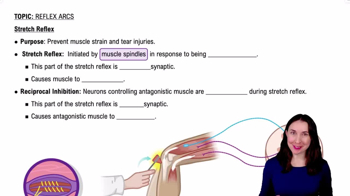
Stretch Reflex

Autonomic Nervous System Regulation

The autonomic nervous system, comprising the sympathetic and parasympathetic branches, controls blood pressure by modulating heart rate, cardiac contractility, and vascular tone. Sympathetic activation increases blood pressure through vasoconstriction and increased cardiac output, while parasympathetic activity lowers it.
추천 영상:
1:50
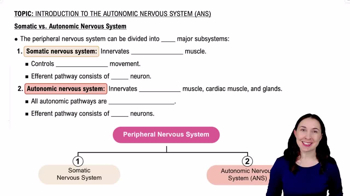
Somatic vs. Autonomic Nervous System

Central Nervous System Integration

The central nervous system, particularly the medulla oblongata, integrates sensory input from baroreceptors and chemoreceptors to coordinate cardiovascular responses. It processes this information to regulate autonomic output, ensuring appropriate adjustments in blood pressure under varying physiological conditions.
추천 영상:
1:32
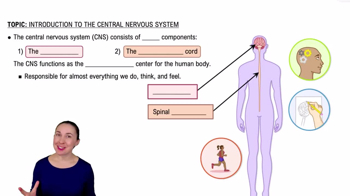
The Central Nervous System