Ch. 19 The Cardiovascular System: Blood Vessels
Marieb - Human Anatomy & Physiology 11th Edition
Marieb, Hoehn11th EditionHuman Anatomy & PhysiologyISBN: 9780136874034당신이 사용하는 게 아니라요?교과서 변경
19장, 문제 18

Physiologists often consider capillaries and postcapillary venules together.
a. What functions do these vessels share?
b. Structurally, how do they differ?

검증된 단계별 안내
1
Step 1: Understand the shared functions of capillaries and postcapillary venules. Both types of vessels are involved in the exchange of substances between the blood and surrounding tissues, including nutrients, gases, and waste products. They also play a role in the regulation of blood flow and immune cell trafficking.
Step 2: Identify the specific functions related to permeability. Capillaries and postcapillary venules both allow for the passage of fluids and cells, but postcapillary venules are especially important sites for leukocyte (white blood cell) exit from the bloodstream during inflammation.
Step 3: Examine the structural features of capillaries. Capillaries are composed primarily of a single layer of endothelial cells with a thin basement membrane, which facilitates efficient exchange of materials.
Step 4: Compare the structure of postcapillary venules to capillaries. Postcapillary venules are slightly larger in diameter, have a similar endothelial lining, but also possess a more developed basement membrane and surrounding pericytes, which provide structural support.
Step 5: Summarize the key structural difference. While both vessels have endothelial linings, postcapillary venules have a structure that supports their role in leukocyte trafficking and fluid exchange, distinguishing them from the simpler capillary walls.

비슷한 문제에 대한 검증된 영상 답변:

이 영상 해법은 위 문제에 도움이 된다고 튜터들이 추천한 것입니다.
영상 길이:
1m
도움이 되었나요?

주요 개념

질문에 올바르게 답하기 위해 반드시 이해해야 하는 핵심 개념들은 다음과 같습니다.

Functions of Capillaries and Postcapillary Venules

Both capillaries and postcapillary venules facilitate the exchange of gases, nutrients, and waste products between blood and tissues. They also play key roles in immune responses by allowing leukocyte migration and regulating fluid balance through filtration and reabsorption.
추천 영상:
가이드 코스
5:59
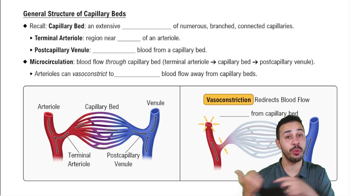
General Structure of Capillary Beds

Structural Characteristics of Capillaries

Capillaries are the smallest blood vessels with thin walls composed of a single layer of endothelial cells and a basement membrane. This minimal structure allows efficient exchange of substances but provides limited mechanical support.
추천 영상:
가이드 코스
6:52
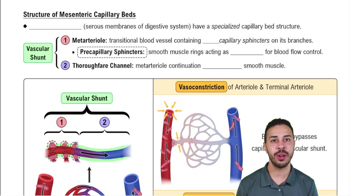
Structure of Mesenteric Capillary Beds

Structural Characteristics of Postcapillary Venules

Postcapillary venules are slightly larger than capillaries and have a thin endothelial lining with a discontinuous basement membrane. Unlike capillaries, they have pericytes and are more permeable, facilitating leukocyte passage during inflammation.
추천 영상:
04:15
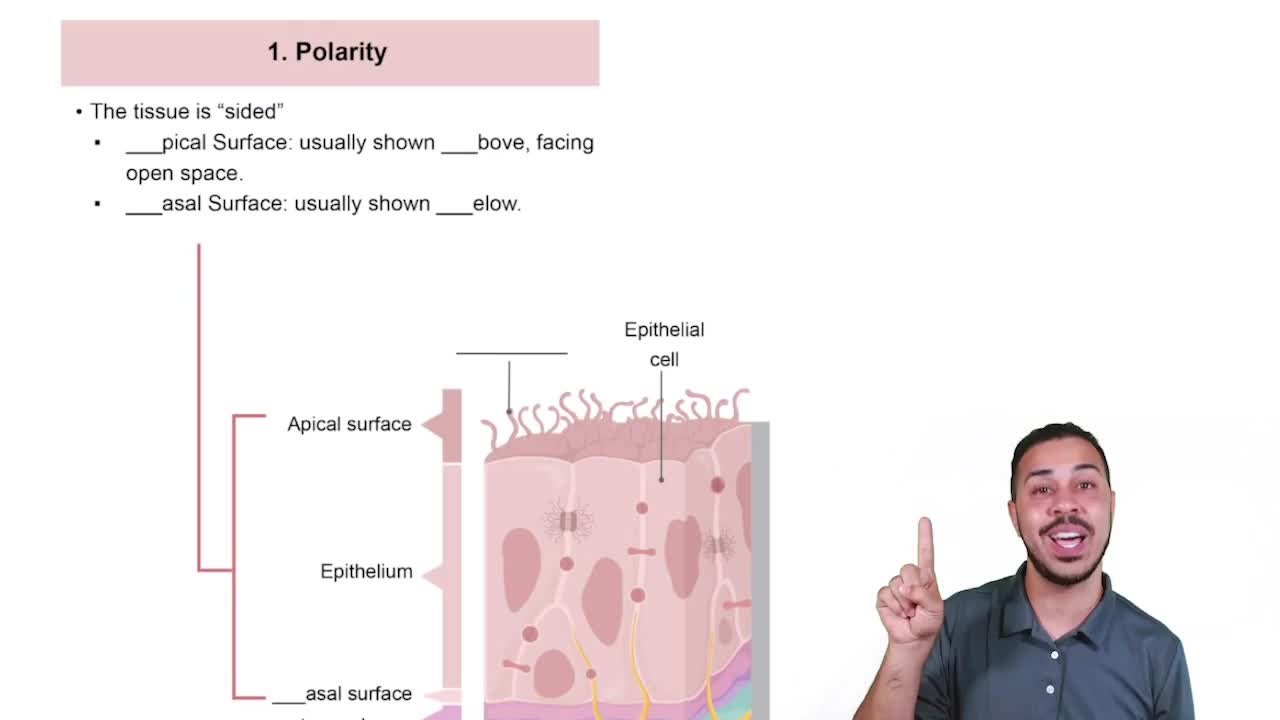
Characteristic 1: Polarity