Ch. 23 The Digestive System
Marieb - Human Anatomy & Physiology 11th Edition
Marieb, Hoehn11th EditionHuman Anatomy & PhysiologyISBN: 9780136874034당신이 사용하는 게 아니라요?교과서 변경
23장, 문제 12

a. What is the normal number of permanent teeth? Of deciduous teeth?
b. What substance covers the tooth crown? Its root?
c. What substance makes up the bulk of a tooth?
d. What and where is pulp?

검증된 단계별 안내
1
Step 1: Understand the normal number of teeth in humans. Permanent teeth are the adult teeth that replace deciduous (baby) teeth. Humans typically have 32 permanent teeth and 20 deciduous teeth. Deciduous teeth are present during childhood and are eventually replaced by permanent teeth.
Step 2: Identify the substances that cover different parts of the tooth. The crown of the tooth is covered by enamel, which is the hardest substance in the human body. The root of the tooth is covered by cementum, a calcified tissue that helps anchor the tooth to the jawbone.
Step 3: Determine the substance that makes up the bulk of the tooth. The bulk of the tooth is composed of dentin, a mineralized tissue that lies beneath the enamel and cementum. Dentin is less hard than enamel but provides structural support to the tooth.
Step 4: Define pulp and its location. Pulp is the soft tissue located in the central cavity of the tooth, known as the pulp cavity. It contains blood vessels, nerves, and connective tissue, which nourish the tooth and provide sensory function.
Step 5: Relate the anatomical structure of the tooth to its function. Enamel protects the tooth from wear and decay, dentin provides structural integrity, cementum anchors the tooth, and pulp ensures the tooth remains vital and responsive to stimuli.

비슷한 문제에 대한 검증된 영상 답변:

이 영상 해법은 위 문제에 도움이 된다고 튜터들이 추천한 것입니다.
영상 길이:
3m
도움이 되었나요?

주요 개념

질문에 올바르게 답하기 위해 반드시 이해해야 하는 핵심 개념들은 다음과 같습니다.

Permanent and Deciduous Teeth

Humans typically have 32 permanent teeth, which replace the 20 deciduous (baby) teeth as they grow. Deciduous teeth emerge during early childhood and are eventually lost to make way for the larger, stronger permanent teeth. Understanding the transition from deciduous to permanent teeth is crucial for grasping dental development.
추천 영상:
가이드 코스
06:55
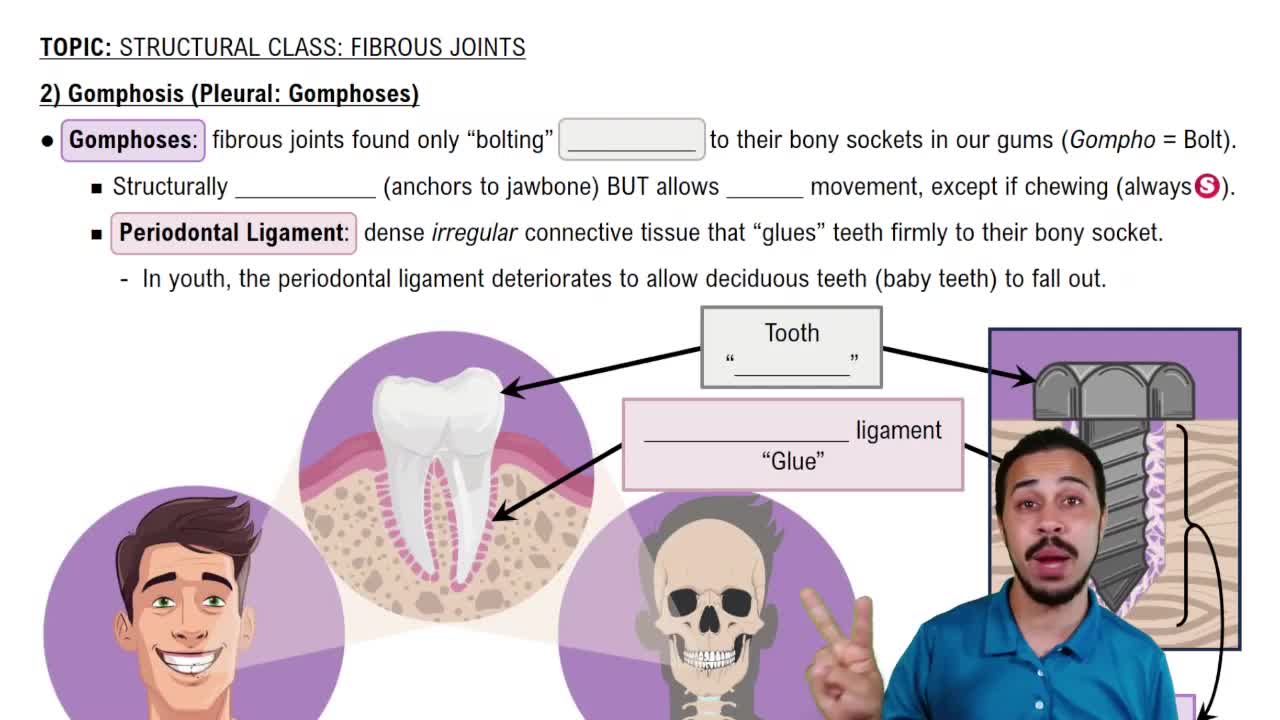
Gomphosis (Pleural: Gomphoses)

Tooth Structure: Enamel and Dentin

The crown of a tooth is covered by enamel, the hardest substance in the human body, which protects against decay. The root is covered by cementum, a bone-like substance that helps anchor the tooth in the jaw. Beneath the enamel and cementum lies dentin, which makes up the bulk of the tooth and provides structural support.
추천 영상:
4:16
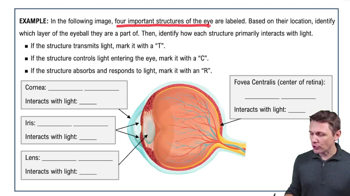
Structure of the Eyeball Example 1

Dental Pulp

Dental pulp is the soft tissue located in the center of the tooth, containing nerves, blood vessels, and connective tissue. It plays a vital role in tooth health by providing nutrients and sensation. Understanding the location and function of pulp is essential for recognizing dental issues such as infections or cavities.
추천 영상:
가이드 코스
10:09
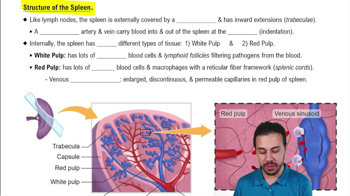
Structure of the Spleen
관련 실천
교과서 질문

Trace the path of a single protein molecule that has been ingested.

The protein molecule will be digested by enzymes made by

a. The mouth, stomach, and colon

b. The stomach, liver, and small intestine

c. The small intestine, mouth, and liver

d. The pancreas, stomach, and small intestine

817
views
교과서 질문

Name the six functional activities of the digestive system.

1203
views
1
rank
교과서 질문

Trace the path of a single protein molecule that has been ingested.

The protein molecule must be digested before it can be transported to and utilized by the cells because

a. Protein is only useful directly

b. Protein has a low pH

c. Proteins in the circulating blood produce an adverse osmotic pressure

d. The protein is too large to be readily absorbed

775
views
교과서 질문

The sphincter between the stomach and duodenum is:

a. The pyloric sphincter

b. The gastroesophageal sphincter

c. The hepatopancreatic sphincter

d. The ileocecal valve

1205
views
교과서 질문

Someone has eaten a meal of buttered toast, cream, and eggs. Which of the following would you expect to happen?

a. Compared to the period shortly after the meal, gastric motility and secretion of HCl decrease when the food reaches the duodenum

b. Gastric motility increases even as the person is chewing the food (before swallowing)

c. Fat will be emulsified in the duodenum by the action of bile

d. All of these

766
views
교과서 질문

The gallbladder

a. Produces bile

b. Is attached to the pancreas

c. Stores and concentrates bile

d. Produces secretin

1106
views