Ch. 23 The Digestive System
Marieb - Human Anatomy & Physiology 11th Edition
Marieb, Hoehn11th EditionHuman Anatomy & PhysiologyISBN: 9780136874034당신이 사용하는 게 아니라요?교과서 변경
23장, 문제 11

Name the six functional activities of the digestive system.

검증된 단계별 안내
1
Understand that the digestive system performs several key functions to process food and absorb nutrients necessary for the body.
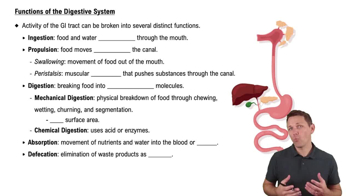
Identify the first functional activity: Ingestion, which is the process of taking food into the mouth.
Recognize the second activity: Propulsion, which includes swallowing and the movement of food through the digestive tract via peristalsis.
Note the third activity: Mechanical digestion, involving physical breakdown of food through chewing, churning, and segmentation.
List the remaining activities: Chemical digestion (breaking down food molecules by enzymes), Absorption (nutrients passing into the blood or lymph), and Defecation (elimination of indigestible substances as feces).

비슷한 문제에 대한 검증된 영상 답변:

이 영상 해법은 위 문제에 도움이 된다고 튜터들이 추천한 것입니다.
영상 길이:
1m
도움이 되었나요?

주요 개념

질문에 올바르게 답하기 위해 반드시 이해해야 하는 핵심 개념들은 다음과 같습니다.

Ingestion

Ingestion is the process of taking food into the mouth, initiating digestion. It involves chewing and swallowing, which prepare food for further breakdown in the digestive tract.
추천 영상:
4:24
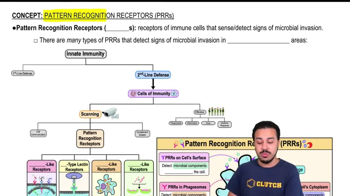
Pattern Recognition Receptors

Digestion

Digestion refers to the mechanical and chemical breakdown of food into smaller molecules. Mechanical digestion includes chewing and churning, while chemical digestion involves enzymes breaking down complex molecules.
추천 영상:
가이드 코스
5:08
Functions of the Digestive System

Absorption

Absorption is the process by which nutrients from digested food pass through the lining of the intestines into the bloodstream. This allows the body to utilize essential nutrients for energy, growth, and repair.
추천 영상:
가이드 코스
3:44
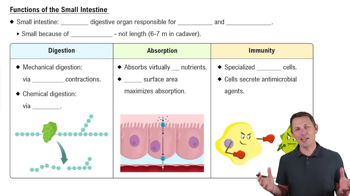
Functions of the Small Intestine
관련 실천
교과서 질문

Trace the path of a single protein molecule that has been ingested.

The protein molecule will be digested by enzymes made by

a. The mouth, stomach, and colon

b. The stomach, liver, and small intestine

c. The small intestine, mouth, and liver

d. The pancreas, stomach, and small intestine

817
views
교과서 질문

Which of the following is not characteristic of the colon?

a. It is divided into ascending, transverse, and descending portions

b. It contains abundant bacteria, some of which synthesize certain vitamins

c. It is the main absorptive site

d. It absorbs much of the water and salts remaining in the wastes

146
views
교과서 질문

The sphincter between the stomach and duodenum is:

a. The pyloric sphincter

b. The gastroesophageal sphincter

c. The hepatopancreatic sphincter

d. The ileocecal valve

1205
views
교과서 질문

Someone has eaten a meal of buttered toast, cream, and eggs. Which of the following would you expect to happen?

a. Compared to the period shortly after the meal, gastric motility and secretion of HCl decrease when the food reaches the duodenum

b. Gastric motility increases even as the person is chewing the food (before swallowing)

c. Fat will be emulsified in the duodenum by the action of bile

d. All of these

766
views
교과서 질문

The gallbladder

a. Produces bile

b. Is attached to the pancreas

c. Stores and concentrates bile

d. Produces secretin

1106
views
교과서 질문

a. What is the normal number of permanent teeth? Of deciduous teeth?

b. What substance covers the tooth crown? Its root?

c. What substance makes up the bulk of a tooth?

d. What and where is pulp?

110
views