

Ch. 26 Fluid, Electrolyte, and Acid-Base Balance
Marieb - Human Anatomy & Physiology 11th Edition
Marieb, Hoehn11th EditionHuman Anatomy & PhysiologyISBN: 9780136874034당신이 사용하는 게 아니라요?교과서 변경
26장, 문제 22

Explain how emphysema and congestive heart failure can lead to acid-base imbalance.

검증된 단계별 안내
1
Step 1: Understand the normal acid-base balance in the body, which is primarily maintained by the respiratory system regulating carbon dioxide (CO2) levels and the kidneys managing bicarbonate (HCO3-) levels.
Step 2: Analyze how emphysema affects this balance. Emphysema damages the alveoli in the lungs, reducing the surface area for gas exchange, which leads to decreased elimination of CO2. This causes CO2 to accumulate in the blood, increasing acidity and resulting in respiratory acidosis.
Step 3: Examine congestive heart failure (CHF) and its impact. CHF leads to poor cardiac output and reduced tissue perfusion, which can cause hypoxia and anaerobic metabolism, producing lactic acid and contributing to metabolic acidosis. Additionally, fluid retention can affect kidney function, impairing acid-base regulation.
Step 4: Consider compensatory mechanisms. In emphysema, the kidneys may retain bicarbonate to buffer the increased CO2, partially correcting the acidosis. In CHF, respiratory compensation may occur by increasing ventilation to reduce CO2 levels, but this can be limited by pulmonary congestion.
Step 5: Summarize that both emphysema and CHF disrupt normal acid-base homeostasis through different mechanisms—emphysema primarily causes respiratory acidosis due to CO2 retention, while CHF can cause metabolic acidosis due to poor perfusion and lactic acid buildup, with the body attempting to compensate through renal and respiratory adjustments.

비슷한 문제에 대한 검증된 영상 답변:

이 영상 해법은 위 문제에 도움이 된다고 튜터들이 추천한 것입니다.
영상 길이:
2m
도움이 되었나요?

주요 개념

질문에 올바르게 답하기 위해 반드시 이해해야 하는 핵심 개념들은 다음과 같습니다.

Respiratory Acidosis in Emphysema

Emphysema damages alveoli, reducing gas exchange and causing CO2 retention. This leads to increased blood CO2 levels, lowering pH and resulting in respiratory acidosis. The body may compensate by renal bicarbonate retention to buffer the acidity.
추천 영상:
03:46
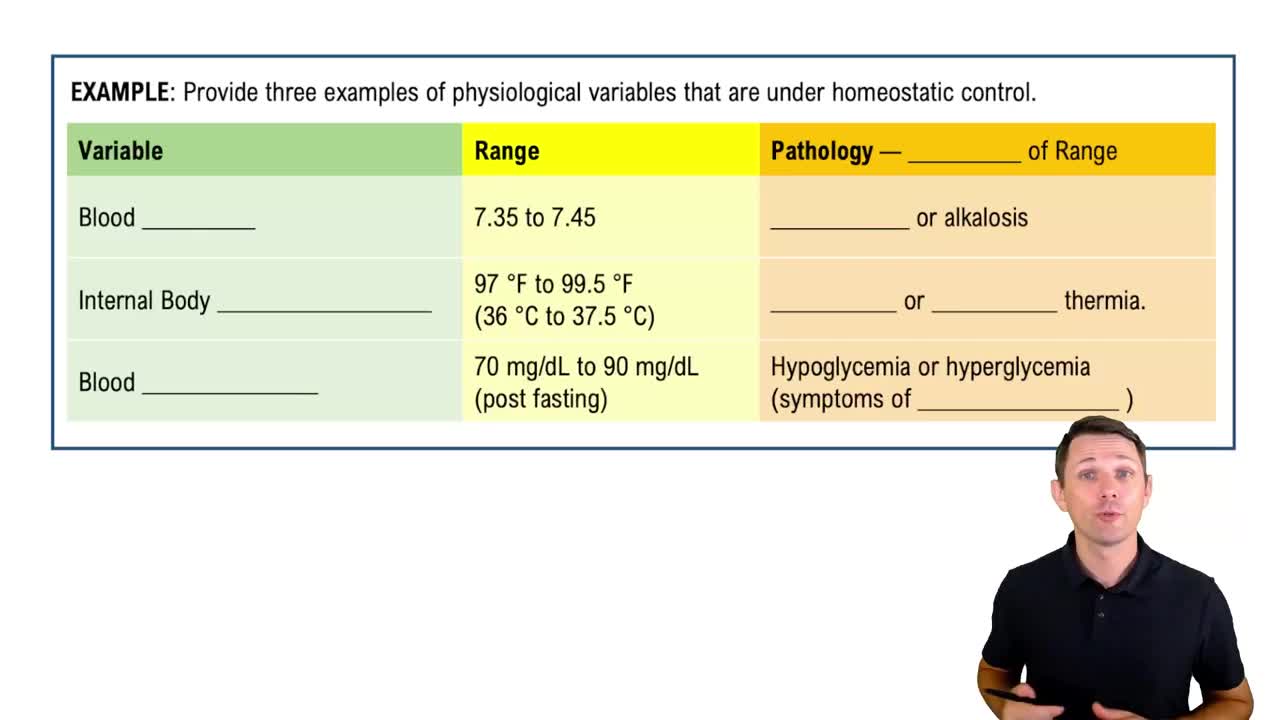
Homeostasis Example 1

Metabolic Acidosis in Congestive Heart Failure

Congestive heart failure reduces tissue perfusion, causing anaerobic metabolism and lactic acid buildup. This accumulation of acids lowers blood pH, leading to metabolic acidosis. The kidneys attempt to compensate by increasing acid excretion and bicarbonate reabsorption.
추천 영상:
가이드 코스
02:17
Introduction to Metabolism

Acid-Base Compensation Mechanisms

The body maintains pH balance through respiratory and renal compensation. In respiratory acidosis, kidneys retain bicarbonate; in metabolic acidosis, respiration increases to expel CO2. Understanding these mechanisms is key to interpreting acid-base imbalances in diseases like emphysema and heart failure.
추천 영상:
가이드 코스
01:29
Acids and Bases
관련 실천
교과서 질문

Mr. Jessup, a 55-year-old man, is operated on for a cerebral tumor. About a month later, he appears at his physician's office complaining of excessive thirst. He claims to have been drinking about 20 liters of water daily for the past week and says he has been voiding nearly continuously. A urine sample is collected and its specific gravity is reported as 1.001.

What is your diagnosis of Mr. Jessup's problem?

What connection might exist between his previous surgery and his present problem?

533
views
교과서 질문

For each of the following sets of blood values, name the acid-base imbalance (acidosis or alkalosis), determine its cause (metabolic or respiratory), decide whether the condition is being compensated, and cite at least one possible cause of the imbalance. Problem 1: pH 7.63; Pco₂ 19 mm Hg; Hco₃⁻ 19.5 mEq/L Problem 2: pH 7.22; Pco₂ 30 mm Hg; Hco₃⁻ 12.0 mEq/L

401
views
교과서 질문

Explain the relationship of the following to renal secretion and excretion of hydrogen ions:

Plasma carbon dioxide levels

Phosphate

Sodium bicarbonate reabsorption

527
views
교과서 질문

During a routine medical checkup, Shelby, a 26-year-old physiotherapy student, is surprised to hear that her blood pressure is 180/110. She also has a rumbling systolic and diastolic abdominal bruit (murmur) that is loudest at the mid-epigastric area. Her physician suspects renal artery stenosis (narrowing). She orders an abdominal ultrasound and renal artery arteriography, which confirm that Shelby has a small right kidney and the distal part of her right renal artery is narrowed by more than 70%. Her physician prescribes diuretics and calcium channel blockers as temporary measures, and refers Shelby to a cardiovascular surgeon. Explain the connection between Shelby's renal artery stenosis and her hypertension. Why is her right kidney smaller than her left? What would you expect Shelby's blood levels of K⁺, Na⁺, aldosterone, angiotensin II, and renin to be?

395
views
교과서 질문

Mrs. Bush, a 70-year-old woman, is admitted to the hospital. Her history states that she has been suffering from diarrhea for three weeks. On admission, she complains of severe fatigue and muscle weakness. A blood chemistry study yields the following information: Na⁺ 142 mEq/L; K⁺ 1.5 mEq/L; Cl⁻ 92 mEq/L; Pco₂ 32 mm Hg.

Which electrolytes are within normal limits? Which are so abnormal that the patient has a medical emergency?

Which of the following represents the greatest danger to Mrs. Bush?

a. A fall due to her muscular weakness

b. Edema

c. Cardiac arrhythmia and cardiac arrest.

506
views