Ch. 26 Fluid, Electrolyte, and Acid-Base Balance
Marieb - Human Anatomy & Physiology 11th Edition
Marieb, Hoehn11th EditionHuman Anatomy & PhysiologyISBN: 9780136874034당신이 사용하는 게 아니라요?교과서 변경
26장, 문제 20

Mr. Jessup, a 55-year-old man, is operated on for a cerebral tumor. About a month later, he appears at his physician's office complaining of excessive thirst. He claims to have been drinking about 20 liters of water daily for the past week and says he has been voiding nearly continuously. A urine sample is collected and its specific gravity is reported as 1.001.
What is your diagnosis of Mr. Jessup's problem?
What connection might exist between his previous surgery and his present problem?

검증된 단계별 안내
1
Step 1: Identify the key symptoms presented by Mr. Jessup: excessive thirst (polydipsia), very high water intake (about 20 liters daily), and nearly continuous urination (polyuria). These symptoms suggest a problem with water balance and urine concentration.
Step 2: Analyze the urine specific gravity value of 1.001, which is very close to pure water (1.000). This indicates that the urine is very dilute, meaning the kidneys are not concentrating the urine properly.
Step 3: Consider the physiological mechanisms controlling water balance: Antidiuretic hormone (ADH), also called vasopressin, regulates water reabsorption in the kidneys. A deficiency or lack of response to ADH leads to large volumes of dilute urine and compensatory excessive thirst.
Step 4: Connect the previous cerebral tumor surgery to the current symptoms. The hypothalamus and posterior pituitary gland, located in the brain, produce and release ADH. Surgery in this area can damage these structures, causing central diabetes insipidus, characterized by ADH deficiency.
Step 5: Conclude that Mr. Jessup likely has central diabetes insipidus caused by damage to the hypothalamic-pituitary axis during his cerebral tumor surgery, leading to decreased ADH secretion, resulting in excessive urination of dilute urine and increased thirst.

비슷한 문제에 대한 검증된 영상 답변:

이 영상 해법은 위 문제에 도움이 된다고 튜터들이 추천한 것입니다.
영상 길이:
5m

주요 개념

질문에 올바르게 답하기 위해 반드시 이해해야 하는 핵심 개념들은 다음과 같습니다.

Diabetes Insipidus

Diabetes insipidus is a condition characterized by excessive thirst and large volumes of dilute urine due to the kidneys' inability to concentrate urine. It results from a deficiency of antidiuretic hormone (ADH) or the kidneys' resistance to it, leading to low urine specific gravity, typically close to 1.000.
추천 영상:
가이드 코스
1:38
Secondary Lymphoid Organs: The Spleen Example 1

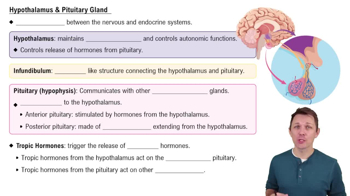
Role of the Hypothalamus and Pituitary Gland in Water Balance

The hypothalamus produces ADH, which is stored and released by the posterior pituitary gland. ADH regulates water reabsorption in the kidneys, concentrating urine and maintaining body fluid balance. Damage to these areas, such as from brain surgery near the pituitary, can disrupt ADH secretion, causing diabetes insipidus.
추천 영상:
7:10
Hypothalamus & Pituitary Gland

Urine Specific Gravity and Its Clinical Significance

Urine specific gravity measures urine concentration, reflecting kidney function and hydration status. Normal values range from 1.005 to 1.030; a value near 1.001 indicates very dilute urine, often seen in diabetes insipidus. This helps differentiate causes of excessive urination and thirst.
추천 영상:
가이드 코스
4:58
Introduction to Energy