Ch. 26 Fluid, Electrolyte, and Acid-Base Balance
Marieb - Human Anatomy & Physiology 11th Edition
Marieb, Hoehn11th EditionHuman Anatomy & PhysiologyISBN: 9780136874034당신이 사용하는 게 아니라요?교과서 변경
26장, 문제 16

Explain why and how total body sodium content, ECF volume, and blood pressure are jointly regulated.

검증된 단계별 안내
1
Step 1: Understand the relationship between total body sodium content and extracellular fluid (ECF) volume. Sodium is the primary cation in the ECF, and its concentration largely determines the osmolarity of this compartment. When total body sodium increases, water follows by osmosis to maintain osmotic balance, leading to an increase in ECF volume.
Step 2: Recognize that changes in ECF volume directly affect blood volume because plasma is part of the ECF. An increase in ECF volume raises blood volume, which in turn influences blood pressure by increasing the amount of fluid within the vascular system.
Step 3: Explore the physiological mechanisms that regulate sodium balance, ECF volume, and blood pressure jointly. Key systems include the renin-angiotensin-aldosterone system (RAAS), antidiuretic hormone (ADH), and atrial natriuretic peptide (ANP). These hormones adjust sodium reabsorption in the kidneys, water retention, and vascular tone to maintain homeostasis.
Step 4: Describe how the kidneys play a central role by adjusting sodium excretion. When blood pressure or ECF volume rises, the kidneys increase sodium and water excretion to reduce volume and pressure. Conversely, when volume or pressure falls, sodium and water retention is promoted to restore balance.
Step 5: Summarize that the joint regulation of total body sodium, ECF volume, and blood pressure is a dynamic feedback system. It ensures stable internal conditions by linking sodium content to fluid volume and vascular pressure through hormonal signals and renal function.

비슷한 문제에 대한 검증된 영상 답변:

이 영상 해법은 위 문제에 도움이 된다고 튜터들이 추천한 것입니다.
영상 길이:
4m
도움이 되었나요?

주요 개념

질문에 올바르게 답하기 위해 반드시 이해해야 하는 핵심 개념들은 다음과 같습니다.

Total Body Sodium Content

Total body sodium content refers to the amount of sodium present in the body, primarily in the extracellular fluid. Sodium is a key determinant of fluid balance because it influences water retention and distribution. Changes in sodium levels directly affect extracellular fluid volume and thus impact blood pressure regulation.
추천 영상:
03:40
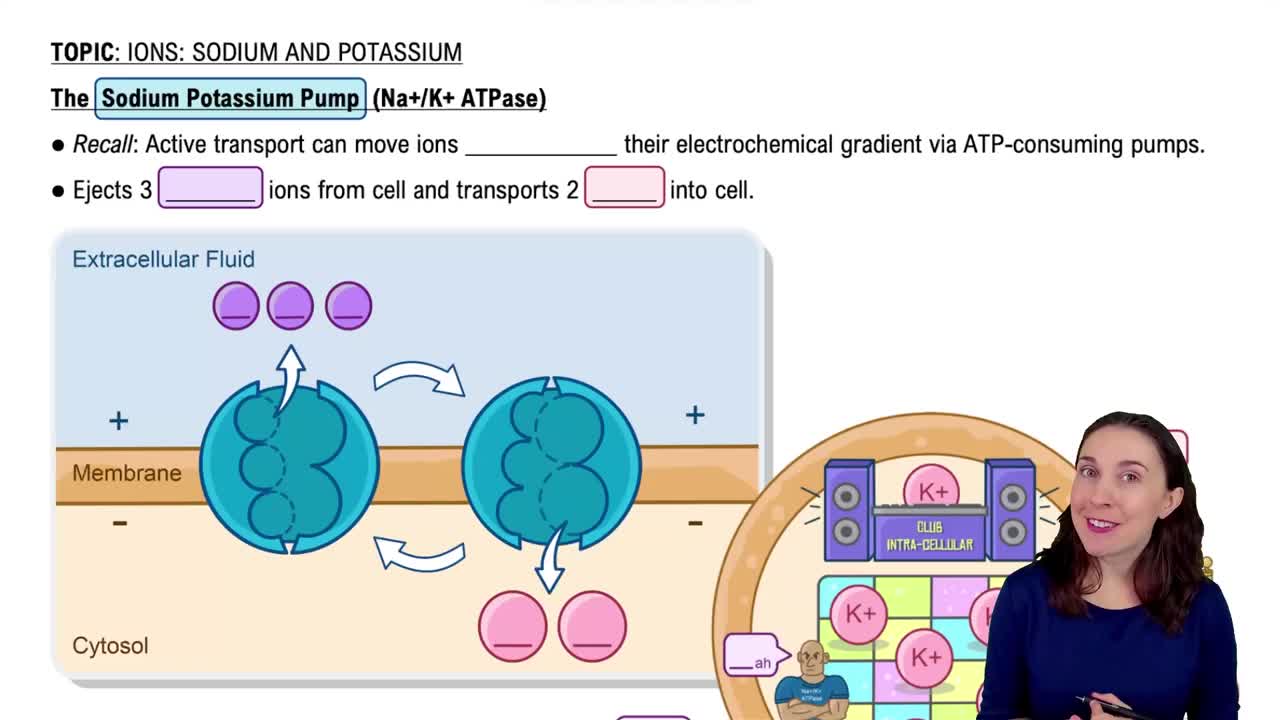
The Sodium Potassium Pump

Extracellular Fluid (ECF) Volume

ECF volume is the amount of fluid outside cells, including plasma and interstitial fluid. It is closely linked to sodium content since sodium attracts water, maintaining fluid balance. Variations in ECF volume influence blood volume, which in turn affects cardiac output and blood pressure.
추천 영상:
6:28
Lung Volumes

Blood Pressure Regulation

Blood pressure is the force exerted by circulating blood on vessel walls, regulated by cardiac output and vascular resistance. It is influenced by ECF volume and sodium levels through mechanisms like the renin-angiotensin-aldosterone system and kidney function, which adjust sodium and water retention to maintain stable blood pressure.
추천 영상:
6:12
Partial Pressure