Ch. 27 The Reproductive System
Marieb - Human Anatomy & Physiology 11th Edition
Marieb, Hoehn11th EditionHuman Anatomy & PhysiologyISBN: 9780136874034당신이 사용하는 게 아니라요?교과서 변경
27장, 문제 2

Relative to differences between mitosis and meiosis, choose the statements that apply only to events of meiosis:
a. Tetrads present
b. Produces two daughter cells
c. Produces four daughter cells
d. Occurs throughout life
e. Reduces the chromosomal number by half
f. Synapsis and crossing over of homologous occur

검증된 단계별 안내
1
Step 1: Understand the key differences between mitosis and meiosis. Mitosis results in two genetically identical daughter cells, while meiosis results in four genetically diverse daughter cells and includes unique processes such as synapsis and crossing over.
Step 2: Identify which statements describe features unique to meiosis. For example, the presence of tetrads (paired homologous chromosomes) occurs only during meiosis, specifically in prophase I.
Step 3: Recognize that meiosis produces four daughter cells, not two, which is a key difference from mitosis.
Step 4: Note that meiosis reduces the chromosome number by half, producing haploid cells from a diploid parent, which is essential for sexual reproduction.
Step 5: Understand that synapsis and crossing over of homologous chromosomes are unique to meiosis and contribute to genetic variation, whereas mitosis does not involve these processes.

비슷한 문제에 대한 검증된 영상 답변:

이 영상 해법은 위 문제에 도움이 된다고 튜터들이 추천한 것입니다.
영상 길이:
2m
도움이 되었나요?

주요 개념

질문에 올바르게 답하기 위해 반드시 이해해야 하는 핵심 개념들은 다음과 같습니다.

Tetrads and Synapsis in Meiosis

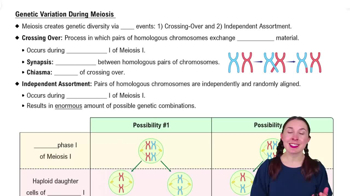
During meiosis, homologous chromosomes pair up to form tetrads in a process called synapsis. This pairing allows crossing over, where genetic material is exchanged, increasing genetic diversity. These events are unique to meiosis and do not occur in mitosis.
추천 영상:
5:19
Genetic Variation During Meiosis

Reduction of Chromosome Number

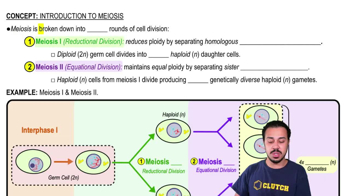
Meiosis reduces the chromosome number by half, producing haploid cells from a diploid parent. This reduction is essential for sexual reproduction, ensuring that when gametes fuse, the resulting offspring have the correct chromosome number.
추천 영상:
가이드 코스
4:49
Meiosis I & Meiosis II

Number of Daughter Cells Produced

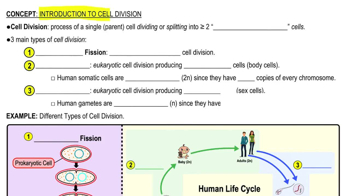
Meiosis results in four genetically distinct daughter cells, each with half the chromosome number of the original cell. In contrast, mitosis produces two identical daughter cells, maintaining the chromosome number.
추천 영상:
가이드 코스
09:40
Introduction to Cell Division