뒤로
뒤로Chapter 1 Study Notes: Operations on Real Numbers and Algebraic Expressions
스터디 가이드 - 스마트 노트
 자료에 맞춘 맞춤형 노트, 핵심 정의, 예시, 맥락을 확장해 제공합니다.
Chapter 1: Operations on Real Numbers and Algebraic Expressions
Section 1: Success in Mathematics
Success in mathematics requires preparation, organization, and active engagement. The following strategies help students maximize their learning and performance in algebra courses.
First Week Tips: Choose a good seat, read the syllabus, connect with classmates, budget study time, and use a dedicated math notebook.
Before Class: Read upcoming sections, prepare questions, and mentally prepare for learning.
During Class: Arrive early, avoid distractions, take thorough notes, and ask questions.
After Class: Review notes, reread sections, complete homework, analyze mistakes, and seek help if needed.
Using the Text Effectively: Attend lectures, practice homework, check answers, and ask about unclear problems.
Preparing for Exams: Review homework and chapter problems, test yourself, watch prep videos, and arrive prepared.
Section 2: Fractions, Decimals, and Percents
This section covers foundational concepts for working with fractions, decimals, and percents, including prime factorization, least common multiples, and conversions.
Prime and Composite Numbers: A prime number has only two factors: 1 and itself. A composite number has more than two factors. 1 is neither prime nor composite.
Prime Factorization Example: The prime factorization of 24 is 2 × 2 × 2 × 3.
Least Common Multiple (LCM): The LCM of two numbers is the smallest number that is a multiple of both. Steps: Write each number as a product of primes, align common factors, multiply the highest occurrences.
Equivalent Fractions: Fractions that represent the same value. Example: is equivalent to .
Least Common Denominator (LCD): The LCD is the LCM of the denominators of a group of fractions.
Lowest Terms: A fraction is in lowest terms if the numerator and denominator share no common factor other than 1.
Decimal Places: Decimals are named by their place value: tenths, hundredths, thousandths, etc.
Rounding Decimals: Identify the place value, check the digit to the right, round up if 5 or more, otherwise leave as is.
Converting Fractions to Decimals: Divide the numerator by the denominator.
Terminating and Repeating Decimals: Terminating decimals end; repeating decimals have a digit or group of digits that repeat indefinitely.
Converting Decimals to Fractions: Use the place value as the denominator and reduce to lowest terms.
Percent: Percent means parts per hundred. To convert percent to decimal, divide by 100.

Section 3: The Number Systems and the Real Number Line
Understanding the classification of numbers and their representation on the real number line is fundamental in algebra.
Set Notation: A set is a collection of objects, written with braces. The empty set is denoted by { } or a special symbol.
Classification of Numbers:
Natural Numbers: {1, 2, 3, ...}
Whole Numbers: {0, 1, 2, 3, ...}
Integers: {..., -3, -2, -1, 0, 1, 2, 3, ...}
Rational Numbers: Numbers that can be written as , where p and q are integers.
Irrational Numbers: Numbers that cannot be written as a fraction of two integers.
Real Numbers: All rational and irrational numbers.
The Real Number Line: Real numbers are represented as points on a line. The origin is 0, negative numbers are left, positive numbers are right.
Inequalities: Use <, >, or = to compare numbers based on their position on the number line.
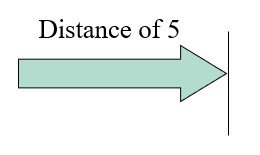
Absolute Value: The absolute value is the distance from 0 to a on the number line.

Section 4: Adding, Subtracting, Multiplying, and Dividing Integers
Operations on signed numbers are essential for algebraic calculations. This section explains the rules and properties for these operations.
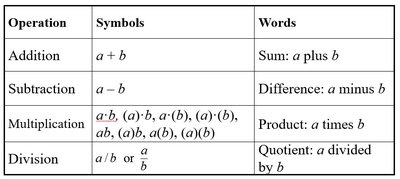
Operations Symbols: Addition (+), Subtraction (–), Multiplication (ā), Division (/).
Additive Inverse: The opposite of a number a is –a. .
Subtracting Integers: ; subtract by adding the opposite.
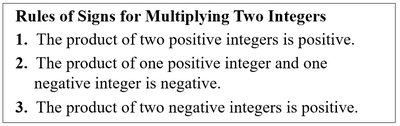
Multiplying Integers: Rules:
Product of two positives is positive.
Product of one positive and one negative is negative.
Product of two negatives is positive.
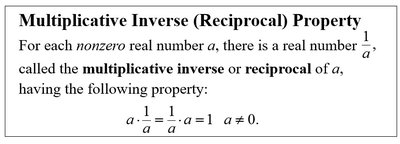
Reciprocals: The reciprocal of a nonzero number a is .
Dividing Integers: Rules:
Quotient of two positives is positive.
Quotient of one positive and one negative is negative.
Quotient of two negatives is positive.
Section 5: Adding, Subtracting, Multiplying, and Dividing Rational Numbers
Rational numbers include fractions and decimals. This section covers the arithmetic operations for these numbers.
Multiplying Fractions: Multiply numerators and denominators.
Dividing Fractions: Multiply by the reciprocal of the divisor.
Adding/Subtracting Fractions: With same denominators, add/subtract numerators. With different denominators, find the LCD first.
Adding/Subtracting Decimals: Align decimal points and add/subtract digits in like place values.
Multiplying Decimals: Multiply as whole numbers, then place the decimal point so the number of decimal places equals the sum of decimal places in the factors.
Dividing Decimals: Make the divisor a whole number by multiplying by a power of 10, then divide as with whole numbers.
Section 6: Properties of Real Numbers
Understanding the properties of real numbers is crucial for simplifying and solving algebraic expressions.
Identity Properties:
Additive Identity:
Multiplicative Identity:
Commutative Properties: and
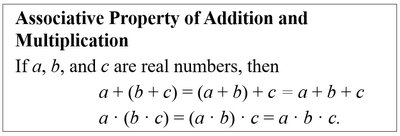
Associative Properties: and
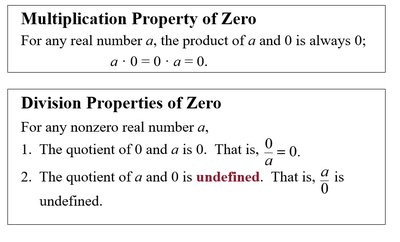
Multiplication and Division Properties of Zero:
Multiplication:
Division: for ; is undefined.
Section 7: Exponents and the Order of Operations
Exponents and the order of operations are essential for evaluating mathematical expressions correctly.
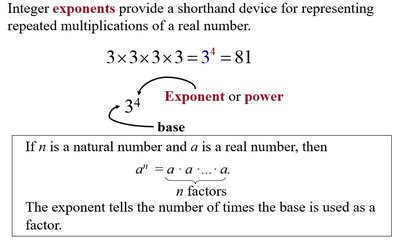
Exponents: means multiply a by itself n times. Example: .
Order of Operations:
Perform operations within grouping symbols first.
Evaluate exponents.
Perform multiplication and division from left to right.
Perform addition and subtraction from left to right.
Section 8: Simplifying Algebraic Expressions
Algebraic expressions are simplified by evaluating, identifying like terms, using the distributive property, and combining like terms.
Algebraic Expressions: Combinations of variables, constants, grouping symbols, and operations.
Evaluating Expressions: Substitute values for variables and simplify.
Like Terms: Terms with the same variable factors and exponents.
Combining Like Terms: Add or subtract coefficients of like terms.
Distributive Property: