 뒤로
뒤로MAT 1033 Intermediate Algebra: Course Structure, Tools, and Success Strategies
스터디 가이드 - 스마트 노트
 자료에 맞춘 맞춤형 노트, 핵심 정의, 예시, 맥락을 확장해 제공합니다.
Course Overview
Introduction to MAT 1033 Intermediate Algebra
This course prepares students for college-level algebra and covers foundational topics in algebra, including operations with real numbers, linear equations and inequalities, graphing, systems of equations, exponents, polynomials, factoring, rational expressions, functions, radicals, quadratic equations, and complex numbers. The course is structured to build critical thinking and problem-solving skills necessary for further mathematics study.
Course Topics and Learning Expectations
Major Topics Covered
Operations on Real Numbers and Algebraic Expressions: Understanding basic arithmetic and algebraic manipulation.
Linear Equations and Inequalities in One and Two Variables: Solving, graphing, and modeling linear relationships.
Systems of Linear Equations and Inequalities: Methods for solving systems, including graphing, substitution, and elimination.
Exponents and Polynomials: Applying laws of exponents, simplifying, and performing operations with polynomials.
Factoring Polynomials: Techniques for factoring various types of polynomials.
Rational Expressions and Equations: Simplifying, evaluating, and solving rational expressions and equations.
Graphs, Relations, and Functions: Understanding and analyzing functions, domains, and ranges.
Radicals and Rational Exponents: Simplifying and solving radical expressions and equations.
Quadratic Equations and Functions: Solving quadratics by various methods and modeling real-world problems.
Complex Numbers: Performing operations with complex numbers and understanding their properties.
Course Competencies: Students are expected to demonstrate proficiency in each topic, apply mathematical reasoning, and solve applied problems.
Course Tools and Technology Requirements
Required and Recommended Tools
Digital Course Materials: Accessed through Canvas and Pearson's MyLab Math.
Calculator: A non-programmable scientific calculator is required. The TI-36X Pro is recommended for its advanced functions, including logarithmic, exponential, trigonometric, and statistical capabilities. Graphing calculators and calculator apps are not permitted.
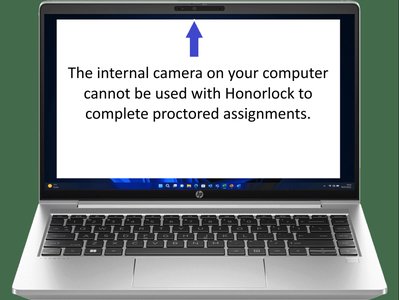
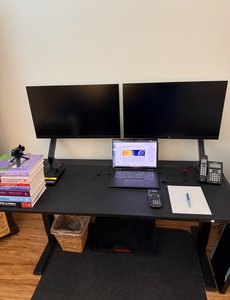
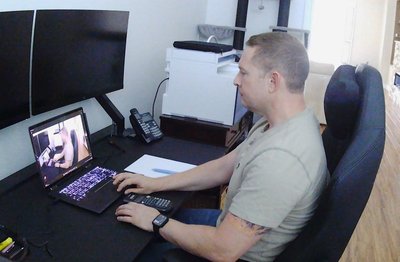
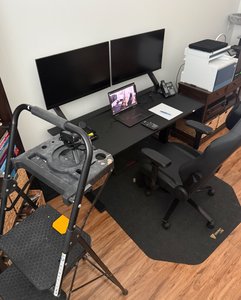
External Webcam: Required for proctored testing using Honorlock. The webcam must provide a clear view of the workspace, including the student, calculator, and blank paper.


Proctored Testing Requirements
Honorlock Proctoring: All exams and the initial attendance assignment are proctored online using Honorlock. Students must use an external webcam, not the internal camera of their computer.
Workspace Setup: The workspace must be clear except for the calculator, pen/pencil, and blank paper. The camera must show the student’s face, hands, workspace, and computer screen throughout the exam.
Course Structure and Assignment Schedule
Weekly Assignments and Exams
The course is organized into weekly practice assignments, unit exams, and a final exam. Practice assignments cover specific sections and topics, and exams assess mastery of multiple sections. Students are encouraged to complete practice exams before proctored exams for additional credit.
Practice Assignments: Completed in Pearson's MyLab Math, covering all major algebra topics.
Unit Exams: Three proctored unit exams, each covering a range of sections.
Final Exam: Comprehensive, covering all course topics.
Extra Credit: Practice exams can add up to 5% to the final grade.
Grading and Policies
Grading Breakdown
Section Practice Assignments: 10%
Honorlock Proctored Unit Exams: 60% (20% each)
Honorlock Proctored Final Exam: 30%
Extra Credit: Up to 5% from practice exams
Grading Scale:
Letter Grade | Percentage Range |
|---|---|
A | 90% to 105% |
B | 80% to < 90% |
C | 70% to < 80% |
D | 60% to < 70% |
F | < 60% |
Late Work Policy: Practice assignments and exams may be submitted up to 3 days late with a 25% deduction per day. The initial attendance assignment and final exam cannot be submitted late.
Recommendations for Success
Study Strategies
Print and complete lecture notes while watching section videos.
Review supplemental PowerPoint notes in Canvas.
Complete all practice assignments and use the Study Plan for extra practice.
Attempt practice exams multiple times before proctored exams.
Attend advisement hours and use tutoring resources as needed.
Consistent participation and practice are essential. Students should plan to spend 8–12 hours per week on course activities.
Accessibility and Academic Integrity
Accommodations and Integrity
Accessibility: Students with documented disabilities should contact the SAIL office for accommodations and inform the instructor as needed.
Academic Integrity: All work must be the student’s own. Cheating, plagiarism, and unauthorized assistance are strictly prohibited and subject to penalties.
Summary Table: Course Topics by Week
Week | Main Topics |
|---|---|
1 | Linear Equations and Inequalities in One Variable |
2-3 | Graphing and Linear Equations in Two Variables |
4-5 | Systems of Linear Equations and Inequalities, Exponents, Polynomials |
6 | Factoring Polynomials, Quadratic Equations |
7 | Rational Expressions and Equations |
8-9 | Functions, Radicals, Rational Exponents |
10-12 | Quadratic Equations, Complex Numbers, Final Exam Review |
Conclusion
MAT 1033 Intermediate Algebra provides a comprehensive foundation in algebraic concepts and skills, preparing students for further study in mathematics. Success in this course requires regular participation, completion of assignments, adherence to proctored testing requirements, and academic integrity.
