 뒤로
뒤로Biochemistry Foundations: Genes, Proteins, and Biomolecules
스터디 가이드 - 스마트 노트
 자료에 맞춘 맞춤형 노트, 핵심 정의, 예시, 맥락을 확장해 제공합니다.
Introduction to Biochemistry
Overview of Biochemistry
Biochemistry is the study of the chemical compounds, their structures, mechanisms of activity, and chemical processes that occur in living organisms. It forms the foundation for understanding cellular structure, function, and the molecular basis of life.
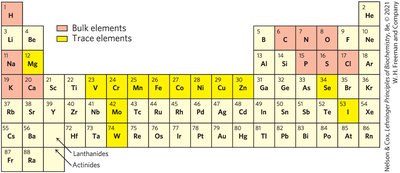
Key Elements: Carbon (C), Hydrogen (H), Oxygen (O), Nitrogen (N), Phosphorus (P), and Sulfur (S) are most common in biological systems.
Metal Ions: Potassium (K+), Sodium (Na+), Calcium (Ca2+), Magnesium (Mg2+), Zinc (Zn2+), Iron (Fe2+/3+) play important roles in metabolism.
Biomolecules: Compounds of carbon with a variety of functional groups.
Origin of Life and Abiotic Synthesis of Biomolecules
Miller-Urey Experiment and Chemical Evolution
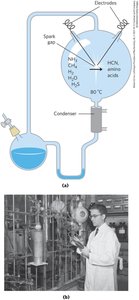
The Miller-Urey experiment demonstrated that simple biomolecules, such as amino acids, could be synthesized abiotically under conditions thought to resemble those of early Earth. This experiment supports the theory of chemical evolution, where life originated from non-living chemical substances.
Abiotic Synthesis: Electrical sparks and high temperatures acting on gaseous mixtures produced biomolecules.
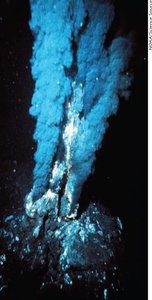
Hydrothermal Vents: Biomolecules may have also formed near oceanic hydrothermal vents.
RNA World Hypothesis
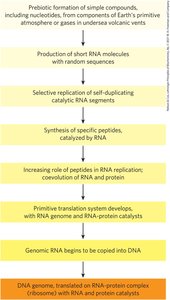
RNA or related precursors may have been the first genes and catalysts. Simple compounds and metabolic pathways likely evolved first, with RNA serving as both a catalyst and an information repository.
RNA as Catalyst: RNA molecules can catalyze reactions and store genetic information.
Evolutionary Steps: Prebiotic formation of compounds, production of short RNA, selective replication, synthesis of peptides, and development of translation systems.
Biological Evolution and Cell Structure
Evolution of Eukaryotes
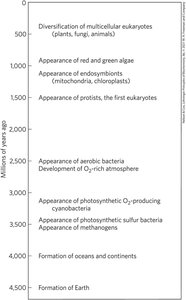
Over more than 3.5 billion years, multicellular organisms evolved specialized cell types. Major evolutionary changes include the development of chromosomes, nuclei, and endosymbiosis, which led to mitochondria and chloroplasts.
Atmospheric Changes: Rise of O2-producing photosynthetic bacteria enriched the atmosphere.
Protocells: Lipid vesicles containing organic compounds and self-replicating RNA gave rise to protocells.
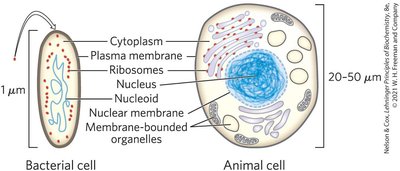
Cellular Structure: Prokaryotes vs. Eukaryotes
Cells are the structural and functional units of all living organisms. Prokaryotic cells lack membrane-bound organelles, while eukaryotic cells contain a nucleus and various organelles.
Prokaryotic Cells: Simple structure, no nucleus, nucleoid region, plasma membrane, ribosomes.
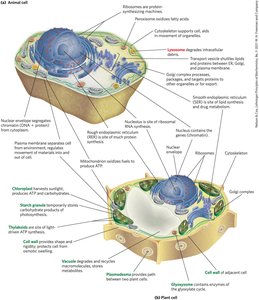
Eukaryotic Cells: Complex structure, nucleus, membrane-bound organelles (mitochondria, chloroplasts, ER, Golgi apparatus).
Plant vs. Animal Cells: Plant cells have chloroplasts, cell walls, and large vacuoles; animal cells lack these but have lysosomes and centrioles.
Major Chemical Constituents of Cells
Macromolecules and Their Building Blocks
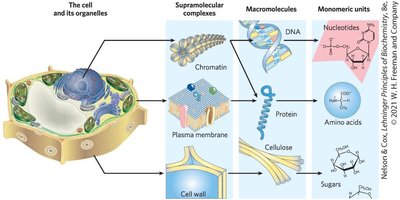
Cells are composed of macromolecules (polymers with molecular weights > 5,000) assembled from simple precursors. These include nucleic acids, proteins, polysaccharides, and lipids.
Nucleic Acids: Polymers of nucleotides (DNA, RNA).
Proteins: Polymers of amino acids.
Polysaccharides: Polymers of glucose (starch, cellulose, glycogen).
Lipids: Nonpolymeric, hydrophobic molecules (fats, oils, hormones, pigments).
Small Molecules: Water, amino acids, nucleotides, simple sugars, ions, vitamins, trace metals.
Supramolecular Structures
Cells build supramolecular structures from macromolecules, held together by non-covalent interactions such as hydrogen bonds, ionic interactions, van der Waals forces, and the hydrophobic effect.
Examples: Chromatin, plasma membrane, cell wall.
Nucleic Acids
Structure and Function
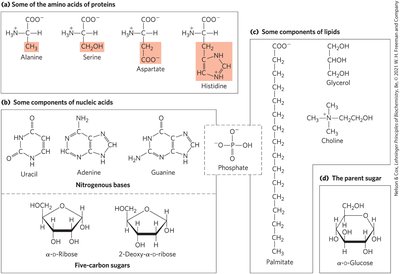
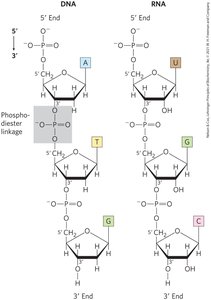
Nucleic acids are polymers of nucleotides, each consisting of a pentose sugar (ribose in RNA, deoxyribose in DNA), a nitrogenous base (A, C, G, T/U), and a phosphate group. DNA and RNA are linked by 5'-3' phosphodiester bonds.
DNA: Stores genetic information, regulates cell metabolism, passed to daughter cells during mitosis.
RNA: Functions in protein synthesis and gene regulation.
Proteins
Structure and Properties
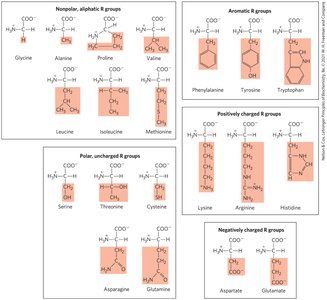
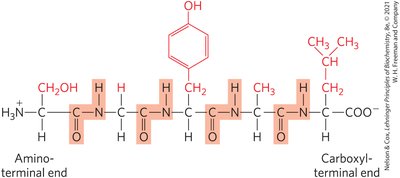
Proteins are polymers of 20 amino acids, each with a central carbon attached to an amino group, carboxyl group, hydrogen, and a unique R group. Amino acids differ in molecular weight, polarity, net charge, and other properties.
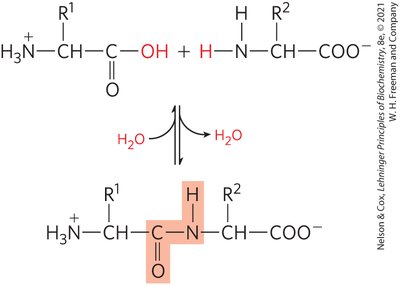
Peptide Bonds: Consecutive amino acids are linked by peptide bonds, forming polypeptide chains.
Genetic Determination: The sequence of amino acids is determined by the DNA sequence via mRNA.
Functions of Proteins
Proteins perform a wide range of functions in cells, including catalysis, defense, energy storage, transport, signaling, structural support, and movement.
Enzymes: Catalyze biochemical reactions.
Antibodies: Provide defense against pathogens.
Transport: Channels for water, sugars, amino acids, ions.
Hormones: Insulin, epinephrine.
Structural: Collagen, keratin.
Motor Proteins: Muscle contraction, movement of cilia, flagella.
Carbohydrates
Structure and Types
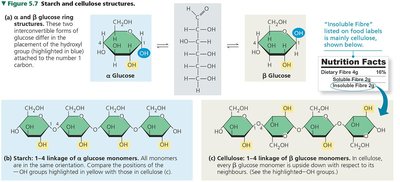
Carbohydrates include simple sugars (monosaccharides), disaccharides, and polysaccharides. They are essential for energy storage, structural support, and cellular communication.
Monosaccharides: Glucose, fructose.
Disaccharides: Sucrose, lactose.
Polysaccharides: Starch (plants), cellulose (plants), glycogen (animals).
Functions of Carbohydrates
Energy Storage: Glucose, maltose, lactose, sucrose, starch, glycogen.
Structural Support: Cellulose, chitin.
Nucleic Acids: Ribose, deoxyribose are components of nucleic acids.
Cell Communication: Complexes with membrane proteins for cell-cell binding.
Lipids
Structure and Diversity
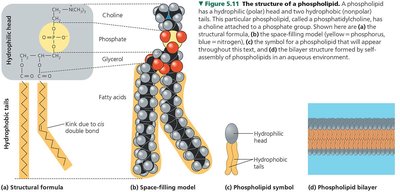
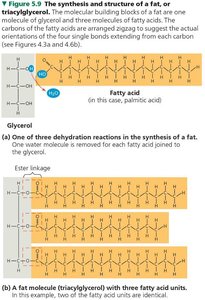
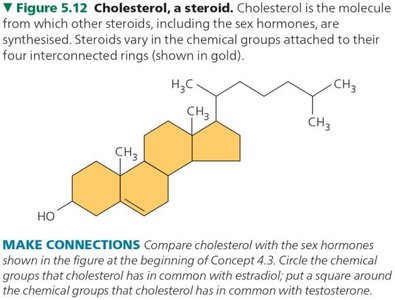
Lipids are hydrophobic molecules with great structural diversity. They include fats, oils, phospholipids, steroids, pigments, and vitamins.
Energy Storage: Triglycerides (fats and oils).
Membrane Structure: Phospholipid bilayers form plasma and organelle membranes.
Cell Support: Cholesterol supports animal cell membranes.
Hormones: Testosterone, estrogen.
Pigments: Chlorophylls, carotenoids.
Vitamins: Vitamin D.
Summary Table: Major Biomolecules
Biomolecule | Monomer | Polymer | Main Functions |
|---|---|---|---|
Nucleic Acids | Nucleotide | DNA, RNA | Genetic information storage, protein synthesis |
Proteins | Amino acid | Polypeptide | Catalysis, structure, transport, signaling |
Carbohydrates | Monosaccharide | Polysaccharide | Energy storage, structure, cell communication |
Lipids | Fatty acid, glycerol | Triglyceride, phospholipid, steroid | Energy storage, membrane structure, signaling |
Additional info:
For further study, refer to Lehninger Principles of Biochemistry (Nelson & Cox, 8th Edition) and Campbell Biology (12th Edition).
Review genomics and proteomics databases, journal articles, and e-book chapters for advanced topics.
