 뒤로
뒤로Enzymes: Classification, Naming, and Kinetics – A Biochemistry Study Guide
스터디 가이드 - 스마트 노트
 자료에 맞춘 맞춤형 노트, 핵심 정의, 예시, 맥락을 확장해 제공합니다.
Enzymes: Biological Catalysts
Definition and Function
Enzymes are specialized proteins that act as biological catalysts, increasing the rate of biochemical reactions without being consumed in the process. They are highly specific for their substrates and do not alter the equilibrium or the relative energies of reactants and products.
Biological catalyst: A molecule that accelerates a chemical reaction in living systems.
Specificity: Enzymes typically act on a single substrate or a specific type of reaction.
Reaction rate enhancement: Enzymes can increase reaction rates by factors of 106 to 1012.
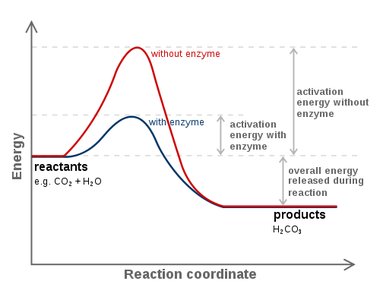
Figure: Enzymes lower the activation energy required for a reaction, thereby increasing the reaction rate without changing the overall energy released.
Enzyme Specificity
Types of Specificity
Enzymes may be specific for a single substrate or for a particular type of reaction. For example, catalase acts on hydrogen peroxide, while carboxypeptidase A catalyzes the hydrolysis of the amide bond closest to the C-terminal of proteins.

Figure: Carboxypeptidase A hydrolyzes the terminal peptide bond in proteins.
Enzyme Cofactors
Types and Roles
Some enzymes require additional non-protein molecules called cofactors to be active. Cofactors can be:
Organic (coenzymes): e.g., NAD+
Inorganic: e.g., Fe2+, Cu2+
Example: Lactate dehydrogenase requires NAD+ as a coenzyme to catalyze the conversion of lactate to pyruvate.

Figure: Lactate is oxidized by NAD+ in the presence of lactate dehydrogenase.
Redox Reactions in Biochemistry
Oxidation and Reduction
Redox reactions involve the transfer of electrons, hydrogen atoms, or oxygen atoms between molecules. The mnemonic OIL RIG helps remember: Oxidation Is Loss (of electrons/hydrogen), Reduction Is Gain (of electrons/hydrogen).
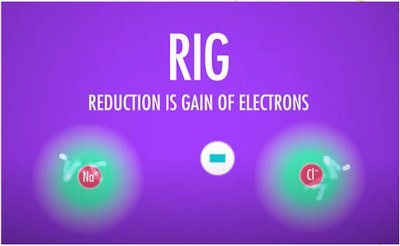
Figure: Reduction is gain of electrons (RIG).
Classification of Enzymes
Six Major Classes
Enzymes are classified based on the type of reaction they catalyze:
Class | Reaction Catalyzed | Example |
|---|---|---|
Oxidoreductases | Oxidation-reduction | Lactate dehydrogenase |
Transferases | Transfer of functional groups | Alanine transaminase |
Hydrolases | Hydrolysis reactions | Lipase |
Isomerases | Isomerization | Phosphoglucose isomerase |
Lyases | Addition/removal to form double bonds | Fumarase |
Ligases | Bond formation with ATP hydrolysis | Pyruvate carboxylase |
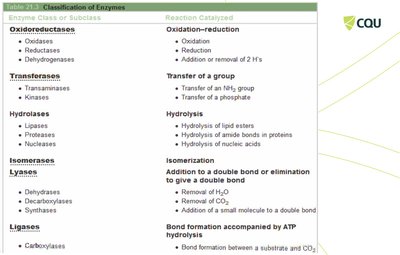
Table: Classification of enzymes by reaction type and example subclasses.
Oxidoreductases
Catalyze oxidation-reduction reactions
Subclasses: oxidases, reductases, dehydrogenases
Example: Lactate dehydrogenase (converts lactate to pyruvate using NAD+)

Transferases
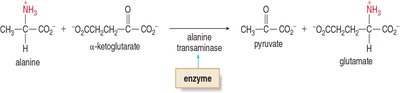
Catalyze transfer of functional groups (e.g., amino, phosphate)
Examples: Transaminases (transfer amino groups), kinases (transfer phosphate groups)
Hydrolases
Catalyze hydrolysis reactions (cleavage with water)
Examples: Lipases (hydrolyze fats), proteases (hydrolyze proteins), nucleases (hydrolyze nucleic acids)
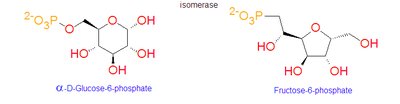
Isomerases
Catalyze the conversion of one isomer to another
Important in metabolic pathways such as glycolysis
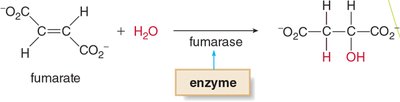
Lyases
Catalyze addition or removal of groups to form double bonds
Subclasses: Dehydrases (remove H2O), decarboxylases (remove CO2), synthases (add small molecules)
Example: Fumarase (adds H2O to fumarate)
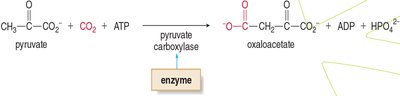
Ligases
Catalyze bond formation coupled with ATP hydrolysis
Example: Carboxylases (form bonds between substrates and CO2)
Naming of Enzymes
Systematic Naming
Enzyme names typically have two parts: the substrate and the reaction type. For example, lactate dehydrogenase acts on lactate and catalyzes a dehydrogenation reaction. Some older enzymes retain traditional names (e.g., trypsin, pepsin, catalase).
General format: [substrate] + [reaction class]
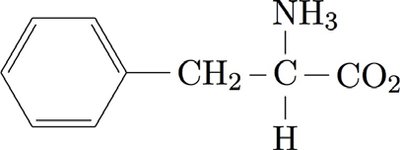
Examples: Alanine transaminase, phenylalanine transaminase
Enzyme Kinetics and Regulation
Enzyme-Substrate Interaction Models
Lock-and-key model: The active site is a rigid structure that fits the substrate exactly.
Induced-fit model: The active site is flexible and adjusts to fit the substrate upon binding.
Effect of Temperature and pH
Enzyme activity increases with temperature up to an optimum (usually ~37°C in humans), then decreases due to denaturation.
Each enzyme has an optimal pH; deviations reduce activity. Example: Pepsin (pH 2), Trypsin (pH 8).
Allosteric Control
Allosteric enzymes are regulated by molecules binding at sites other than the active site.
Negative allosteric control: Regulator decreases enzyme activity.
Positive allosteric control: Regulator increases enzyme activity.
Enzyme Inhibition
Irreversible inhibitors: Bind permanently, inactivating the enzyme (e.g., penicillin).
Reversible inhibitors: Bind non-covalently and can dissociate.
Competitive: Compete with substrate for the active site; inhibition can be overcome by increasing substrate concentration.
Non-competitive: Bind elsewhere, changing enzyme shape and reducing activity; cannot be overcome by substrate increase.
Zymogens (Proenzymes)
Inactive enzyme precursors activated by cleavage when needed.
Prevents unwanted activity in inappropriate locations.
Examples: Pepsinogen (activated to pepsin in stomach), trypsinogen (activated to trypsin in intestine).
Summary Table: Enzyme Classes and Examples
Class | Reaction Catalyzed | Example |
|---|---|---|
Oxidoreductases | Oxidation-reduction | Lactate dehydrogenase |
Transferases | Transfer of groups | Alanine transaminase |
Hydrolases | Hydrolysis | Lipase |
Isomerases | Isomerization | Phosphoglucose isomerase |
Lyases | Addition/removal to double bonds | Fumarase |
Ligases | Bond formation with ATP hydrolysis | Pyruvate carboxylase |
