 뒤로
뒤로Enzymes: Structure, Function, and Regulation
스터디 가이드 - 스마트 노트
 자료에 맞춘 맞춤형 노트, 핵심 정의, 예시, 맥락을 확장해 제공합니다.
Enzymes: Structure, Function, and Regulation
Introduction to Enzymes
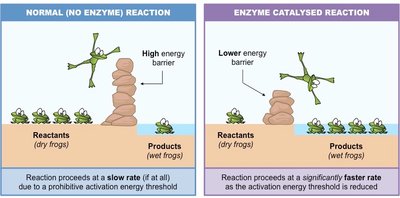
Enzymes are biological catalysts that accelerate chemical reactions in living organisms without being consumed in the process. They are essential for sustaining life by enabling metabolic pathways to occur rapidly and efficiently under physiological conditions.
Function of Enzymes: Enzymes lower the activation energy required for reactions, thereby increasing the rate at which products are formed from reactants.
Specificity: Each enzyme is specific to a particular substrate or group of related substrates due to the unique structure of its active site.
Reusability: Enzymes are not permanently altered by the reactions they catalyze and can be used repeatedly.
Example: Digestive enzymes such as amylase, protease, and lipase facilitate the breakdown of carbohydrates, proteins, and fats, respectively.
Cofactors and Coenzymes
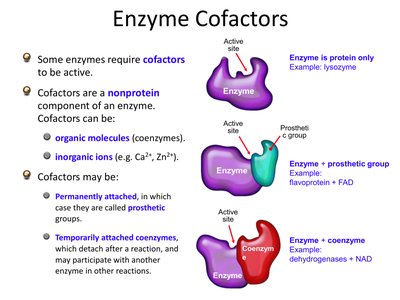
Many enzymes require non-protein molecules called cofactors to be active. These cofactors can be organic molecules (coenzymes) or inorganic ions.
Cofactor: A non-protein chemical compound that is required for the enzyme's biological activity.
Coenzyme: An organic cofactor, often derived from vitamins (e.g., NAD+, FAD).
Prosthetic Group: A cofactor that is tightly or permanently bound to the enzyme.
Example: The enzyme hexokinase requires Mg2+ as a cofactor for its activity.
Enzyme Classification and Naming
Enzyme Classes
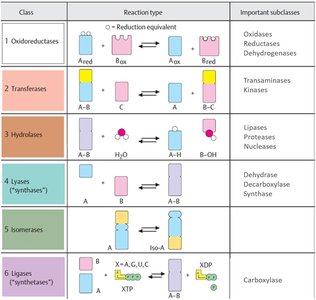
Enzymes are classified into six major classes based on the type of reaction they catalyze. Each class has important subclasses and examples.
Class | Reaction Type | Important Subclasses |
|---|---|---|
1. Oxidoreductases | Oxidation-reduction reactions | Oxidases, Reductases, Dehydrogenases |
2. Transferases | Transfer of functional groups | Transaminases, Kinases |
3. Hydrolases | Hydrolysis reactions | Lipases, Proteases, Nucleases |
4. Lyases | Addition or removal of groups to form double bonds | Dehydratases, Decarboxylases, Synthases |
5. Isomerases | Isomerization (rearrangement of atoms) | Isomerases |
6. Ligases | Joining of two molecules with ATP hydrolysis | Synthetases, Carboxylases |
Naming of Enzymes
Enzymes are typically named by adding the suffix -ase to the name of their substrate or the type of reaction they catalyze. For example, lactase breaks down lactose, and DNA polymerase synthesizes DNA. However, some enzymes have traditional names that do not follow this rule, such as pepsin and trypsin.
Enzyme Kinetics and Mechanisms
Models of Enzyme-Substrate Interaction
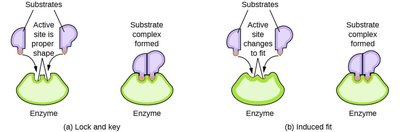
Two primary models explain how enzymes interact with their substrates:
Lock-and-Key Model: The enzyme's active site is a perfect fit for the substrate, much like a key fits into a lock. This model emphasizes the specificity of enzyme-substrate binding.
Induced-Fit Model: The enzyme's active site is flexible and molds itself around the substrate upon binding, enhancing the fit and catalytic efficiency.
Benefit of Lock-and-Key: Provides high specificity for substrate recognition.
Benefit of Induced-Fit: Allows for greater flexibility and can accommodate substrates with slight structural variations, improving catalytic efficiency.
Allosteric Enzymes and Regulation
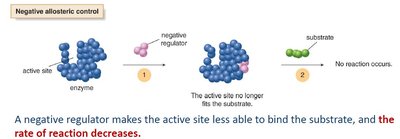
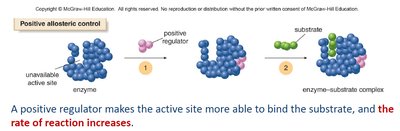
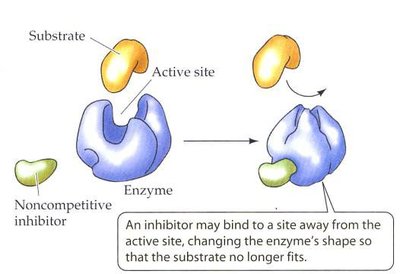
Allosteric enzymes have regulatory sites distinct from the active site. Binding of effectors (activators or inhibitors) at these sites modulates enzyme activity.
Allosteric Enzyme: An enzyme whose activity is regulated by the binding of an effector molecule at a site other than the active site.
Negative Allosteric Control: Binding of a negative regulator (inhibitor) decreases enzyme activity by altering the active site so the substrate cannot bind efficiently.
Positive Allosteric Control: Binding of a positive regulator (activator) increases enzyme activity by making the active site more receptive to the substrate.
Enzyme Inhibition
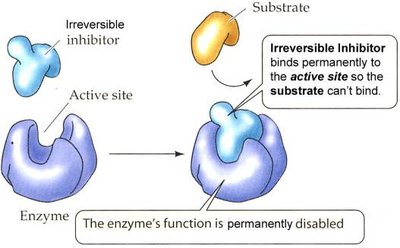
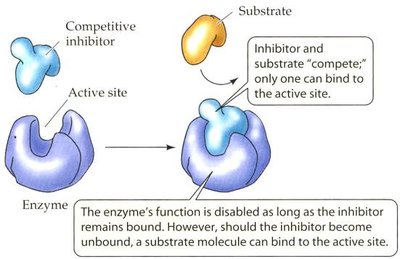
Enzyme inhibitors are molecules that decrease or abolish enzyme activity. There are three main types:
Irreversible Inhibition: The inhibitor binds covalently to the enzyme, permanently inactivating it. Example: Nerve gases inhibiting acetylcholinesterase.
Competitive Reversible Inhibition: The inhibitor resembles the substrate and competes for binding at the active site. Inhibition can be overcome by increasing substrate concentration.
Non-Competitive Reversible Inhibition: The inhibitor binds to a site other than the active site, causing a conformational change that reduces enzyme activity. This inhibition cannot be overcome by increasing substrate concentration.
Zymogens and Enzyme Activation
Zymogens
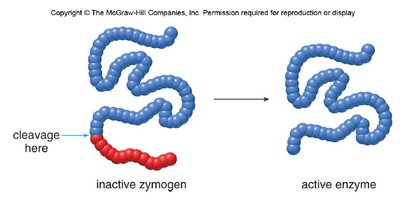
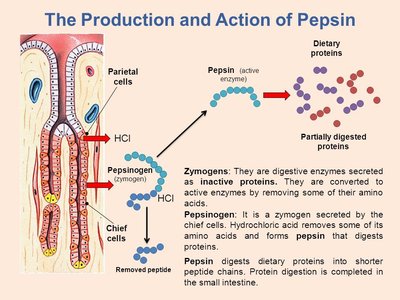
Zymogens are inactive precursors of enzymes that require a biochemical change (such as cleavage of a peptide segment) to become active. This mechanism prevents unwanted activity of potent enzymes, such as digestive proteases, within cells where they are synthesized.
Example: Pepsinogen is a zymogen that is converted to active pepsin in the stomach by the action of hydrochloric acid.
Environmental Effects on Enzyme Activity
pH and Temperature
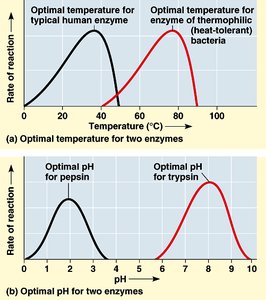
Enzyme activity is highly sensitive to changes in pH and temperature. Each enzyme has an optimal pH and temperature at which it functions most efficiently.
Effect of Temperature: Increasing temperature generally increases reaction rate up to an optimum, beyond which the enzyme denatures and activity decreases sharply.
Effect of pH: Each enzyme has an optimal pH range. Deviations from this range can lead to denaturation or changes in the ionization state of amino acid residues at the active site, reducing activity.
Example: Human enzymes typically have an optimal temperature around 37°C, while enzymes from thermophilic bacteria function best at much higher temperatures. Pepsin (stomach enzyme) has an optimal pH of ~2, while trypsin (intestinal enzyme) has an optimal pH of ~8.
Additional info: These notes are designed to provide a comprehensive overview of enzyme structure, function, regulation, and environmental effects, suitable for undergraduate biochemistry students preparing for exams or assessments.
