 뒤로
뒤로Genes, Genomes, and the Flow of Genetic Information: Foundations of Biochemistry
스터디 가이드 - 스마트 노트
 자료에 맞춘 맞춤형 노트, 핵심 정의, 예시, 맥락을 확장해 제공합니다.
Introduction to Systems Biology and 'Omics'
Overview of Systems Biology
Systems biology is a modern discipline in molecular and biochemical studies that seeks to analyze the components of a biological system and integrate them to understand the system as a whole. This approach is facilitated by 'omics' technologies, which systematically characterize various molecular complements within cells under specific physiological conditions.
Genomics: Study of the entire genome (all DNA sequences) of an organism.
Transcriptomics: Analysis of all RNA molecules (transcriptome) expressed in a cell.
Proteomics: Characterization of all proteins (proteome) present in a cell.
Glycomics: Study of all carbohydrate-containing molecules (glycome).
Lipidomics: Systematic analysis of all lipid molecules (lipidome).
Metabolomics: Characterization of all small molecules (metabolome).
Ionomics: Study of all ions (ionome) present in a cell.
Each 'omics' field provides qualitative and quantitative data, enabling a holistic understanding of cellular function and regulation.
Molecular Component | % of Cell Weight | Approx. Number of Species |
|---|---|---|
Water | 70 | 1 |
Proteins | 15 | 3,000 |
Nucleic acids: DNA | 1 | 1–4 |
Nucleic acids: RNA | 6 | >3,000 |
Polysaccharides | 3 | 20 |
Lipids | 2 | 50a |
Monomeric subunits/intermediates | 2 | 2,600 |
Inorganic ions | 1 | 20 |
Additional info: a If all permutations and combinations of fatty acid substitutions are considered, this number is much larger.
Nucleic Acids and Genomics
DNA, RNA, and the Genome
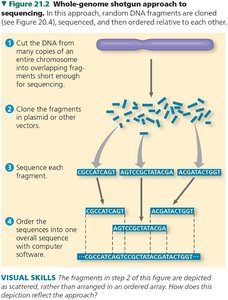
Nucleic acids (DNA and RNA) are polymers of nucleotides that store and transmit genetic information. The genome refers to the entire sequence of a cell’s DNA (or RNA in some viruses). Genomics involves sequencing and characterizing the entire genome, including gene mapping, structure, function, and evolution.
Transcriptome: All RNAs expressed in a cell under specific conditions.
Transcriptomics: Systematic study of the transcriptome.
Proteins and Proteomics
Proteins and Their Cellular Roles
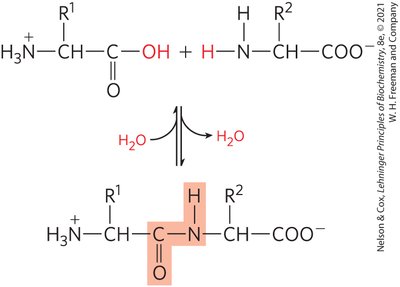
Proteins are polymers of amino acids that serve as enzymes, structural elements, signal receptors, and transporters. The proteome is the entire set of proteins expressed in a cell under specific conditions. Proteomics is the systematic study of the proteome.
Polysaccharides, Lipids, and Other Cellular Components
Polysaccharides
Polysaccharides are polymers of simple sugars, functioning as energy stores, structural components, and recognition elements. The glycome is the set of all carbohydrate-containing molecules in a cell, and glycomics is their systematic study.
Lipids
Lipids are water-insoluble hydrocarbon derivatives, serving as membrane components, energy stores, pigments, and signaling molecules. The lipidome and lipidomics refer to the complete set and study of cellular lipids, respectively.
Metabolites and Ions
Metabolites include central metabolites (amino acids, nucleotides, sugars, carboxylic acids) and secondary metabolites (organism-specific). The metabolome and metabolomics refer to all small molecules and their study. The ionome and ionomics refer to all ions present in a cell and their systematic study.
Genomes, Genes, and Chromosomes
Introduction to Genomes
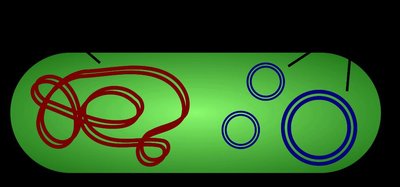
The genome is the complete set of genetic material (DNA) in an organism, including nuclear, mitochondrial, and chloroplast DNA in eukaryotes. In bacteria, the genome typically refers to the main chromosome.
Main chromosome: Usually circular in prokaryotes; essential for survival.
Plasmids: Additional circular DNA molecules; not essential for survival but useful in molecular studies.
Eukaryotic Chromosome Structure
Eukaryotic chromosomes are composed of chromatin, a complex of DNA and histone proteins. The fundamental unit is the nucleosome, consisting of DNA wrapped around histone cores. Chromatin can be tightly packed (heterochromatin) or loosely packed (euchromatin), affecting gene activity.
Note: Chromatin, nucleosomes, and histones are not found in bacterial chromosomes, plasmids, or organelle DNA (mitochondria, chloroplasts).
Mitochondrial and Chloroplast Genomes
Mitochondrial DNA (mtDNA): Circular, codes for tRNAs, rRNAs, and some proteins. Animal mtDNA is <20,000 bp; plant mtDNA is much larger.
Chloroplast DNA (cpDNA): Circular, 120,000–160,000 bp.
Genome Size and Complexity
Genome size is measured in base pairs (bp) or picograms. While genome size tends to increase with organismal complexity, there are many exceptions. Most eukaryotic DNA is non-coding or repetitive, and the number of chromosomes does not correlate strongly with complexity.
Organism | Total DNA (bp) | Chromosomes | Protein-coding Genes |
|---|---|---|---|
Escherichia coli | 4,641,652 | 1 | 4,494 |
Saccharomyces cerevisiae | 12,157,105 | 16 | 6,600 |
Caenorhabditis elegans | 100,286,401 | 12 | 20,191 |
Arabidopsis thaliana | 119,667,750 | 10 | 27,655 |
Drosophila melanogaster | 143,726,002 | 18 | 13,931 |
Oryza sativa (rice) | 375,049,285 | 24 | 37,849 |
Mus musculus (mouse) | 2,730,871,774 | 40 | 22,480 |
Homo sapiens (human) | 3,096,649,726 | 46 | 20,454 |
Additional info: Genome size does not always correlate with organismal complexity due to the presence of non-coding and repetitive DNA.
Composition of the Human Genome
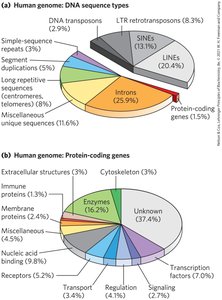
The human genome contains a large proportion of non-coding and repetitive DNA. Only a small fraction codes for proteins.
Flow of Genetic Information
Central Dogma of Molecular Biology
Genetic information is stored in DNA as the sequence of nucleotides. This information is faithfully copied during cell division and expressed through the processes of transcription and translation.
Gene: A region of DNA that can be expressed to produce a functional product (polypeptide or RNA).
Genes are transcribed into RNA; mRNAs are translated into proteins, while tRNAs and rRNAs assist in translation.
Proteins, composed of unique amino acid sequences, perform diverse cellular functions.
DNA Structure and Replication
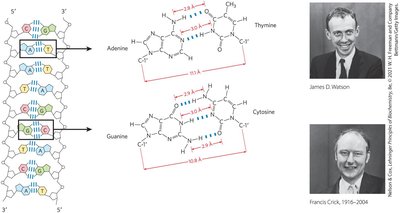
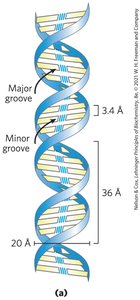
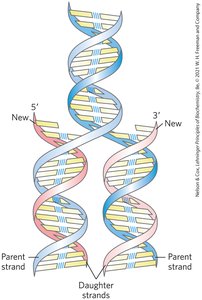
The discovery of the double-helical structure of DNA by Watson and Crick revealed the mechanism for genetic information storage and replication. DNA replication is semi-conservative: each new DNA molecule contains one parental and one newly synthesized strand.
Transcription and Translation
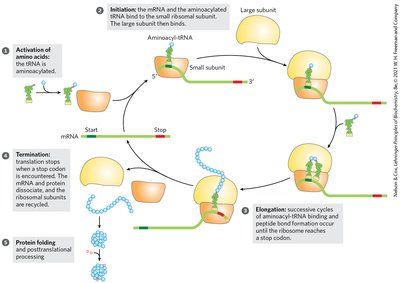
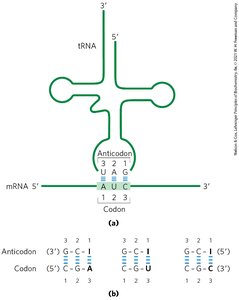
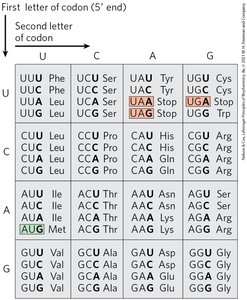
During transcription, one DNA strand serves as a template for RNA synthesis. In translation, mRNA codons are read by tRNA anticodons, and amino acids are polymerized to form proteins. The sequence of nucleotides in DNA thus determines the sequence and function of proteins.
Summary Table: Key Terms and Definitions
Term | Definition |
|---|---|
Genome | Complete set of genetic material in an organism |
Gene | DNA region encoding a functional product (protein or RNA) |
Proteome | All proteins expressed in a cell under specific conditions |
Transcriptome | All RNAs expressed in a cell under specific conditions |
Glycome | All carbohydrate-containing molecules in a cell |
Lipidome | All lipid molecules in a cell |
Metabolome | All small molecules in a cell |
Ionome | All ions in a cell |
Key Equations and Concepts
Peptide Bond Formation:
Central Dogma:
Suggested Reading
Lehninger Principles of Biochemistry (Nelson and Cox), Ed. VIII: Ch 1, 3, 5, 8, 24, 27
Campbell Biology, Ed. XII: Ch 5, 17
NCBI Genome Resources for human genome statistics and annotation
