 뒤로
뒤로Nucleic Acids: Structure, Function, and Biological Importance
스터디 가이드 - 스마트 노트
 자료에 맞춘 맞춤형 노트, 핵심 정의, 예시, 맥락을 확장해 제공합니다.
Nucleic Acids: Structure, Function, and Biological Importance
Introduction to Nucleic Acids
Nucleic acids are essential macromolecules responsible for the storage, transmission, and expression of genetic information in all living organisms. The two primary types are deoxyribonucleic acid (DNA) and ribonucleic acid (RNA). Their unique structures enable them to perform a variety of critical cellular functions.
DNA: Structure and Discovery
Watson, Crick, and the Double Helix
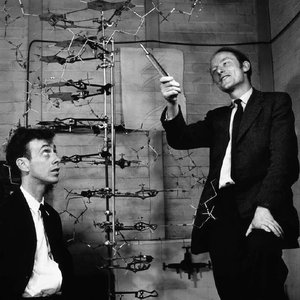
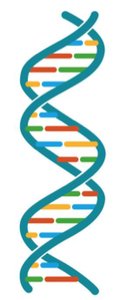
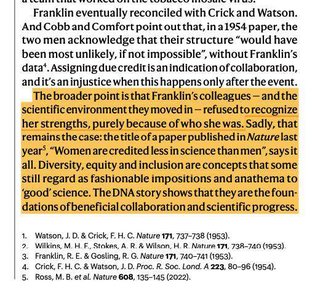
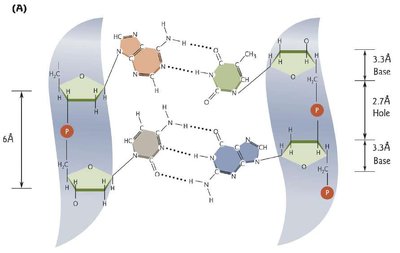
The structure of DNA was elucidated in 1953 by James Watson and Francis Crick, who described it as a long, double helix with a sugar-phosphate backbone on the outside and nitrogenous bases on the inside. The two strands run in opposite directions (antiparallel) and are stabilized by hydrogen bonds between complementary bases.
Historical Context and Key Contributors
Watson and Crick: Proposed the double helix model based on available experimental data.
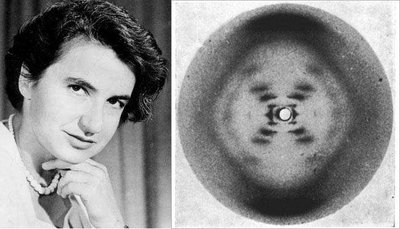
Rosalind Franklin: Used X-ray diffraction to demonstrate that DNA is helical, providing critical evidence for the double helix structure.
Maurice Wilkins: Collaborated in X-ray diffraction studies and shared data with Watson and Crick.
Chargaff's Rules
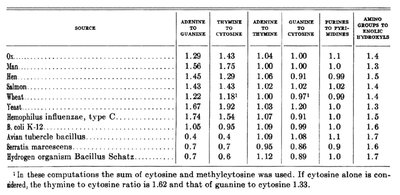
Erwin Chargaff discovered that in DNA, the amount of adenine (A) equals thymine (T), and the amount of guanine (G) equals cytosine (C). This base pairing regularity is fundamental to the double helix structure.
Chemical Components of Nucleic Acids
Nucleotides: Structure and Types
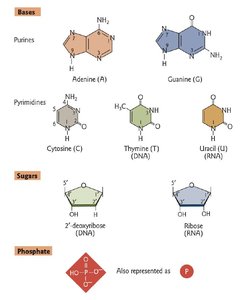
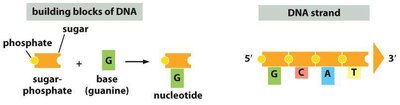
Nucleic acids are polymers of nucleotides, each consisting of three components:
Nitrogenous base: Purines (adenine, guanine) and pyrimidines (cytosine, thymine in DNA; uracil in RNA).
Pentose sugar: Deoxyribose in DNA, ribose in RNA.
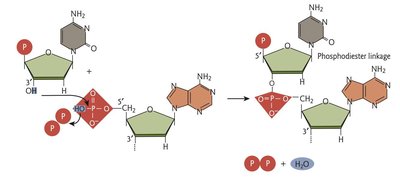
Phosphate group: Provides acidity and links nucleotides via phosphodiester bonds.
Nucleosides and Nucleotides
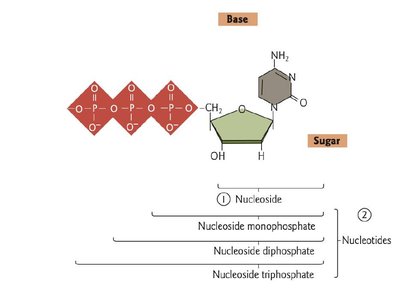
A nucleoside is formed when a base is covalently bonded to a sugar. Addition of one or more phosphate groups to the nucleoside yields a nucleotide (mono-, di-, or triphosphate forms).
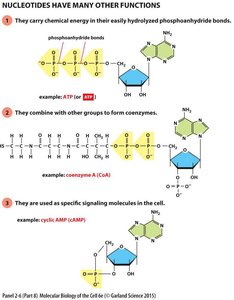
Functions of Nucleotides
Energy carriers (e.g., ATP)
Coenzyme components (e.g., CoA)
Signaling molecules (e.g., cAMP)
DNA Structure: Molecular Details
Primary Structure: Polynucleotide Chains
DNA consists of two long chains of nucleotides held together by phosphodiester bonds between the 3' hydroxyl of one sugar and the 5' phosphate of the next. This linkage gives DNA strands a distinct polarity (5' to 3').
Double Helix and Base Pairing
The two DNA strands are antiparallel and held together by hydrogen bonds between complementary bases: A pairs with T (two hydrogen bonds), and G pairs with C (three hydrogen bonds). This specificity ensures accurate replication and transcription.
Major and Minor Grooves
The coiling of the DNA double helix creates two grooves: the major groove and the minor groove. These grooves are critical for protein-DNA interactions, such as transcription factor binding.
Structural Forms of DNA
DNA can adopt several conformations:
B-DNA: The most common form under physiological conditions; right-handed helix.
A-DNA: Right-handed, shorter and wider; found in dehydrated samples and double-stranded RNA.
Z-DNA: Left-handed helix; occurs in sequences with alternating purines and pyrimidines, often under high salt or torsional stress.
Feature | A-DNA | B-DNA | Z-DNA |
|---|---|---|---|
Helix Direction | Right-handed | Right-handed | Left-handed |
Diameter (Å) | 26 | 20 | 18 |
Base pairs/turn | 11 | 10.5 | 12 |
Major Groove | Narrow, deep | Wide, medium | Absent |
Minor Groove | Wide, shallow | Narrow, medium | Narrow, deep |
Additional info: Z-DNA is associated with gene regulation and certain diseases, such as Alzheimer's and viral pathologies.
Triple-Stranded DNA (H-DNA)
Triple-stranded DNA forms when a third strand binds to the major groove of B-DNA via Hoogsteen hydrogen bonds. This structure can play roles in gene regulation and is implicated in certain genetic diseases, such as Friedreich's ataxia.
Chromosomal DNA and Packaging
Chromatin Structure
In eukaryotes, DNA is packaged with proteins into chromatin, which allows efficient storage and regulation. The basic unit of chromatin is the nucleosome, consisting of DNA wrapped around a histone octamer (two each of H2A, H2B, H3, and H4). The linker histone H1 helps compact the structure further.
Higher-Order Chromatin Structures
Nucleosomes are further coiled into a 30-nm fiber and higher-order structures, enabling the compaction of long DNA molecules into the cell nucleus.
RNA: Structure and Types
RNA Structure
RNA is typically single-stranded but can form complex secondary and tertiary structures through intramolecular base pairing. The sugar in RNA is ribose, and uracil replaces thymine as a base.
Types of RNA and Their Functions
mRNA (messenger RNA): Carries genetic information from DNA to ribosomes for protein synthesis. Features a 5' cap and 3' poly(A) tail for stability and translation regulation.
tRNA (transfer RNA): Adaptor molecules that bring amino acids to the ribosome during translation. Characterized by a cloverleaf secondary structure and L-shaped tertiary structure.
rRNA (ribosomal RNA): Structural and catalytic component of ribosomes.
Other types: snRNA, siRNA, miRNA, hnRNA, each with specialized regulatory or catalytic roles.
Comparison of DNA and RNA
Feature | DNA | RNA |
|---|---|---|
Strandedness | Double-stranded (except some viruses) | Mainly single-stranded |
Sugar | Deoxyribose | Ribose |
Pyrimidines | Thymine | Uracil |
Stability | Stable, resists alkali | Labile, degraded by alkali |
Location | Nucleus (mainly), mitochondria, plasmids | Cytoplasm, nucleus |
Function | Genetic information storage | Protein synthesis, regulation, catalysis |
Types | One main type | Multiple types (mRNA, tRNA, rRNA, etc.) |
Conclusion
Nucleic acids are fundamental to life, encoding genetic information and enabling its expression and regulation. Understanding their structure and function is essential for all fields of molecular biology and biochemistry.
