 뒤로
뒤로Protein Translation and the Genetic Code: Biochemistry Study Notes
스터디 가이드 - 스마트 노트
 자료에 맞춘 맞춤형 노트, 핵심 정의, 예시, 맥락을 확장해 제공합니다.
Protein Translation: Overview
Introduction to Protein Synthesis
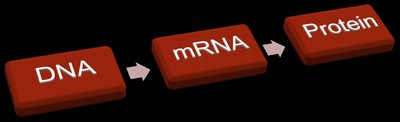
Protein synthesis, also known as translation, is a fundamental process in biochemistry where the genetic information encoded in DNA is expressed as functional proteins. This process involves the conversion of messenger RNA (mRNA) sequences into polypeptide chains, which then fold into active proteins. The primary structure of a protein is determined by the sequence of amino acids, which is specified by the genetic code.
Amino Acids: Structure and Classification
Structure and Composition of Amino Acids
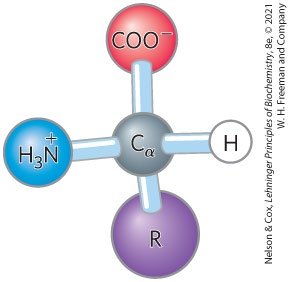
Amino acids are the building blocks of proteins. Each amino acid (except glycine) contains four distinct groups attached to a central (α) carbon atom: an acidic carboxyl group, a basic amino group, a hydrogen atom, and a unique side chain (R group). The α-carbon is chiral, giving rise to L- and D-isomers; proteins exclusively contain L-amino acids.
Classification of Amino Acids
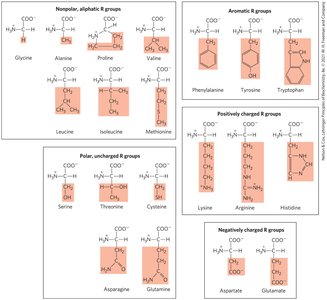
The 20 common amino acids are classified based on their R groups:
Nonpolar (aliphatic): Glycine, Alanine, Proline, Valine, Leucine, Isoleucine, Methionine (includes aromatic Phenylalanine)
Polar (uncharged): Serine, Threonine, Cysteine, Asparagine, Glutamine (includes aromatic Tyrosine, Tryptophan)
Positively charged: Lysine, Arginine, Histidine
Negatively charged: Aspartate, Glutamate
Aromatic amino acids absorb UV light, which is useful for protein quantitation.
Formation of Peptides
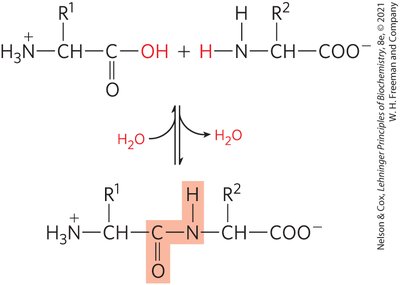
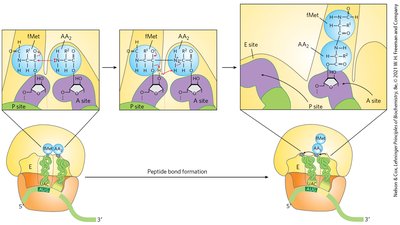
Peptides are formed by condensation reactions between amino acids, resulting in peptide bonds. The carboxyl group of one amino acid reacts with the amino group of another, releasing water and forming a covalent bond. This process occurs in the ribosome during translation.
Peptide bond formation equation:
Protein Synthesis Machinery
Components Required for Translation
Protein synthesis is a complex process requiring numerous biomolecules:
~40 types of tRNAs
3 types of rRNAs in prokaryotes, 4 in eukaryotes
Over 70 ribosomal proteins
~20 aminoacyl-tRNA synthetases
~20 protein factors for initiation, elongation, and termination
~100 additional enzymes for post-translational processing
In bacteria, these components constitute a significant portion of the cell's dry weight.
Ribosomes: Structure and Function
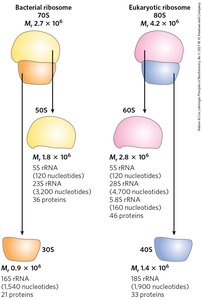
Ribosomes are the molecular machines responsible for protein synthesis. They consist of two subunits, each composed of rRNA and proteins. Bacterial ribosomes are 70S (30S + 50S), while eukaryotic ribosomes are 80S (40S + 60S).
Coupling of Transcription and Translation in Prokaryotes
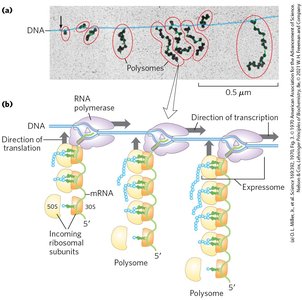
In prokaryotes, transcription and translation are coupled due to the absence of a nuclear membrane. Ribosomes begin translating mRNA while it is still being synthesized by RNA polymerase.
Free vs. Bound Ribosomes in Eukaryotes
Eukaryotic cells contain both free and ER-bound ribosomes. ER-bound ribosomes synthesize proteins destined for membranes or secretion, while free ribosomes produce cytosolic proteins.
Stages of Protein Synthesis
Activation of Amino Acids and Charging of tRNAs
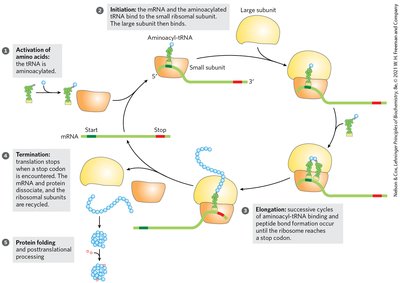
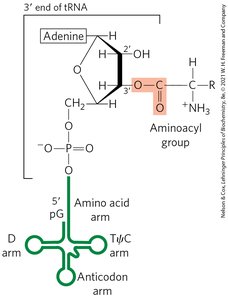
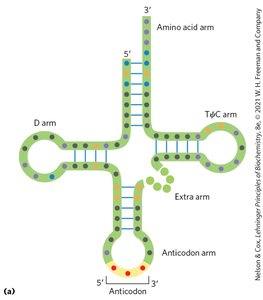
Aminoacyl-tRNA synthetases catalyze the attachment of amino acids to their corresponding tRNAs, forming aminoacyl-tRNAs (charged tRNAs). This process is highly specific and is referred to as the 'second genetic code'.
Pairing of Codons and Anticodons: Wobble Hypothesis
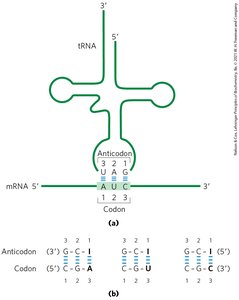
The codon on mRNA pairs with the anticodon on tRNA via hydrogen bonding. The first base of the anticodon (5' end) can 'wobble', allowing some tRNAs to recognize multiple codons. This reduces the number of tRNAs required for translation.
Initiation of Translation
Prokaryotic Initiation
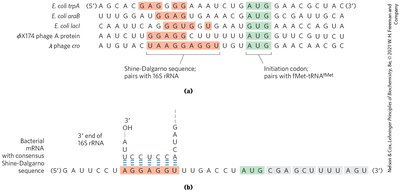
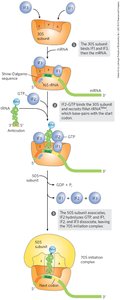
Prokaryotic mRNAs contain a Shine-Dalgarno sequence that aligns the ribosome with the start codon (AUG). Initiation factors block incorrect tRNA binding, and the initiator tRNA (charged with methionine) binds at the P site. The large ribosomal subunit then associates, completing the initiation complex.
Eukaryotic Initiation
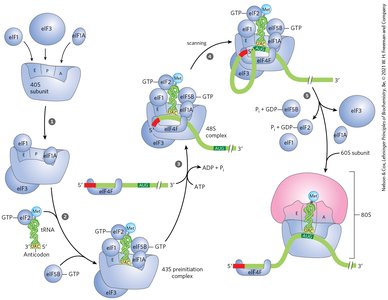
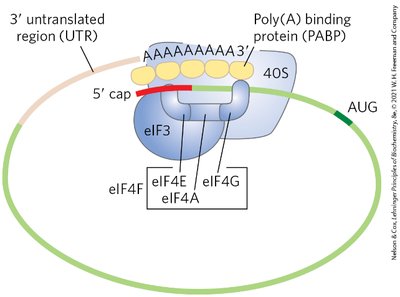
Eukaryotic mRNAs lack a Shine-Dalgarno sequence. Instead, the mRNA is circularized via interactions between the 5' cap and 3' poly(A) tail, mediated by eIF4F complex and poly(A) binding proteins. The ribosome scans the mRNA to locate the start codon.
Elongation of the Polypeptide Chain
Elongation involves three main steps: binding of the next charged tRNA to the A site, peptide bond formation catalyzed by peptidyl transferase (a ribozyme activity of 23S rRNA), and translocation of the ribosome along the mRNA. Proofreading occurs to ensure correct tRNA-codon pairing.
Termination of Protein Synthesis
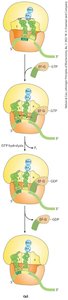
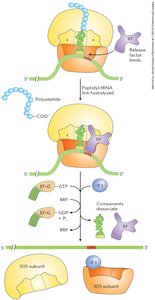
When the ribosome encounters a stop codon, a release factor binds to the A site, triggering hydrolysis of the bond between the polypeptide and tRNA. The completed polypeptide is released, and the ribosome dissociates.
Features of the Genetic Code
Properties of the Genetic Code
Codons are read in the 5' → 3' direction on mRNA.
Proteins are synthesized from the amino (N) to carboxyl (C) terminus.
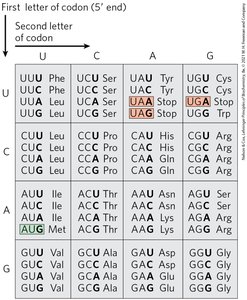
AUG is the start codon (codes for methionine).
Three stop codons: UAA, UGA, UAG.
The code is degenerate: most amino acids are specified by multiple codons.
The code is not ambiguous: each codon specifies only one amino acid.
Inhibition of Protein Synthesis
Antibiotics and Toxins Targeting Translation
Many antibiotics and toxins inhibit protein synthesis by targeting specific steps:
Puromycin: Binds to the A site and terminates protein synthesis.
Tetracycline: Blocks the A site.
Chloramphenicol, Cycloheximide: Block peptidyl transferase activity.
Streptomycin: Causes misreading of the genetic code and inhibits initiation.
Diphtheria toxin: Inactivates elongation factors in eukaryotes.
Ricin: Inactivates ribosomal subunits by mutating rRNA.
Summary Table: Amino Acid Classification
Group | Amino Acids | Properties |
|---|---|---|
Nonpolar | Gly, Ala, Pro, Val, Leu, Ile, Met, Phe | Hydrophobic, aliphatic/aromatic |
Polar | Ser, Thr, Cys, Asn, Gln, Tyr, Trp | Hydrophilic, uncharged |
Positively charged | Lys, Arg, His | Basic side chains |
Negatively charged | Asp, Glu | Acidic side chains |
References
Textbook: Lehninger Principles of Biochemistry, Nelson and Cox, 8th Edition. Relevant concepts from Chapters 3 and 27.
