 뒤로
뒤로Animal Diversity: Invertebrates and Vertebrates – Structure, Function, and Classification
스터디 가이드 - 스마트 노트
 자료에 맞춘 맞춤형 노트, 핵심 정의, 예시, 맥락을 확장해 제공합니다.
Animal Diversity: Invertebrates and Vertebrates
Introduction to Animal Diversity
Animals represent a vast and diverse group of organisms, with over two-thirds of the 1.5 million known species classified as animals. Understanding animal diversity involves examining their evolutionary relationships, body plans, and adaptations for survival.
Classification Challenges: Evolution can produce organisms with similar characteristics, making classification complex.
Defining Animals: Animals are eukaryotic, multicellular, and heterotrophic organisms that ingest their food.
Ingestion: Animals digest food internally after ingestion.
Animal Life Cycle and Development
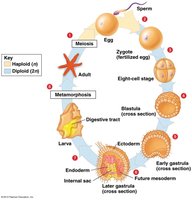
Most animals are diploid and reproduce sexually. Their development typically includes the formation of a blastula, gastrula, and sometimes a larval stage.
Blastula: A hollow ball of cells formed early in embryonic development.
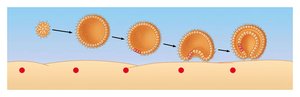
Gastrula: A stage where the embryo forms three cell layers: endoderm, mesoderm, and ectoderm.
Embryonic Cell Layers
Endoderm: Inner layer; forms digestive and respiratory organs.
Mesoderm: Middle layer; forms muscles, bones, and reproductive structures.
Ectoderm: Outer layer; forms skin, brain, and nervous system.
Evolutionary Origins of Animals
The ancestor of animals was likely a colonial, flagellated protist. Over time, cells became specialized and organized into layers, leading to the diversity of animal forms seen today.
Animal Body Plans and Symmetry
Animals are characterized by their body plans, which include symmetry and the presence or absence of a body cavity.
Radial Symmetry: Body parts arranged around a central axis (e.g., jellyfish).
Bilateral Symmetry: Body has right and left halves that are mirror images (e.g., humans, worms).
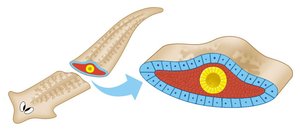
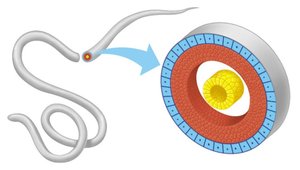
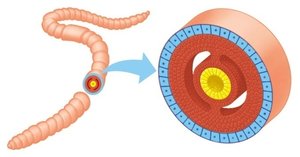
Body Cavities in Animals
Animals with three tissue layers may have different types of body cavities:
Acoelomate: No body cavity (e.g., flatworms).
Pseudocoelomate: Body cavity not fully lined by mesoderm (e.g., roundworms).
Coelomate: Body cavity completely lined by mesoderm (e.g., annelids, mollusks).
Protostomes vs. Deuterostomes
Animals with three tissue layers are further divided based on embryonic development:
Protostomes: The first opening (blastopore) becomes the mouth.
Deuterostomes: The first opening becomes the anus.
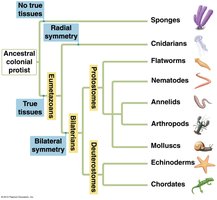
Animal Phylogeny
Phylogenetic trees (cladograms) illustrate evolutionary relationships among animal phyla, based on morphological and genetic data.
Invertebrates
Phylum Porifera (Sponges)
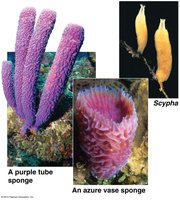
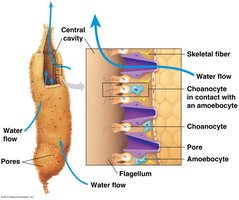
Sponges are the simplest animals, lacking true tissues and organs. They are mostly marine and are suspension feeders, filtering food from water using specialized cells called choanocytes.
Amoebocytes: Cells that produce skeletal fibers (spongin or mineral-based).
Phylum Cnidaria
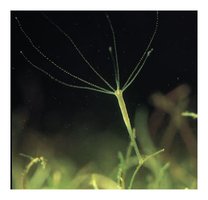
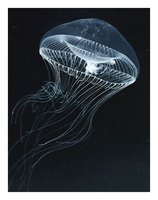
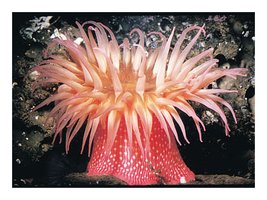
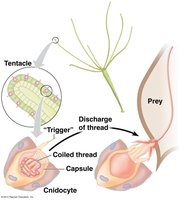
Cnidarians have true tissues, radial symmetry, and specialized stinging cells called cnidocytes. They include hydras, jellies, sea anemones, and corals.
Body Forms: Polyps (sedentary) and medusae (mobile).
Gastrovascular Cavity: Central digestive compartment with a single opening.
Phylum Platyhelminthes (Flatworms)
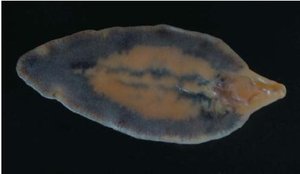
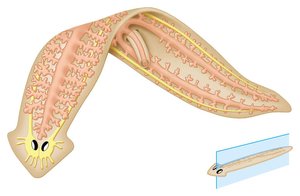
Flatworms are the simplest bilateral animals and lack a body cavity. They have a gastrovascular cavity and a simple nervous system.
Planarians: Free-living flatworms with eyespots and nerve cords.
Flukes and Tapeworms: Parasitic flatworms with complex life cycles.
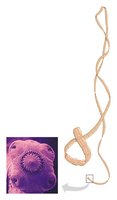
Phylum Nematoda (Roundworms)
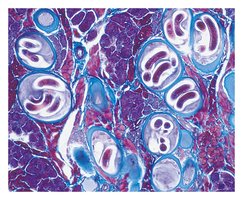
Nematodes have a pseudocoelom and a complete digestive tract. They are covered by a protective cuticle and can be free-living or parasitic.
Trichinella: Parasitic nematode causing trichinosis in humans.

Phylum Mollusca
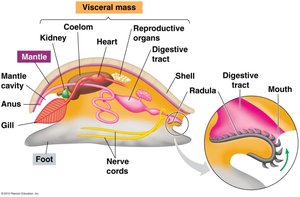
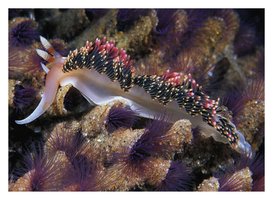
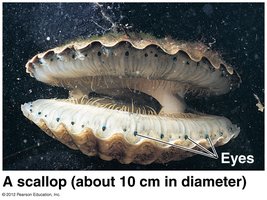
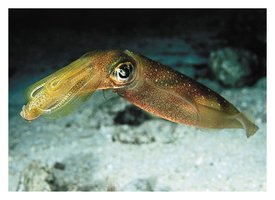
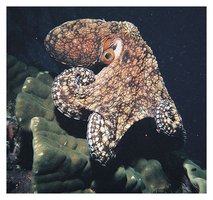
Mollusks are diverse and share a common body plan: a muscular foot, a mantle (which may secrete a shell), and a visceral mass. Most have a radula for feeding and separate sexes.
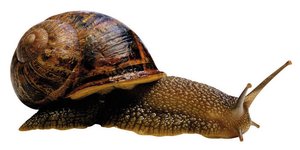
Gastropods: Snails and slugs; largest group, found in various environments.
Bivalves: Clams, oysters, mussels, scallops; have two-part shells and are suspension feeders.
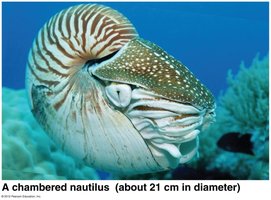
Cephalopods: Squids, octopuses, nautiluses; agile predators with large brains.
Phylum Annelida (Segmented Worms)
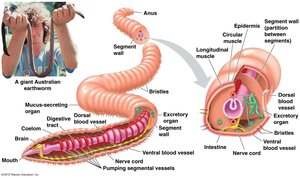
Annelids have segmented bodies, a true coelom, and are found in soil, freshwater, and marine environments. Segmentation allows for greater mobility and specialization of body regions.
Earthworms: Hermaphroditic, closed circulatory system, important for soil health.
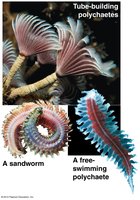
Polychaetes: Marine worms with paddle-like appendages.
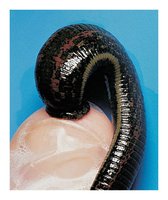
Leeches: Mostly free-living carnivores or bloodsuckers.
Phylum Arthropoda
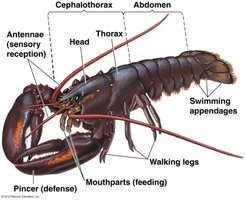
Arthropods are the most diverse animal phylum, characterized by segmentation, jointed appendages, and an exoskeleton. They have an open circulatory system and undergo molting to grow.
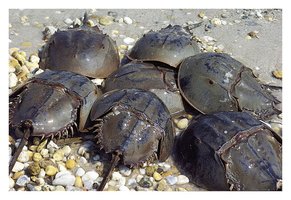
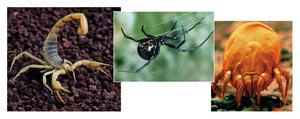
Chelicerates: Horseshoe crabs, spiders, scorpions, mites, ticks.
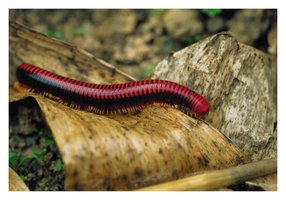
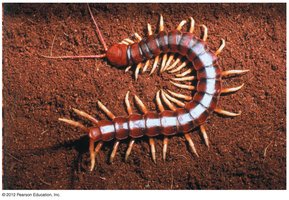
Millipedes and Centipedes: Differ in number of legs per segment and diet.
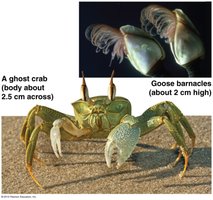
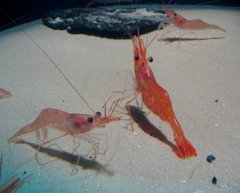
Crustaceans: Mostly aquatic; include crabs, lobsters, shrimp, barnacles.
Insects: Most diverse group; three-part body (head, thorax, abdomen), six legs, often wings.
Vertebrates and Chordates
Phylum Echinodermata
Echinoderms have spiny skin, an endoskeleton, and a water vascular system for movement. Adults are radially symmetrical, while larvae are bilaterally symmetrical. Examples include sea stars, sea urchins, and sand dollars.
Phylum Chordata
Chordates are defined by four key features:
Dorsal hollow nerve cord
Notochord
Pharyngeal slits
Muscular post-anal tail
Most chordates are vertebrates, possessing a backbone and a head.
Major Vertebrate Groups
Jawless Fishes: Hagfish and lampreys; lack jaws and paired fins.
Jawed Fishes: Sharks (cartilaginous), ray-finned fishes, and lobe-finned fishes.
Amphibians: First tetrapods; include frogs, toads, salamanders.
Reptiles: Amniotes with waterproof scales and shelled eggs; include dinosaurs, birds, and modern reptiles.
Birds: Feathered reptiles adapted for flight; evolved from theropod dinosaurs.
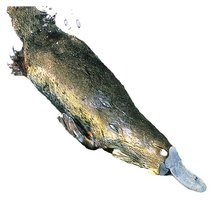
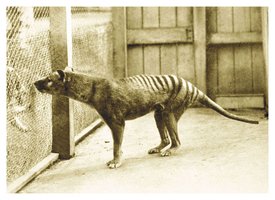
Mammals: Endothermic amniotes with hair and mammary glands; include monotremes (egg-laying), marsupials (pouched), and eutherians (placental).
Animal Structure and Function
Levels of Organization
Animals are organized into hierarchical levels: cells, tissues, organs, and organ systems. Structure and function are closely correlated at all levels.
Anatomy: Study of structure.
Physiology: Study of function.
Animal Tissues
Epithelial Tissue: Covers body surfaces and lines organs/cavities; classified by cell layers and shape.
Connective Tissue: Binds and supports; includes loose, fibrous, adipose, cartilage, bone, and blood.
Muscle Tissue: Responsible for movement; includes skeletal (voluntary), cardiac (heart), and smooth (internal organs).
Nervous Tissue: Senses stimuli and transmits signals; composed of neurons and supporting cells.
Organs and Organ Systems
Organs are made of multiple tissues working together. Organ systems are groups of organs that perform vital functions, such as:
Circulatory System: Transports nutrients, gases, and wastes.
Respiratory System: Gas exchange.
Digestive System: Ingestion, digestion, absorption, elimination.
Muscular and Skeletal Systems: Movement, support, protection.
Nervous and Endocrine Systems: Coordination and regulation.
Immune and Lymphatic Systems: Defense against disease.
Reproductive System: Production of gametes and offspring.
Homeostasis is maintained through the coordinated activity of organ systems.
