 뒤로
뒤로Atoms, Molecules, and Carbohydrates: Foundations of Biological Chemistry
스터디 가이드 - 스마트 노트
 자료에 맞춘 맞춤형 노트, 핵심 정의, 예시, 맥락을 확장해 제공합니다.
Atomic Structure and Matter
What is Matter?
Matter is anything that has mass and occupies space. It is composed of atoms, which are the smallest units of matter that retain the properties of an element.
Not Matter: Hopes, dreams, emotions, energy, heat, and sound are not considered matter because they do not have mass or occupy space.
Atoms: The fundamental building blocks of matter. Examples include carbon (C), nitrogen (N), oxygen (O), phosphorus (P), hydrogen (H), and sulfur (S).
Levels of Biological Organization
Atomic Level: Atoms such as C, H, O, N, P.
Molecular Level: Atoms form bonds to create molecules and compounds (e.g., O2, CO2, H2O).
Cellular Level: Cells are the smallest units of life.
Tissues, Organs, Organ Systems, Organisms: Increasing complexity in biological organization.
Populations, Communities, Ecosystems, Biosphere: Higher levels of organization involving multiple organisms and their environments.
Emergent Properties
Emergent properties arise at each level of biological organization, resulting from the arrangement and interactions of parts as complexity increases.
Atomic Structure
Subatomic Particles
Protons: Positively charged particles found in the nucleus.
Neutrons: Neutral particles found in the nucleus.
Electrons: Negatively charged particles found in energy shells around the nucleus.
Periodic Table Basics
Atomic Number: Number of protons in an atom; defines the element.
Atomic Symbol: One or two-letter abbreviation for an element (e.g., H for hydrogen).
Atomic Mass: Sum of protons and neutrons in the nucleus.
Isotopes
Isotopes are atoms of the same element with different numbers of neutrons, resulting in different atomic masses. For example, hydrogen has three isotopes: protium (1H), deuterium (2H), and tritium (3H).
Valence Electrons and Reactivity
Valence Electrons: Electrons in the outermost shell; determine chemical reactivity.
Stable Atoms: Atoms with full outer shells (e.g., noble gases) are nonreactive.
Ions: Atoms that have gained or lost electrons, resulting in a charge (cations are positive, anions are negative).
Chemical Bonds
Ionic Bonds
Ionic bonds form when electrons are transferred from one atom to another, creating oppositely charged ions that attract each other. Example: sodium chloride (NaCl).
Covalent Bonds
Covalent bonds form when atoms share valence electrons. These can be single, double, or triple bonds depending on the number of shared electron pairs.
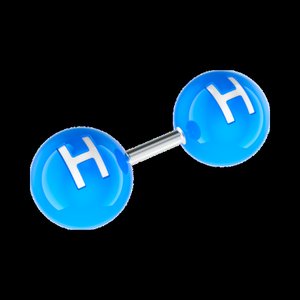
Single Covalent Bond: One pair of electrons shared (e.g., H2).
Double Covalent Bond: Two pairs of electrons shared (e.g., O2).
Triple Covalent Bond: Three pairs of electrons shared (e.g., N2).
Polarity of Covalent Bonds
Nonpolar Covalent Bonds: Electrons are shared equally; molecules are hydrophobic.
Polar Covalent Bonds: Electrons are shared unequally, creating partial charges (e.g., water molecules).
Hydrogen Bonds
Hydrogen bonds are weak attractions between a hydrogen atom covalently bonded to a highly electronegative atom (like oxygen or nitrogen) and another electronegative atom. They do not form compounds but are important in stabilizing structures like DNA and proteins.
Carbohydrates
Elements and Structure
Elements: Carbon (C), hydrogen (H), and oxygen (O).
Monomer: Monosaccharides (simple sugars).
Monosaccharides
Definition: Simple sugars containing 5 or 6 carbons (e.g., glucose, fructose).
Isomers: Compounds with the same chemical formula but different structures.
Functional Groups: Polar hydroxyl and carbonyl groups.
Examples: Glucose and fructose are isomers; ribose (in RNA) and deoxyribose (in DNA) are pentose sugars.
Disaccharides and Polysaccharides
Disaccharides: Formed by joining two monosaccharides via dehydration synthesis (e.g., sucrose, lactose, maltose).
Polysaccharides: Long chains of monosaccharides; serve as energy storage or structural components.
Examples:
Starch: Energy storage in plants.
Glycogen: Short-term energy storage in animals.
Cellulose: Structural component of plant cell walls.
Chitin: Structural component in fungi cell walls and insect exoskeletons; contains nitrogen.
Dehydration Synthesis
Monosaccharides join to form disaccharides and polysaccharides through dehydration synthesis, a reaction that removes a water molecule to form a covalent bond.
Summary Table: Types of Carbohydrates
Type | Example | Function |
|---|---|---|
Monosaccharide | Glucose, Fructose | Immediate energy source |
Disaccharide | Sucrose, Lactose, Maltose | Transport and energy |
Polysaccharide | Starch, Glycogen, Cellulose, Chitin | Energy storage, structure |
