 뒤로
뒤로ATP-ADP Cycle and Cellular Energy Transfer
스터디 가이드 - 스마트 노트
 자료에 맞춘 맞춤형 노트, 핵심 정의, 예시, 맥락을 확장해 제공합니다.
ATP-ADP Cycle and Cellular Energy Transfer
Introduction to ATP and Its Role in Cells
Adenosine triphosphate (ATP) is the primary energy carrier in all living organisms. It stores and transfers energy necessary for various cellular processes. The ATP-ADP cycle is fundamental to understanding how cells manage energy.
Structure of ATP
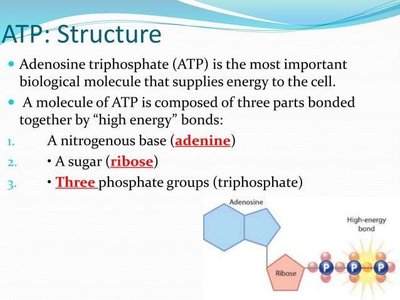
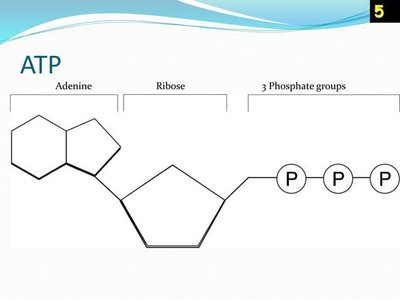
ATP is a nucleotide composed of three main components:
Adenine: A nitrogenous base.
Ribose: A five-carbon sugar.
Three phosphate groups: Linked by high-energy bonds.
The energy stored in ATP is primarily found in the bonds between the phosphate groups, especially the bond connecting the third phosphate.
ATP: The Cell's Currency
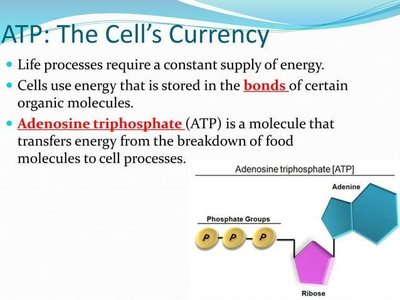
Cells require a constant supply of energy for life processes. ATP acts as the cell's energy currency, transferring energy from the breakdown of food molecules to cellular activities. The energy is stored in the chemical bonds of ATP and released when these bonds are broken.
Where Does ATP Come From?
ATP is produced indirectly from the food we eat. Carbohydrates (such as glucose) and lipids are broken down during cellular respiration to generate ATP.
The ATP-ADP Cycle
The ATP-ADP cycle describes how ATP is used and regenerated in cells:
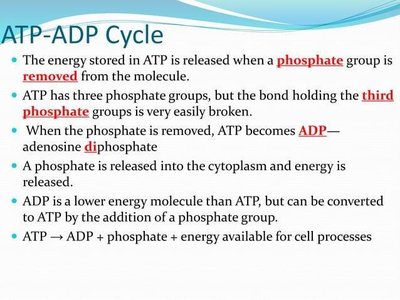
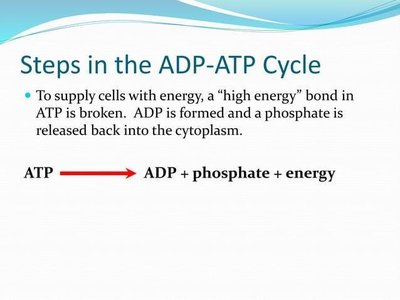
When a phosphate group is removed from ATP, energy is released, and ATP becomes adenosine diphosphate (ADP).
The reaction can be summarized as:
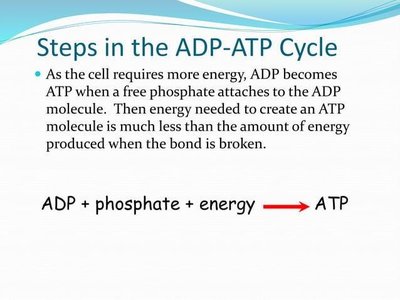
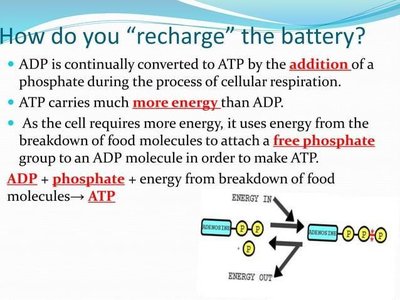
ADP can be converted back to ATP by adding a phosphate group, using energy from food breakdown:
This cycle allows cells to efficiently store and release energy as needed.
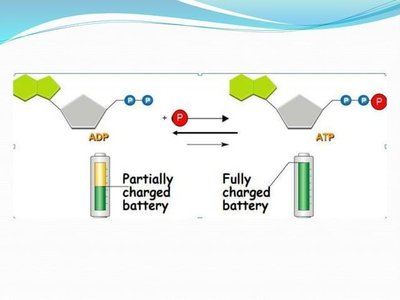
How Do You "Recharge" the Battery?
ADP is continually converted back to ATP by the addition of a phosphate group during cellular respiration. ATP stores more energy than ADP. The energy required to add a phosphate to ADP is less than the energy released when ATP is broken down, making the cycle efficient for cellular energy management.
When is ATP Used?
ATP is consumed in the cell during energy-requiring processes and generated during energy-releasing processes. It transfers energy between biochemical reactions and is the main energy source for:
Production of organic molecules (e.g., DNA, proteins)
Transport of molecules across cell membranes (e.g., exocytosis and endocytosis)
Types of Reactions: Exergonic vs. Endergonic
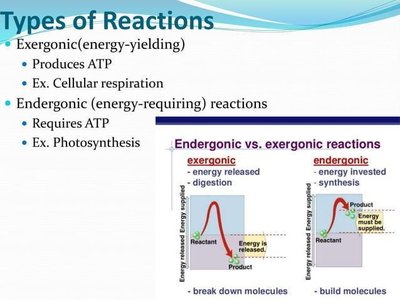
Cellular reactions are classified based on energy changes:
Exergonic reactions: Release energy (e.g., cellular respiration), producing ATP.
Endergonic reactions: Require energy input (e.g., photosynthesis), consuming ATP.
ATP vs. ADP: Comparison Table
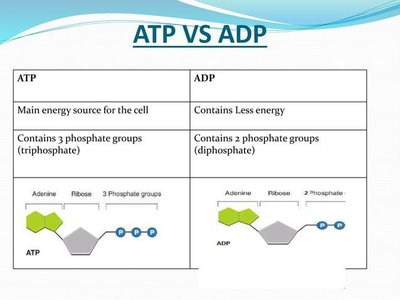
The following table summarizes the key differences between ATP and ADP:
ATP | ADP |
|---|---|
Main energy source for the cell | Contains less energy |
Contains 3 phosphate groups (triphosphate) | Contains 2 phosphate groups (diphosphate) |
|
|
Summary
The ATP-ADP cycle is central to cellular energy management. ATP acts as the main energy currency, storing and releasing energy as needed for cellular processes. The cycle of ATP breakdown and regeneration ensures that cells have a continuous supply of energy to support life.
