 뒤로
뒤로Bacteria and Archaea: Structure, Function, and Diversity
스터디 가이드 - 스마트 노트
 자료에 맞춘 맞춤형 노트, 핵심 정의, 예시, 맥락을 확장해 제공합니다.
Prokaryotes: Bacteria and Archaea
Overview of Prokaryotes
Prokaryotes are single-celled organisms classified into two domains: Bacteria and Archaea. They are the most abundant and diverse organisms on Earth, thriving in a wide range of environments, including extreme conditions.
Prokaryotes lack a membrane-bound nucleus and organelles.
They are typically much smaller than eukaryotic cells (0.5–5 µm vs. 10–100 µm).
Shapes include spheres (cocci), rods (bacilli), and spirals.
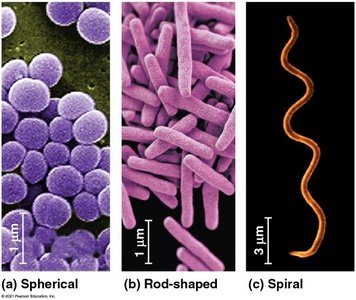
Structure and Function of Prokaryotes
Cell Surface Structures
The cell wall is a critical feature of prokaryotes, providing shape, protection, and preventing lysis in hypotonic environments.
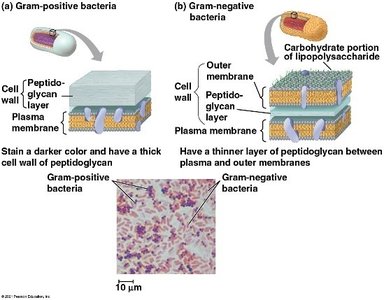
Bacterial cell walls contain peptidoglycan, a polymer of sugars and amino acids.
Archaeal cell walls lack peptidoglycan and are composed of various polysaccharides and proteins.
Gram stain distinguishes bacteria based on cell wall structure:
Gram-positive: Thick peptidoglycan layer, stains dark purple.
Gram-negative: Thin peptidoglycan layer, outer membrane with lipopolysaccharides, stains pink/red.
Gram-negative bacteria are generally more resistant to antibiotics.
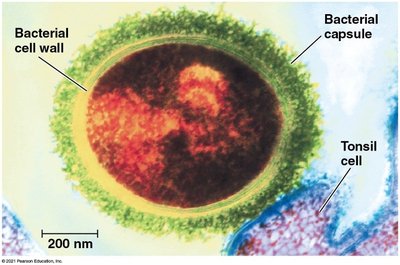
Capsules and Slime Layers
Many prokaryotes have a sticky layer outside the cell wall, called a capsule (dense) or slime layer (loose).
Functions: Adherence, protection from dehydration, and defense against host immune systems.
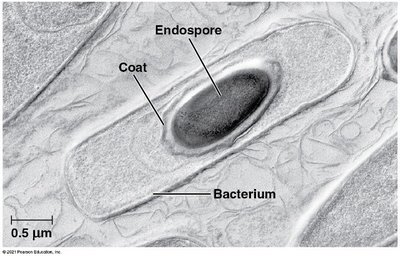
Endospores
Some bacteria (e.g., Bacillus and Clostridium) form endospores—dormant, tough structures that allow survival in harsh conditions.
Endospores can remain viable for centuries.
Formation involves copying the chromosome and encasing it in a multilayered coat.
Fimbriae and Pili
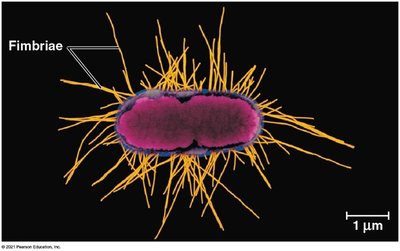
Fimbriae: Short, hairlike appendages for attachment to surfaces or other cells.
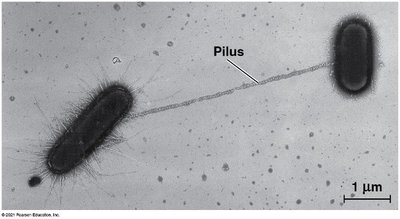
Pili (sex pili): Longer structures used for DNA transfer between cells.
Motility
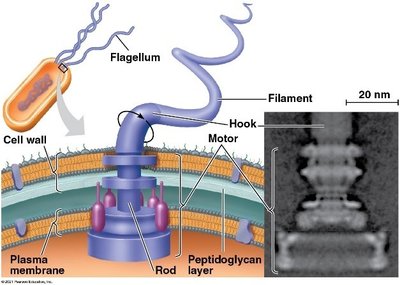
About half of prokaryotes exhibit taxis—movement toward or away from stimuli.
Flagella are the primary structures for movement, differing in structure and function from eukaryotic flagella.
Internal Organization and DNA
Prokaryotes lack complex compartmentalization but may have specialized membrane infoldings for metabolic functions.
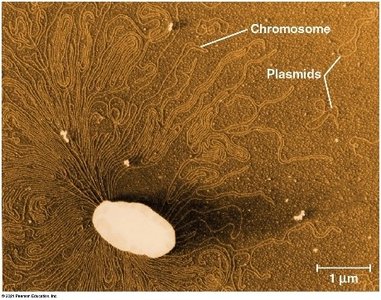
DNA is organized in a single circular chromosome located in the nucleoid region (no membrane).
Additional small DNA rings called plasmids may be present.
Differences in DNA replication, transcription, and translation allow antibiotics to target bacteria without harming human cells.
Reproduction and Growth
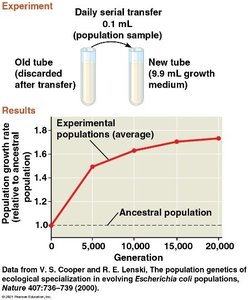
Prokaryotes reproduce rapidly by binary fission, leading to short generation times and high adaptability.
Key features: Small size, binary fission, short generation times.
Genetic Recombination
Mechanisms of Genetic Recombination
Genetic recombination increases diversity in prokaryotes through several processes:
Transformation: Uptake of foreign DNA from the environment.
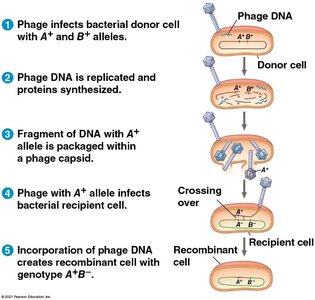
Transduction: Transfer of DNA via bacteriophages (viruses that infect bacteria).
Conjugation: Direct transfer of DNA between cells via a pilus.
Horizontal gene transfer: Movement of genes between different species.
F Factor and Conjugation
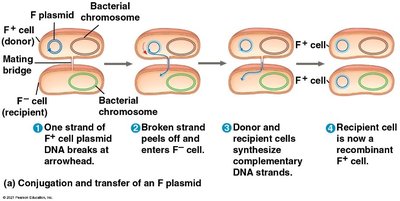
F factor (fertility factor) is required for pilus formation and DNA transfer.
F factor can exist as a plasmid or integrated into the chromosome.
Cells with F plasmid (F+) are donors; those without (F–) are recipients.
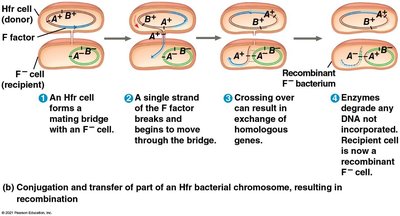
Hfr cells (high frequency of recombination) have F factor in their chromosome and can transfer chromosomal genes.
R Plasmids and Antibiotic Resistance
R plasmids carry genes for antibiotic resistance and can spread rapidly among bacteria.
Nutritional Adaptations in Prokaryotes
Modes of Nutrition
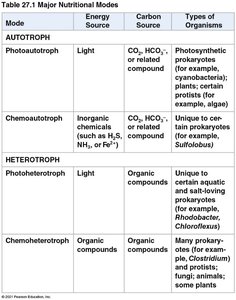
Prokaryotes are classified by their energy and carbon sources:
Phototrophs: Use light for energy.
Chemotrophs: Use chemicals for energy.
Autotrophs: Use CO2 or related compounds as carbon source.
Heterotrophs: Require organic nutrients for carbon.
Mode | Energy Source | Carbon Source | Types of Organisms |
|---|---|---|---|
Photoautotroph | Light | CO2, HCO3–, or related compound | Photosynthetic prokaryotes (e.g., cyanobacteria); plants; certain protists |
Chemoautotroph | Inorganic chemicals (e.g., H2S, NH3, Fe2+) | CO2, HCO3–, or related compound | Unique to certain prokaryotes (e.g., Sulfolobus) |
Photoheterotroph | Light | Organic compounds | Unique to certain aquatic and salt-loving prokaryotes (e.g., Rhodobacter, Chloroflexus) |
Chemoheterotroph | Organic compounds | Organic compounds | Many prokaryotes (e.g., Clostridium); protists; fungi; animals; some plants |
Oxygen and Metabolism
Prokaryotes vary in their use of oxygen:
Obligate aerobes: Require O2 for cellular respiration.
Obligate anaerobes: Poisoned by O2; use fermentation or anaerobic respiration.
Facultative anaerobes: Can use O2 or switch to anaerobic metabolism.
Nitrogen Metabolism
Nitrogen is essential for amino acids and nucleic acids. Some prokaryotes perform nitrogen fixation, converting atmospheric N2 to ammonia (NH3).
Examples: Cyanobacteria, Rhizobium
Biofilms
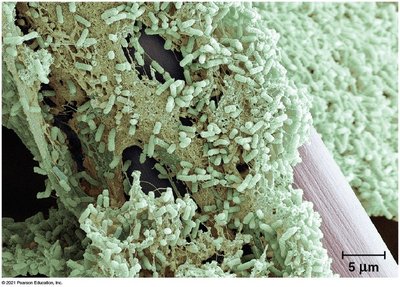
Prokaryotes often form biofilms, cooperative surface-coating colonies.
Biofilms facilitate nutrient access and waste removal.
They can cause corrosion, contamination, tooth decay, and chronic infections.
Archaea
Characteristics of Archaea
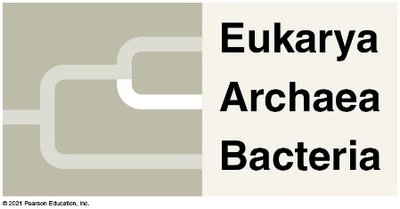
Archaea share traits with both bacteria and eukaryotes, but also possess unique features.
Cell walls lack peptidoglycan.
Membrane lipids may be branched hydrocarbons.
RNA polymerase and protein synthesis initiation differ from bacteria.
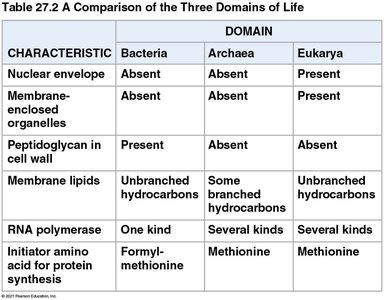
Characteristic | Bacteria | Archaea | Eukarya |
|---|---|---|---|
Nuclear envelope | Absent | Absent | Present |
Membrane-enclosed organelles | Absent | Absent | Present |
Peptidoglycan in cell wall | Present | Absent | Absent |
Membrane lipids | Unbranched hydrocarbons | Some branched hydrocarbons | Unbranched hydrocarbons |
RNA polymerase | One kind | Several kinds | Several kinds |
Initiator amino acid for protein synthesis | Formyl-methionine | Methionine | Methionine |
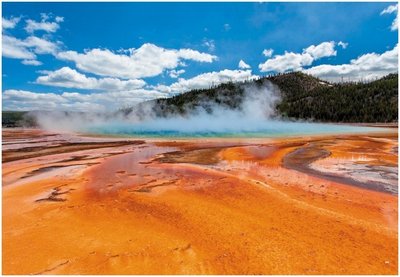
Extremophiles
Extremophiles are archaea adapted to extreme environments.
Extreme halophiles: Thrive in highly saline environments.
Extreme thermophiles: Survive at high temperatures, even above 100°C.
Methanogens
Methanogens are obligate anaerobes that produce methane as a metabolic by-product.
Found under ice, in swamps, marshes, and the guts of herbivores.
