 뒤로
뒤로Cell Communication: Mechanisms and Pathways (Chapter 11)
스터디 가이드 - 스마트 노트
 자료에 맞춘 맞춤형 노트, 핵심 정의, 예시, 맥락을 확장해 제공합니다.
Cell Communication
Overview of Cell Signaling
Cell communication is essential for the regulation of cellular activities and coordination among cells. It involves the conversion of external signals into specific cellular responses through a series of well-defined steps.
Signal Reception: The cell detects a signaling molecule (ligand) from its environment.
Signal Transduction: The signal is relayed and amplified inside the cell via a cascade of molecular interactions.
Cellular Response: The cell responds by altering its activity, such as gene expression or metabolic changes.

Stages of Cell Signaling
Signal Reception: A signaling molecule binds to a receptor on the cell surface or inside the cell, initiating the process.
Signal Transduction: Relay molecules transmit the signal, often activating enzymes or other proteins.
Cellular Response: The cell executes a response, such as breaking down glycogen to release glucose for energy.
Types of Signal Receptors
Cell-Surface Receptors
Cell-surface receptors are proteins embedded in the plasma membrane that bind to water-soluble signaling molecules. The three main types are:
G-Protein-Coupled Receptors (GPCRs): These receptors interact with G proteins to transmit signals.
Receptor Tyrosine Kinases (RTKs): These receptors phosphorylate tyrosine residues, activating multiple pathways.
Ion Channel Receptors: These receptors open or close ion channels in response to ligand binding.
G-Protein-Coupled Receptors (GPCRs)
GPCRs are composed of seven transmembrane α helices and are involved in many physiological processes. 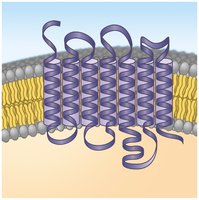
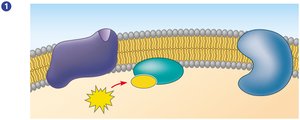
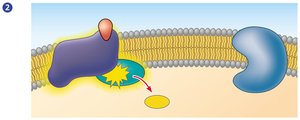
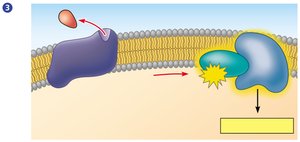
Step 1: Ligand binds to the GPCR, causing a conformational change.
Step 2: The activated GPCR interacts with a G protein, causing GDP to be replaced by GTP.
Step 3: The G protein activates an enzyme, leading to a cellular response.
Step 4: The G protein hydrolyzes GTP to GDP, terminating the signal.
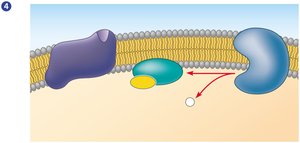
Receptor Tyrosine Kinases (RTKs)
RTKs are membrane receptors that can trigger multiple signal transduction pathways.
Step 1: Ligand binds to the extracellular domain of RTKs.
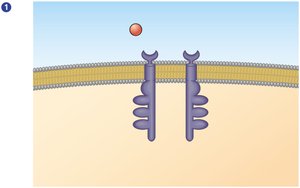
Step 2: RTKs dimerize upon ligand binding.
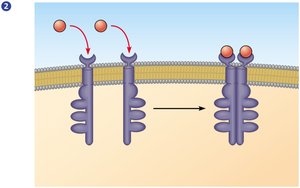
Step 3: The dimerized RTKs autophosphorylate tyrosine residues, activating the receptor.
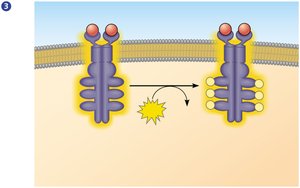
Step 4: Activated RTKs recruit and activate multiple relay proteins, leading to diverse cellular responses.
Ion Channel Receptors
Ion channel receptors regulate the flow of ions across the membrane in response to ligand binding.
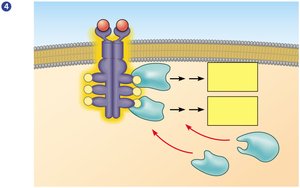
Step 1: Ligand binds to the ion channel receptor.
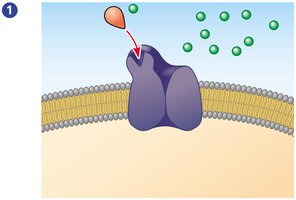
Step 2: The channel opens, allowing ions to flow into the cell.
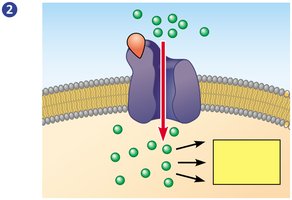
Step 3: The ligand dissociates, and the channel closes.
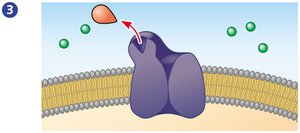
Intracellular Receptors
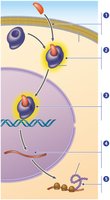
Intracellular receptors bind to signaling molecules that can cross the plasma membrane, such as steroid hormones.
Example: Aldosterone binds to its receptor in the cytoplasm, and the complex enters the nucleus to regulate gene expression.
Signal Transduction Pathways
Phosphorylation Cascades
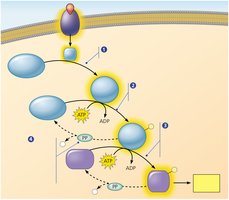
Signal transduction often involves phosphorylation cascades, where protein kinases activate other proteins by adding phosphate groups.
Protein Kinases: Enzymes that transfer phosphate groups from ATP to proteins.
Protein Phosphatases: Enzymes that remove phosphate groups, deactivating proteins.
Second Messengers
Second messengers, such as cyclic AMP (cAMP) and calcium ions, amplify the signal within the cell.
First Messenger: The extracellular signaling molecule (e.g., hormone).
Second Messenger: Intracellular molecules that relay and amplify the signal.
Cellular Responses and Regulation
Nuclear and Cytoplasmic Responses
Nuclear Response: Regulation of gene expression, often through transcription factors.
Cytoplasmic Response: Alteration of metabolic pathways or cytoskeletal organization.
Signal Amplification and Specificity
Amplification: A single signaling molecule can trigger the production of many molecules of a product (e.g., glucose 1-phosphate).
Specificity: Different cells may respond differently to the same signal due to variations in receptor types and relay proteins.
Termination of Signal
Signals are terminated by removal of the ligand or deactivation of signaling proteins, ensuring proper regulation.
Integration of Signaling Pathways: Apoptosis
Apoptosis
Apoptosis is programmed cell death, an essential process for development and homeostasis. It involves the integration of multiple signaling pathways, both internal and external.
External Signals: Death signals from other cells can trigger apoptosis.
Internal Signals: DNA damage or protein misfolding can initiate apoptosis.
Examples: Normal development (e.g., removal of webbing between fingers), immune response, and disease states.
Additional info: Apoptosis is tightly regulated to prevent inappropriate cell death, which can lead to diseases such as cancer or neurodegeneration. ----------------------------------------
