 뒤로
뒤로Cellular Components and Biomolecules: Study Guidance
스터디 가이드 - 스마트 노트
 자료에 맞춘 맞춤형 노트, 핵심 정의, 예시, 맥락을 확장해 제공합니다.
Q1. Where would you expect to find most LIPIDS?
Background
Topic: Cell Structure and Biomolecules
This question tests your understanding of where lipids are primarily located within a eukaryotic cell. Lipids are essential biomolecules that play key roles in cell membrane structure, energy storage, and signaling.
Key Terms:
Lipids: Hydrophobic molecules, including fats, oils, phospholipids, and steroids.
Cell Membrane: A lipid bilayer that surrounds the cell and many organelles.
Organelles: Specialized structures within cells, some of which have membranes rich in lipids (e.g., mitochondria, endoplasmic reticulum, Golgi apparatus).
Step-by-Step Guidance
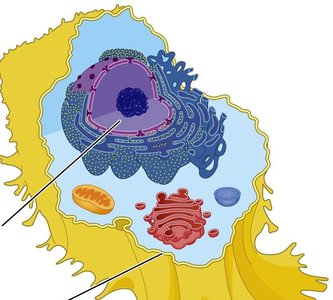
Examine the cell diagram and identify the structures that contain membranes (e.g., plasma membrane, organelle membranes).
Recall that the main component of biological membranes is the phospholipid bilayer, which is made up of lipids.
Consider whether lipids are found only in one location or in multiple locations within the cell.
Think about the function of lipids in the cell—are they limited to the outer membrane, or do they also make up internal membranes of organelles?
Try solving on your own before revealing the answer!
Final Answer: D. All of these locations
Lipids are found throughout the cell, especially in the plasma membrane and the membranes of organelles such as the endoplasmic reticulum, Golgi apparatus, and mitochondria. The cell's internal and external membranes are all composed primarily of lipids, making them present in all these locations.
Q2. Where would you expect to find DNA (nucleic acid)?
Background
Topic: Cell Structure and Genetic Material
This question tests your knowledge of where DNA is located within a eukaryotic cell. DNA is the molecule that stores genetic information.
Key Terms:
DNA (Deoxyribonucleic Acid): The hereditary material in almost all living organisms.
Nucleus: The membrane-bound organelle that contains most of the cell's DNA.
Mitochondria: Organelles that also contain a small amount of their own DNA.
Step-by-Step Guidance
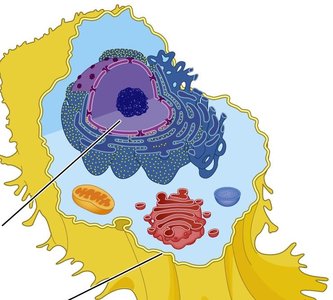
Identify the nucleus in the cell diagram, as it is the primary location of DNA in eukaryotic cells.
Recall that mitochondria (and in plants, chloroplasts) also contain DNA.
Consider whether DNA is found in other locations within the cell.
Think about the answer choices and whether more than one location is correct.
Try solving on your own before revealing the answer!
Final Answer: D. All of these locations
DNA is primarily found in the nucleus, but mitochondria (and chloroplasts in plants) also contain DNA. Thus, DNA can be found in multiple locations within the cell.
Q3. Where would you expect to find Proteins?
Background
Topic: Cell Structure and Biomolecules
This question tests your understanding of the distribution of proteins within a cell. Proteins are essential for structure, function, and regulation of the body's tissues and organs.
Key Terms:
Proteins: Large biomolecules made of amino acids, performing a variety of functions in the cell.
Ribosomes: Organelles where proteins are synthesized.
Organelles: Many organelles contain or are made of proteins (e.g., enzymes, structural proteins).
Step-by-Step Guidance
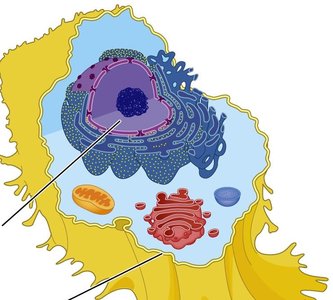
Recall that proteins are synthesized by ribosomes, which can be free in the cytoplasm or attached to the endoplasmic reticulum.
Think about the roles of proteins in the cell, including enzymes, structural components, and transporters.
Consider whether proteins are limited to one part of the cell or are distributed throughout.
Review the answer choices and decide if proteins are found in all locations or just specific ones.
Try solving on your own before revealing the answer!
Final Answer: D. All of these locations
Proteins are found throughout the cell, including in the cytoplasm, membranes, organelles, and as enzymes and structural components. They are not restricted to a single location.
